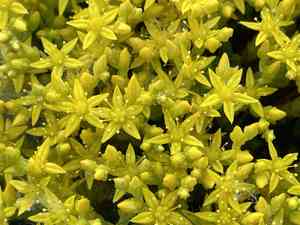
Goldmoss stonecrop (Sedum acre)
Also known as: Wallpepper, Mossy stonecrop
Goldmoss stonecrop, a perennial with distinctive star-shaped flowers, is often featured in hanging baskets and container gardens as a groundcover or trailing plant. Its peppery, slightly bitter leaves and stems make it a unique addition to various dishes. These parts of the plant can be used sparingly to enhance the flavor of salads, soups, and stews, or as a garnish to add a spicy kick to sandwiches and wraps.
In This Article
Attributes of Goldmoss stonecrop
Lifespan
Perennial
Plant Type
Succulent, Herb
Plant Height
5 cm to 12 cm
Spread
30 cm to 60 cm
Leaf Color
Green Red Yellow
Flower Size
5 mm to 9 mm
Flower Color
Yellow
Images of Goldmoss stonecrop
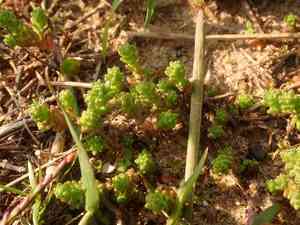
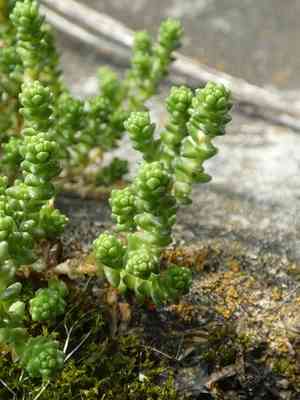
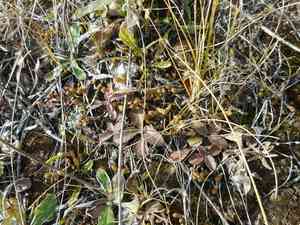
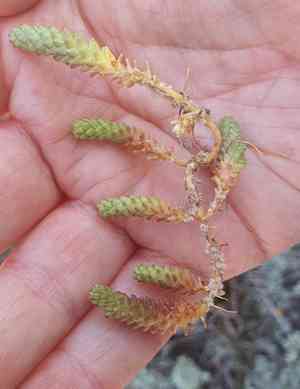
Quickly Identify Goldmoss stonecrop
1
Mat-forming growth habit
2
Small, star-shaped yellow flowers
3
Fleshy, evergreen leaves
4
Dense ground cover due to sprawling stems
5
Succulent stem with varying colors
Scientific Classification of Goldmoss stonecrop
Phylum
Vascular plants
Class
Dicotyledons
Order
Saxifragales
Family
Stonecrop
Genus
Stonecrops
Species
Goldmoss stonecrop
Planting and Growing of Goldmoss stonecrop
Care Difficulty
Easy
Watering Schedule
Every day
Sunlight Requirements
Full sun
Sunshine Duration
4-6 hours
Ideal Temperature
60-75℉
Soil Type
Potting Mix, Peat Mix
Soil pH
6.5-7.5
Fertilizer Type
Balanced
Pruning Season
Spring, Summer
Pruning Area
Branches, Leaves
Pruning Frequency
2 times a year
Repotting Season
Spring
Pot Type
Plastic, Ceramic
 How to Water Goldmoss stonecrop?
Sedum acre, also known as goldmoss stonecrop, requires limited watering due to its succulent nature. Watering should mimic a light rainfall, about 50 ml per session, enough to moisten the soil without waterlogging. Allow the soil to dry out completely between watering sessions to prevent root rot.
More About Watering Techniques→
What are the symptoms of an underwatered Goldmoss stonecrop?
›
What should I do if my Goldmoss stonecrop is not getting enough water?
›
What are the symptoms of an overwatered Goldmoss stonecrop?
›
How to save an overwatered Goldmoss stonecrop?
›
 What Are the Sunlight Requirements for Goldmoss stonecrop?
Sedum acre prefers full to partial sun, flourishing with consistent exposure to direct rays. Adequate sunlight promotes strong growth, vibrant pigmentation, and abundant flowering.
More About Sunlight Requirements Techniques→
Optimal Light Level
›
Solution to Achieve Ideal Light
›
Benefits of Ideal Lighting
›
 What Is the Ideal Temperature Range for Goldmoss stonecrop?
The ideal temperature range for Sedum acre, between 60°F to 75°F, is crucial for its growth and health. Within this range, the plant can efficiently perform photosynthesis, maintain healthy leaves, and resist diseases. This temperature range allows for balanced moisture evaporation and nutrient absorption, which are key to developing vibrant foliage without stress.
 What Soil is Best for Goldmoss stonecrop?
Sedum acre thrives in well-drained soil as it prevents root rot by ensuring excess water can flow away quickly. This is crucial as the plant is particularly susceptible to water-logged conditions. This plant does not require nutrient-rich soil, making it ideal for poor or rocky soils. The low nutrient demand helps it focus energy on producing vibrant foliage instead of excessive root growth. Preferring slightly alkaline soil, Sedum acre benefits from a pH balance that supports optimal growth and health, aiding in nutrient uptake and disease resistance.
More About Soil→
 How to Fertilize Goldmoss stonecrop?
For Sedum acre, a light application of fertilizer is sufficient. Using about 1/4 of the recommended dose on the package is ideal. This low requirement helps maintain its unique texture and growth form without leading to overgrowth.
 How to Prune Goldmoss stonecrop?
One of the most important things to remember when pruning Sedum acre is to avoid over-pruning. This species is relatively slow-growing, and excessive cutting back can lead to stress or even stunt the plant's growth. Always aim to remove no more than a third of the plant's foliage at any one time to ensure it remains healthy and vibrant. Over-pruning can also diminish the plant's ability to flower, so if blooms are a priority, approach pruning with a light touch. Although Sedum acre is a hardy plant, it's still important to handle it with care during the pruning process. The leaves are succulent and brittle, making them susceptible to accidental breakage. Gentle handling minimizes damage and keeps the plant looking its best. Additionally, after pruning, give the plant a little extra care by avoiding direct, harsh sunlight for a few days and watering only when the soil is dry to prevent any stress from moisture changes.
 How to Propagate Goldmoss stonecrop plant?
1
Choose healthy, disease-free stems that are firm and show signs of growth. Avoid stems that are too old or too new, as they might not root effectively.
2
Cut a stem section about 3-4 inches long below a node using a clean shear. Remove lower leaves to expose the node and enhance root development.
3
Plant the prepared stem in a pot filled with well-draining potting mix, ensuring the node is below soil surface. Water lightly and keep in a shaded area until new growth appears.
 How to Repot Goldmoss stonecrop plant?
1
Sedum acre needs repotting when you notice roots growing through the drainage holes or the soil becoming compacted. Another sign is when the plant's growth seems stunted despite proper care. Ideally, this should be done during its active growing seasons, spring or summer, when the plant can quickly adjust to its new environment.
2
Select a pot that has ample drainage and is slightly larger than the current one. This allows more room for root growth and prevents root bound conditions. A terracotta pot is often recommended, as it helps to wick away excess moisture, providing an environment less conducive to root rot.
3
Opt for a well-draining, sandy soil mix to mimic Sedum acre's natural environment. This soil type prevents waterlogging, which is crucial for succulents as they are prone to root rot when overwatered. Adding some perlite or coarse sand can enhance the drainage capability of the mix.
Toxicity
ingestion
WARNING
The judgment on toxicity and danger is for reference only. We DO NOT GUARANTEE any accuracy of such judgment. Therefore, you SHALL NOT rely on such judgment. It is IMPORTANT TO SEEK PROFESSIONAL ADVICE in advance when necessary.
Learn More About Goldmoss stonecrop Diseases
Bacterial Leaf Spot
Bacterial Soft Rot
Chemical Injury
Crown Gall
Cyst Nematode
Damping-off
Drought Stress
Fusarium Wilt
Gray Mold
Leaf Spot
Mosaic
Nutrient Deficiency
Nutrient Toxicity
Powdery Mildew
Root Rot
Root-knot Nematode
Rusts
Sooty Mold
Spider Mites
Temperature Stress
Thrips Damage
White Mold



