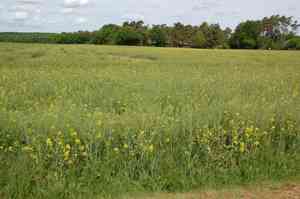
Wild mustard(Sinapis arvensis)

Wild mustard (Sinapis arvensis)

Also known as: Charlock mustard

Common Nettle (Urtica dioica) is often regarded as an invasive weed. The young leaves of this plant are edible and were used as a food source in Ireland during the potato famine, despite the potential for stomach issues if not prepared properly.

Attributes of Wild mustard

Lifespan
Annual, Biennial
Plant Type
Herb
Plant Height
20 cm to 1 m
Spread
5 cm
Leaf Color
Green
Flower Size
1.8 cm to 2.5 cm
Flower Color
Yellow

PlantJoy - Identify plants with a snap

Identify and diagnose plants, get toxicity alerts, and explore safety guides for all types of fungi.

Try for Free

Images of Wild mustard

Wild mustard(Sinapis arvensis)

Quickly Identify Wild mustard

1
Bright yellow, four-petaled flowers measuring 0.6-1 inch (15-25 mm) wide.
2
Upright stems reaching 1-3 feet (30-90 cm) in height with bristly texture.
3
Deeply lobed leaves resembling an oak leaf, larger at the base and smaller up the stem.
4
Slender, slightly curved seed pods (siliques) about 1-2 inches (25-50 mm) long.
5
Erect stem with reddish pigmentation, coarse hairs denser towards lower parts, 0.1-0.3 inches (2.5-7.5 mm) thick.

Scientific Classification of Wild mustard

Phylum
Vascular plants
Class
Dicotyledons
Order
Brassicales
Family
Cruciferae
Genus
Mustard
Species
Wild mustard

Planting and Growing of Wild mustard

Care Difficulty
Easy
Watering Schedule
Every 3 days
Sunlight Requirements
Full sun
Sunshine Duration
4-6 hours
Ideal Temperature
68-77℉
Soil Type
Potting Mix, Peat Mix
Soil pH
6-8
Fertilizer Type
Balanced
Pruning Season
Spring, Summer
Pruning Area
Branches, Leaves
Pruning Frequency
2 times a year
Repotting Season
Spring
Pot Type
Plastic, Terracotta

water icon How to Water Wild mustard?

For Sinapis arvensis, also known as wild mustard, it's crucial that the soil remains moist but not waterlogged. The plant prefers an environment that mimics its natural habitat, where water is available but not overly abundant. Each time you water, aim to soak the soil thoroughly, ensuring water reaches the root depth. This typically means about 250 ml per session, but adjust depending on the size and moisture retention of the pot.
What are the symptoms of an underwatered Wild mustard?
What should I do if my Wild mustard is not getting enough water?
What are the symptoms of an overwatered Wild mustard?
How to save an overwatered Wild mustard?

sunlight icon What Are the Sunlight Requirements for Wild mustard?

Sunlight Requirements: Full sun
Duration of light: 6 to 8 hours
Full sun is ideal for Sinapis arvensis as it helps in maintaining lush, healthy foliage and abundant flowering. By ensuring ongoing exposure to 6-8 hours of sunlight, the plant thrives with improved vigor and resilience.
Achieving Optimal Growth
Maximizing Flower Production
Ensuring Strong Structure
More About Sunlight Requirements Techniques

temperature icon What Is the Ideal Temperature Range for Wild mustard?

Ideal Temperature: 68 ~ 77℉
The ideal temperature range for growing Sinapis arvensis is between 68°F to 77°F. Within this range, the plant can engage in optimal photosynthesis and metabolism, promoting healthy growth and vibrant blooms.

soil icon What Soil is Best for Wild mustard?

Soil type: Loam, Sandy loam, Calcareous soil
Soil PH: 6 ~ 8
Sinapis arvensis thrives in nutrient-rich soil which provides the necessary minerals for its growth. A well-fertilized soil encourages strong plant development and robust flowering, ensuring a healthy life cycle. It requires well-drained conditions to prevent root rot. Good drainage helps maintain the right moisture levels, vital for disease prevention and optimal plant health. Soil with adequate aeration is crucial for Sinapis arvensis, facilitating efficient nutrient and water uptake. This enhances the plant's ability to flourish in its environment. More About Soil

fertilize icon How to Fertilize Wild mustard?

Fertilizer type: Balanced
For Sinapis arvensis, it is generally recommended to use a balanced 10-10-10 NPK fertilizer. When using liquid fertilizer, apply a diluted concentration of 1 tablespoon per gallon of water. For solid or slow-release fertilizers, distribute a layer about 1/2 inch thick over the soil once per application. More About Fertilizing Techniques

prune icon How to Prune Wild mustard?

Pruning Time: Spring, Summer, Autumn, Winter
Start by examining the plant for any dead, diseased, or damaged stems. Target these for removal first, as getting rid of unhealthy parts will benefit the overall growth health. Look for any branches that cross others, which can cause damage over time. When making cuts on Sinapis arvensis, do so at a 45-degree angle. This helps prevent water from settling on the cut surface, reducing the chances of rot and infection. Position the cut about a quarter-inch above a bud facing outward to promote new growth in the desired direction. Maintain the natural shape of Sinapis arvensis by cutting back to the next lateral shoot or bud. This helps the plant remain aesthetically pleasing while controlling its size and shape. Regularly step back to evaluate your work and ensure you're maintaining the desired form.

propagate icon How to Propagate Wild mustard plant?

Propagate Time: Spring, Early spring
1
Before sowing, soak the seeds in water for 24 hours. This helps to soften the outer seed coat, promoting quicker germination. Dry the seeds thoroughly afterward to prevent mold growth in the soil.
2
Spread the seeds evenly over the potting mix in the seed tray, pressing them gently to ensure good contact with the soil. Cover lightly with more potting mix, as too deep a covering can prevent seedlings from emerging.
3
After sowing, water the seeds gently using a spray bottle to avoid dislodging them. Maintain consistent moisture but avoid waterlogging. Place the seed tray in a warm location with bright, indirect sunlight, and watch for germination.
More About Propagating Techniques

repot icon How to Repot Wild mustard plant?

Repotting frequency: Every 1-2 years
1
Sinapis arvensis, commonly known as charlock or wild mustard, shows signs of needing a repot when roots begin to appear from the drainage holes, or the growth slows down despite adequate care. Spring and summer are ideal seasons as the plant can then take advantage of the warm growing season to establish itself in the new pot.
2
Selecting the right pot for Sinapis arvensis involves choosing one that is approximately 2 inches larger in diameter than the current one, allowing room for growth. The pot should have adequate drainage holes to prevent waterlogging, which helps in preventing root rot and ensures healthy plant growth.
3
Opt for a well-draining, loamy soil when repotting Sinapis arvensis. This type of soil allows water to flow through easily, preventing the roots from becoming waterlogged, and retains enough moisture to keep the plant hydrated. A balanced mix ensures the plant receives the essential nutrients for optimal growth.

PlantJoy - Identify plants with a snap

Find the best spots for them to optimize their health, simply using your phone.

Try for Free

Toxicity of Wild mustard

Is Wild mustard toxic to cat?

Wild mustard presents a moderate toxic risk to cats, chiefly through consumption. Notably, the seeds of wild mustard harbor detrimental components that could result in poisoning. If a cat were to consume these seeds, it might show indications of physical distress, necessitating prompt veterinary care. Pet owners must remain watchful to keep cats away from locations where wild mustard is found and respond quickly by seeking treatment at a veterinary facility if exposure happens.

Is Wild mustard toxic to dog?

Wild mustard presents a moderate toxicity hazard to dogs, mostly through ingestion. When dogs eat the seeds of wild mustard, they face the risk of poisoning. Dog owners should remain attentive, as pets may inadvertently consume these seeds while exploring the great outdoors or if the seeds have inadvertently tainted their food. Poisoning symptoms can differ but may manifest as gastrointestinal upset, which includes vomiting and diarrhea, lethargy, or even more serious indicators depending on how much has been ingested. It is vital for dog owners to keep a close watch on their pets and seek immediate veterinary assistance if they believe their dog has ingested any part of wild mustard. Timely treatment is critical for managing symptoms and preventing further complications.

Identify toxic plants for your safety

Learn which plants are harmful to you and your pets, and make informed choices for a safer home!

Try for Free
WARNING
The judgment on toxicity and danger is for reference only. We DO NOT GUARANTEE any accuracy of such judgment. Therefore, you SHALL NOT rely on such judgment. It is IMPORTANT TO SEEK PROFESSIONAL ADVICE in advance when necessary.
More About Toxic Techniques