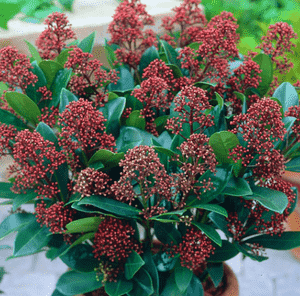
Japanese skimmia (Skimmia japonica)
Also known as: Japanese Skimmia, Skimmia
Japanese skimmia (Skimmia japonica) is an evergreen shrub known for its fragrant cream-colored flowers, vibrant red berries, and lush dark green leaves. Native to East and Southeast Asia, it excels in shady areas. For optimal growth, plant it in moist, well-drained soil enriched with organic matter. This low-maintenance shrub prefers partial to full shade and benefits from a sheltered spot to protect it from strong winds. Regular watering is essential, but avoid overly wet conditions. Mulching can help maintain soil moisture and temperature.
In This Article
Attributes of Japanese skimmia
Lifespan
Perennial
Plant Type
Shrub
Plant Height
6 m
Spread
6 m
Leaf Color
Green
Flower Size
2.5 cm
Flower Color
White Pink Yellow
Images of Japanese skimmia
Quickly Identify Japanese skimmia
1
Leaves: Elliptical, leathery, dark green with yellow-green underside, 2.5-5 inches (6.4-12.7 cm) long.
2
Flowers: Creamy-white to pink-tinged, 2-3 inches (5-7.5 cm) long, fragrant, star-shaped blooms.
3
Fruits: Small red drupes, 3/8 inches (1 cm) in diameter, clustered, ornamental, persists into winter.
4
Stem: Woody, reddish-brown, 0.5-1 inch (1.3-2.5 cm) diameter, multi-stemmed, mildly fragrant.
5
Bark: Green-tinged with reddish-purple undertones, smooth surface, modest girth, distinctive color fusion.
Scientific Classification of Japanese skimmia
Phylum
Vascular plants
Class
Dicotyledons
Order
Sapindales
Family
Rue
Genus
Skimmia
Species
Japanese skimmia
Planting and Growing of Japanese skimmia
Care Difficulty
Easy
Watering Schedule
Every 4 days
Sunlight Requirements
Partial sun
Sunshine Duration
4-6 hours
Ideal Temperature
60-70℉
Soil Type
Potting Mix, Peat Mix
Soil pH
5-7
Fertilizer Type
Balanced
Pruning Season
Spring, Summer
Pruning Area
Branches, Leaves
Pruning Frequency
2 times a year
Repotting Season
Spring
Pot Type
Plastic, Terracotta
 How to Water Japanese skimmia?
Skimmia japonica plants prefer soil that is evenly moist but not soggy. You should aim to water enough to penetrate the top 2-3 inches of soil, which generally translates to around 500 milliliters per watering session—ensuring the roots have adequate moisture without being waterlogged.
More About Watering Techniques→
What are the symptoms of an underwatered Japanese skimmia?
›
What should I do if my Japanese skimmia is not getting enough water?
›
What are the symptoms of an overwatered Japanese skimmia?
›
How to save an overwatered Japanese skimmia?
›
 What Are the Sunlight Requirements for Japanese skimmia?
Partial sun or full shade ensures Skimmia japonica grows well with four to six hours of indirect light. This balance supports vibrant foliage without causing stress.
More About Sunlight Requirements Techniques→
Best Lighting Solutions
›
Achieving Ideal Light Exposure
›
Benefits of Ideal Lighting
›
 What Is the Ideal Temperature Range for Japanese skimmia?
The ideal temperature range for growing Skimmia japonica is between 60°F and 70°F. This range ensures that the plant can perform essential physiological processes such as photosynthesis, respiration, and nutrient uptake efficiently. Within this range, the plant experiences minimal stress, leading to robust growth and vibrant foliage. Maintaining this temperature range is particularly important during the active growing seasons of spring and summer.
 What Soil is Best for Japanese skimmia?
Skimmia japonica thrives in well-drained soil, allowing for adequate aeration while preventing root rot. This characteristics help to ensure the plant remains healthy and its roots can access essential nutrients without drowning in excess water. Maintaining soil that retains moisture is vital for Skimmia japonica, as it ensures consistent access to water, reducing stress and promoting lush foliage growth. Despite its need for moisture, the soil should not be waterlogged, striking a balance is key. Skimmia japonica prefers a slightly acidic soil pH to optimize nutrient uptake. Acidic conditions enhance the availability of elements like iron and magnesium, which are crucial for vibrant leaf coloration and plant vigor.
More About Soil→
 How to Fertilize Japanese skimmia?
When fertilizing Skimmia japonica, it is crucial to use a balanced fertilizer with a ratio like 10-10-10. You should apply about 1 tablespoon of granular fertilizer per square foot. For liquid fertilizers, mix at half the recommended strength given on the product label, usually around 1 teaspoon per gallon of water.
More About Fertilizing Techniques→
 How to Prune Japanese skimmia?
Begin by removing any dead, damaged, or diseased branches using pruning shears. Cut back to healthy wood to prevent the spread of disease and promote robust growth. Gently shape the shrub by cutting the outer branches. Thinning out crowded areas will improve air circulation and light penetration, benefiting the entire plant structure. If you wish to control the size of your Skimmia japonica, trim back leading shoots by about a third. Be cautious not to over-prune, as this can hinder the plant's natural habit. After pruning, collect all the cuttings and any fallen debris around the plant base. This helps prevent pests and diseases and keeps the garden tidy and attractive.
 How to Propagate Japanese skimmia plant?
1
Choose a healthy Skimmia japonica plant free from disease or pests. A vigorous plant will increase the chances of successful propagation, providing stronger offspring.
2
Take cuttings from semi-hardwood sections of the plant. Ensure each cutting is 4-6 inches in length, and remove any leaves from the bottom half to keep energy focused on root development.
3
Insert the cut end of each cutting into a well-draining potting mix. Keep the medium moist and cover with a plastic bag to maintain humidity, placing it in indirect light.
 How to Repot Japanese skimmia plant?
1
Skimmia japonica shows signs it needs repotting when its roots start to emerge from the drainage holes, or when you notice its growth has significantly slowed down despite proper care. It's best to repot during early spring, before the active growing season, to ensure it can establish itself in the new soil.
2
Select a pot that is slightly larger than the current one but not too large, as an oversized pot can lead to overwatering issues. Ensure the pot has drainage holes to allow excess water to escape, helping to prevent root rot and promote healthy root growth.
3
Opt for acidic, well-draining soil to ensure proper aeration and moisture retention. This is crucial for Skimmia japonica, as it prefers slightly acidic conditions to thrive. A mix containing peat moss, pine bark, and perlite is ideal for maintaining the necessary balance.
Toxicity
Ingestion of berries or leaves
WARNING
The judgment on toxicity and danger is for reference only. We DO NOT GUARANTEE any accuracy of such judgment. Therefore, you SHALL NOT rely on such judgment. It is IMPORTANT TO SEEK PROFESSIONAL ADVICE in advance when necessary.



