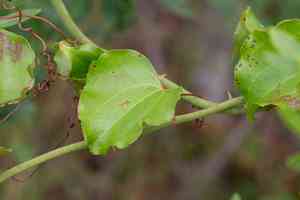
Roundleaf greenbrier (Smilax rotundifolia)
Also known as: Common catbriar
The Roundleaf greenbrier (Smilax rotundifolia) is a prominent vine found in woodlands and forests across the eastern United States and Canada. This plant produces berries that serve as a food source for a variety of animals. Birds such as wild turkeys, northern cardinals, and thrushes, as well as mammals like raccoons, opossums, and white-tailed deer, are known to consume these berries.
In This Article
Attributes of Roundleaf greenbrier
Lifespan
Perennial
Plant Type
Vine
Plant Height
61 cm to 91 cm
Spread
3.5 m to 6 m
Leaf Color
Green
Flower Size
2.5 cm
Flower Color
Yellow Green White Gold
Images of Roundleaf greenbrier
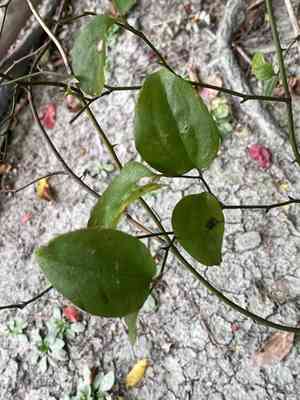
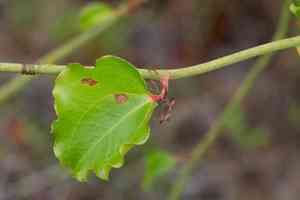
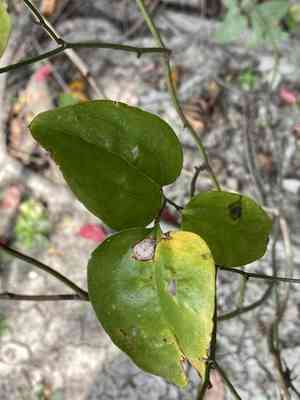
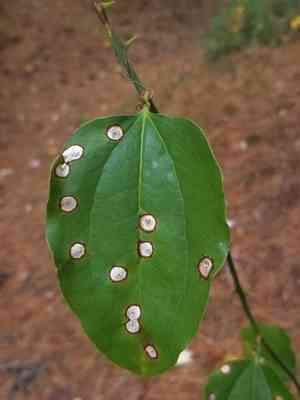
Quickly Identify Roundleaf greenbrier
1
Round-shaped leaves, 2-5 inches (5-13 cm) long, with darker upper surfaces and lighter undersides.
2
Sharp 4-angled stem, 0.2 to 0.4 inches (0.5 to 1 cm) thick, covered in scattered stiff prickles.
3
Greenish-white flowers in umbels of 3-20, 1/4 inch (6 mm) long, with 6 yellowish-green tepals.
4
Blue-black berries, 0.3 inches (7-8 mm) in diameter, each containing 1-3 seeds.
5
Slender trunk reaching up to 2 inches (5 cm) in diameter, with initially smooth bark transitioning to brown.
Scientific Classification of Roundleaf greenbrier
Phylum
Vascular plants
Class
Monocotyledons
Order
Liliales
Family
Greenbrier
Genus
Prickly-ivy
Species
Roundleaf greenbrier
Planting and Growing of Roundleaf greenbrier
Care Difficulty
Easy
Watering Schedule
Every 3 days
Sunlight Requirements
Partial sun
Sunshine Duration
4-8 hours
Ideal Temperature
60-77℉
Soil Type
Potting Mix, Peat Mix
Soil pH
6.5-7.5
Fertilizer Type
Balanced
Pruning Season
Spring, Summer
Pruning Area
Branches, Leaves
Pruning Frequency
2 times a year
Repotting Season
Spring
Pot Type
Terracotta, Plastic
 How to Water Roundleaf greenbrier?
For Smilax rotundifolia, the watering principle is to ensure the soil is consistently moist but not waterlogged. Pour approximately 500 ml of water at each watering session until the water reaches about an inch into the soil without creating puddles.
What are the symptoms of an underwatered Roundleaf greenbrier?
›
What should I do if my Roundleaf greenbrier is not getting enough water?
›
What are the symptoms of an overwatered Roundleaf greenbrier?
›
How to save an overwatered Roundleaf greenbrier?
›
 What Are the Sunlight Requirements for Roundleaf greenbrier?
Smilax rotundifolia thrives in partial sun to full sun conditions, benefiting from around 4-6 hours of sunlight daily, ideally with morning sun and afternoon shade. This ideal range allows photosynthesis and energy production, promoting healthy growth and flowering.
Best Spot for Growth
›
Morning Sun, Afternoon Shade
›
Filter Harsh Light
›
 What Is the Ideal Temperature Range for Roundleaf greenbrier?
The best temperature range for growing Smilax rotundifolia is between 60°F and 77°F. This range provides the optimal conditions for this plant to thrive, supporting both vegetative growth and reproductive processes. These temperatures help maintain the plant's cellular functions, ensuring photosynthesis, nutrient uptake, and water regulation are all at their peak efficiency. Achieving and maintaining such temperatures can result in robust and healthy plant development.
 What Soil is Best for Roundleaf greenbrier?
Smilax rotundifolia thrives in well-drained soil that prevents water logging. This type of soil minimizes root rot and encourages healthier root growth, which is essential for nutrient absorption and overall plant vigor. This plant doesn't require overly rich soil. A moderate amount of organic matter suffices, ensuring that the plant receives adequate nutrients without suffering from nutrient burn, leading to balanced growth. While the soil should be well-drained, it must also retain some moisture to provide the plant with consistent hydration. This balance supports sustained growth and prevents the plant from frequent wilting.
 How to Fertilize Roundleaf greenbrier?
For Smilax rotundifolia, an appropriate fertilizer amount is crucial to its health and growth. Typically, a diluted liquid fertilizer at a ratio of 1:4 is recommended during the growing season. For solid fertilizers, use about a handful per plant per application.
 How to Prune Roundleaf greenbrier?
Avoid pruning during extreme cold or drought conditions. Instead, opt for mild days where weather stress on plants is minimized. Pruning early in the season allows the plant to recover and flourish with the coming stronger light and growth conditions. Start at the base of the plant and work your way up, removing any dead or diseased wood first. Make clean cuts at a 45-degree angle about a quarter-inch above a bud or branch junction, ensuring new growth develops in the desired directions. Prune away excess vine length to keep the plant manageable, focusing especially on unwanted runners that may climb over other plants or structures. This keeps Smilax rotundifolia's vigorous growth under control, preventing it from overtaking garden spaces.
 How to Propagate Roundleaf greenbrier plant?
1
Start by collecting mature seeds from a healthy Smilax rotundifolia plant. Clean them thoroughly to remove any fruit pulp and allow them to dry. This step ensures that the seeds are free from pests and diseases before planting.
2
Select healthy, non-flowering stems and use pruning shears to cut 4-6 inch sections. Make sure the cuttings have at least a couple of nodes as these will be essential for root formation in cutting propagation.
3
To divide Smilax rotundifolia, dig up the plant carefully ensuring you retain as much of the root system as possible. Use a sharp knife to divide the root ball into sections each containing several stems and roots.
 How to Repot Roundleaf greenbrier plant?
1
Smilax rotundifolia signals its need for repotting when you notice roots circling the pot's edges or emerging from drainage holes. Another indication is when the plant's growth noticeably slows down, even in optimal care. Ideally, repot during its active growing season, in spring or summer, to reduce the shock.
2
Select a pot that is 1-2 inches larger in diameter than the current one with ample drainage holes. A slightly bigger pot prevents waterlogging, which can cause root rot. Terra cotta pots are preferred as they allow excess moisture to evaporate, promoting a healthier root system.
3
Opt for a well-draining potting mix containing a blend of sand, peat moss, and perlite. This mix ensures adequate aeration and drainage, mimicking Smilax rotundifolia's natural habitat. The right soil prevents water retention, reducing the risk of fungal diseases and root rots.



