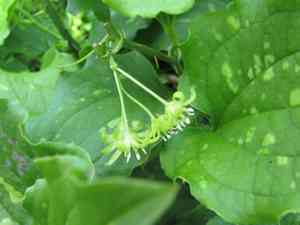
Bristly greenbrier (Smilax tamnoides)
Also known as: Catbrier, Bamboo vine
Bristly greenbrier (Smilax tamnoides) is a deciduous vine that thrives in moist woodlands, thickets, and along stream banks. It prefers environments with partial to full sunlight but can also grow in semi-shade. This plant blooms with clusters of greenish-brown flowers from spring to summer. Additionally, its roots are edible when cooked, dried, or ground into powder.
In This Article
Attributes of Bristly greenbrier
Lifespan
Perennial
Plant Type
Vine, Shrub
Plant Height
3 m to 9 m
Spread
1.8 m
Leaf Color
Green
Flower Size
6 mm
Flower Color
Yellow Green Gray White Silver Gold
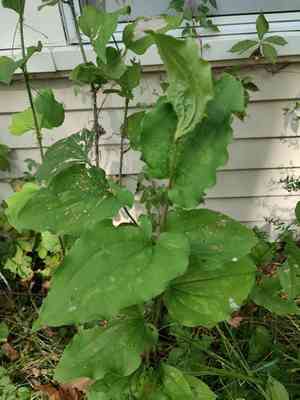
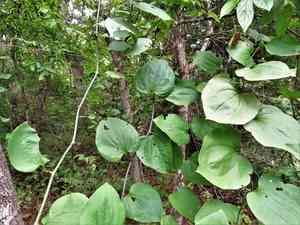
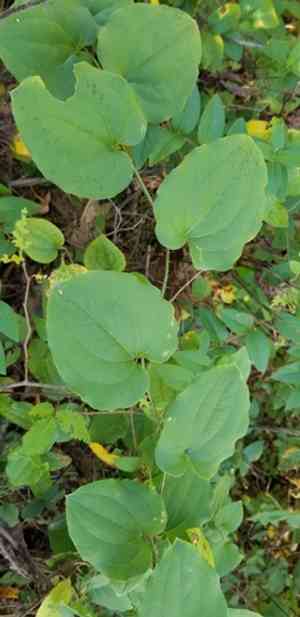
Images of Bristly greenbrier
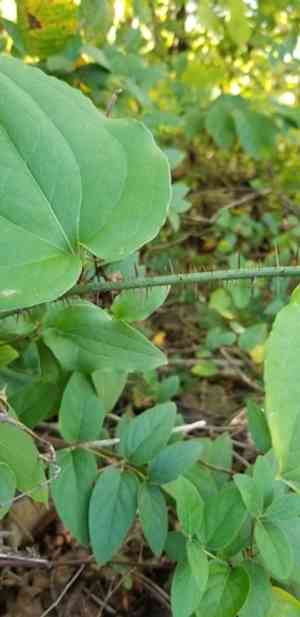
Quickly Identify Bristly greenbrier
1
Heart-shaped leaves with smooth margins, 5 inches (12.7 cm) long and 4 inches (10.2 cm) wide.
2
Spiny, bristle-covered stems aiding in climbing, with initial straight spines maturing to dark brown or black.
3
Distinct male and female flowers; male flowers with 6 yellow, white, and green tepals, female flowers with 5 yellow, grey, and green tepals.
4
Small berries, 0.5 inches (1.3 cm) diameter, deep blue to black when ripe, typically containing 1-3 seeds.
5
Propagation through rhizomes and seeds, thriving in moist woodlands and along waterways.
Scientific Classification of Bristly greenbrier
Phylum
Vascular plants
Class
Monocotyledons
Order
Liliales
Family
Greenbrier
Genus
Prickly-ivy
Species
Bristly greenbrier
Planting and Growing of Bristly greenbrier
Care Difficulty
Easy
Watering Schedule
Every 2 days
Sunlight Requirements
Partial sun
Sunshine Duration
6-10 hours
Ideal Temperature
60-75℉
Soil Type
Potting Mix, Peat Mix
Soil pH
6.5-7.5
Fertilizer Type
Balanced
Pruning Season
Spring, Summer
Pruning Area
Branches, Leaves
Pruning Frequency
2 times a year
Repotting Season
Spring
Pot Type
Ceramic, Plastic
 How to Water Bristly greenbrier?
For Smilax tamnoides, water until the soil is moist but not saturated. Aim for around 500 milliliters per watering. Adjust based on the environmental conditions, allowing the top of the soil to dry slightly between sessions. Ensure good drainage to prevent waterlogging.
What are the symptoms of an underwatered Bristly greenbrier?
›
What should I do if my Bristly greenbrier is not getting enough water?
›
What are the symptoms of an overwatered Bristly greenbrier?
›
How to save an overwatered Bristly greenbrier?
›
 What Are the Sunlight Requirements for Bristly greenbrier?
Partial sun with filtered light is ideal for Smilax tamnoides, providing the necessary energy for growth and health without the risk of sunburn, promoting lush foliage and stronger stems.
What is the best lighting for Smilax tamnoides?
›
How do I achieve this lighting condition?
›
Why is proper lighting important for Smilax tamnoides?
›
 What Is the Ideal Temperature Range for Bristly greenbrier?
Smilax tamnoides thrives in temperatures ranging from 60°F to 75°F. This range provides an environment conducive to active growth and minimizes stress factors. Maintaining consistent temperatures within this range supports robust foliage and overall plant health.
 What Soil is Best for Bristly greenbrier?
Smilax tamnoides thrives in soils that provide excellent drainage. This helps prevent waterlogging, reducing the risk of root rot, and ensures the roots have access to both water and oxygen, promoting healthy plant growth. The plant benefits from soil rich in organic matter, which enhances nutrient availability. This fosters strong and vigorous growth, leading to a more robust plant with lush foliage. A slightly acidic to neutral pH (6.5 to 7.5) is ideal. This pH range allows optimal nutrient uptake, supporting healthier plant development and vibrant leaf color.
 How to Fertilize Bristly greenbrier?
For Smilax tamnoides, the fertilizer amount should be moderate. The plant thrives with a balanced 10-10-10 fertilizer. When using liquid fertilizer, dilute it to half strength to avoid root burn. For granular fertilizers, use approximately 1 tablespoon per square foot.
 How to Prune Bristly greenbrier?
Begin by identifying and removing dead or damaged branches to promote new growth. Focus on thinning out densely tangled areas. This creates an open structure, allowing sunlight and air to reach inner sections. Trim back overgrown sections to maintain a tidy appearance. Focus on preserving the natural shape while removing any stems that extend beyond desired boundaries. This not only improves aesthetics but also encourages uniform growth. After major pruning, keep an eye on the remaining growth. Water adequately and fertilize if necessary to promote vigorous regrowth, which will fill in any gaps left by removed sections.
 How to Propagate Bristly greenbrier plant?
1
Gather seeds from ripe berries of Smilax tamnoides in the fall. Clean them to remove any pulp, and dry them before storage to prevent mold and ensure viability.
2
Select a healthy stem for taking cuttings. Make a clean cut below a node, remove the lower leaves, and treat the cut end with rooting hormone to enhance root development.
3
Dig up the mature Smilax tamnoides plant in early spring. Use a sharp knife to divide the rhizomes ensuring each piece has healthy roots and shoots for successful propagation.
 How to Repot Bristly greenbrier plant?
1
You should consider repotting Smilax tamnoides when you notice that the roots are making their way out of the drainage holes or if you see the soil compacted and losing its richness. Another clear sign is when the plant growth appears stunted, indicating its roots need more space to thrive.
2
When selecting a pot for Smilax tamnoides, ensure it's just one size larger than the current one. The pot should provide ample drainage holes to prevent waterlogging, which can lead to root rot. The benefit of a slightly bigger pot is that it offers space for root expansion without overwhelming the plant with too much soil that may retain excess moisture.
3
Opt for a loamy, well-draining soil mixture when repotting Smilax tamnoides. This type of soil maintains the perfect balance of moisture retention and drainage, ensuring the roots get adequate air circulation. The loamy texture provides essential nutrients while avoiding water retention problems that could suffocate the roots.



