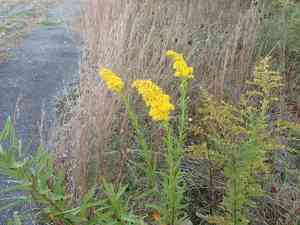
Seaside goldenrod (Solidago sempervirens)
Also known as: Northern seaside goldenrod
Seaside goldenrod (Solidago sempervirens) is a robust flowering plant found in coastal areas such as beaches, dunes, and salt marshes. It produces striking yellow flower clusters. The plant's thick, waxy leaves are a key adaptation, helping it to resist dehydration caused by salt spray in its habitat. These characteristics enable seaside goldenrod to thrive in the challenging conditions of coastal ecosystems.
In This Article
Attributes of Seaside goldenrod
Lifespan
Perennial
Plant Type
Herb
Plant Height
1.2 m to 1.8 m
Spread
30 cm to 60 cm
Leaf Color
Green
Flower Size
2.5 cm
Flower Color
Yellow Gold
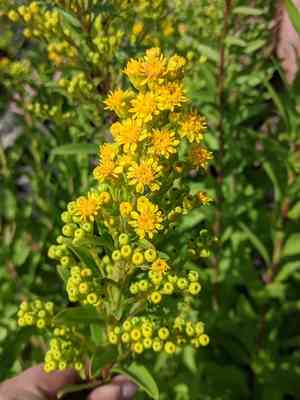
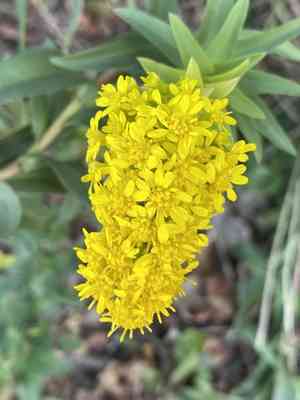
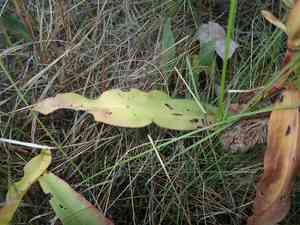
Images of Seaside goldenrod
Quickly Identify Seaside goldenrod
1
Tall stalks range from 2 to 8 feet (60 to 240 cm).
2
Dense clusters of large, bright yellow flower heads on one-sided branches.
3
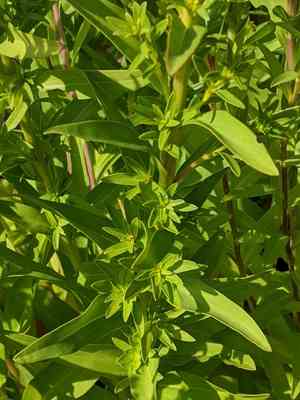
Distinctive lanceolate upper leaves measure 2 to 8 inches (5 to 20 cm).
4
Leafy, erect or arching stem can reach 8 feet (240 cm) with vibrant green color.
5
Small, dry achenes with tufts of hair for wind dispersal, light brown when mature.
Scientific Classification of Seaside goldenrod
Phylum
Vascular plants
Class
Dicotyledons
Order
Asterales
Family
Daisy
Genus
Goldenrods
Species
Seaside goldenrod
Planting and Growing of Seaside goldenrod
Care Difficulty
Easy
Watering Schedule
Every 3 days
Sunlight Requirements
Full sun
Sunshine Duration
6-10 hours
Ideal Temperature
60-75℉
Soil Type
Potting Mix, Peat Mix
Soil pH
6.5-7.5
Fertilizer Type
Balanced
Pruning Season
Spring, Summer
Pruning Area
Branches, Leaves
Pruning Frequency
2 times a year
Repotting Season
Spring
Pot Type
Plastic, Ceramic
 How to Water Seaside goldenrod?
Solidago sempervirens thrives with consistent moisture without being waterlogged. Water until the top 1 inch of soil feels moist to the touch, making sure the water drains through the bottom of the pot. This ensures the roots are adequately hydrated without drowning in excess water.
More About Watering Techniques→
What are the symptoms of an underwatered Seaside goldenrod?
›
What should I do if my Seaside goldenrod is not getting enough water?
›
What are the symptoms of an overwatered Seaside goldenrod?
›
How to save an overwatered Seaside goldenrod?
›
 What Are the Sunlight Requirements for Seaside goldenrod?
This plant thrives in full to partial sun environments, benefiting from at least 6 hours of sunlight daily. Adequate sunlight ensures a healthy growth cycle, resulting in abundant blooms and robust plant vitality.
More About Sunlight Requirements Techniques→
What type of sunlight does Solidago sempervirens prefer?
›
How can I ensure my Solidago sempervirens is getting adequate light?
›
What benefits does Ideal sunlight bring to Solidago sempervirens?
›
 What Is the Ideal Temperature Range for Seaside goldenrod?
The ideal temperature range for Solidago sempervirens is between 60°F and 75°F. This range supports optimal growth and ensures that the plant remains healthy and vibrant. Maintaining this temperature helps in promoting the best flowering results during the growing season.
 What Soil is Best for Seaside goldenrod?
Solidago sempervirens thrives in well-draining soil, preventing root rot by ensuring excess water doesn't accumulate. This characteristic is particularly beneficial in regions with heavy, unpredictable rainfall. Rich in organic matter, the soil should provide essential nutrients to support healthy growth and vibrant blooms. Nutrient-rich soils enhance plant resilience against pests and diseases. A balance in moisture retention is key, helping maintain hydration in arid conditions while preventing over-saturation. This balance supports consistent growth and blooming patterns.
More About Soil→
 How to Fertilize Seaside goldenrod?
For Solidago sempervirens, a balanced fertilizer with an N-P-K ratio like 10-10-10 is ideal. Apply liquid fertilizer diluted to half the recommended strength every two weeks during the growing season. For slow-release fertilizers, use approximately half a cup per plant annually.
 How to Prune Seaside goldenrod?
Begin with sterilized pruning shears to avoid diseases. During early spring, cut back any dead or withered stems to promote vigorous growth. For summer pruning, focus on deadheading faded flowers to encourage new blooms and extend the flowering season. Always make clean cuts just above a set of leaves or a healthy bud to support regrowth.
More About Pruning Techniques→
 How to Propagate Seaside goldenrod plant?
1
Begin with planting seeds in a seed tray filled with a sterile seed-starting mix. Ensure the seeds are lightly covered with the medium and kept in a warm, bright location.
2
In early spring or early summer, dig up an established plant. Use a sharp spade to split the root ball into smaller sections, ensuring each section has a good amount of roots.
3
Once the seedlings have developed a sturdy root system, transplant them to the garden bed, spacing them appropriately to allow for growth and air circulation.
 How to Repot Seaside goldenrod plant?
1
Solidago sempervirens should be repotted when you notice roots growing through the drainage holes or circling the top of the soil. It is also a good time to move it to a larger pot in early spring, as new growth starts, ensuring the plant has enough space to thrive throughout the growing season.
2
Select a pot that's about 2 inches larger in diameter than the current one, ensuring it has drainage holes to prevent waterlogging. A slightly larger pot encourages healthy root expansion and reduces the risk of root rot, which can occur if the roots sit in water.
3
Opt for a well-draining soil mix, ideally with some sand or perlite to improve aeration. This prevents water from stagnating around the roots, which is crucial for the health of Salt Marsh Goldenrod, especially if it's exposed to periods of high moisture.
Learn More About Seaside goldenrod Diseases
Anthracnose
Bacterial Leaf Spot
Bacterial Soft Rot
Bacterial Wilt
Chemical Injury
Crown Gall
Cyst Nematode
Damping-off
Downy Mildew
Drought Stress
Fusarium Wilt
Gray Mold
Leaf Spot
Mosaic
Nutrient Deficiency
Nutrient Toxicity
Powdery Mildew
Root Rot
Root-knot Nematode
Rusts
Sooty Mold
Spider Mites
Temperature Stress
Thrips Damage
White Mold



