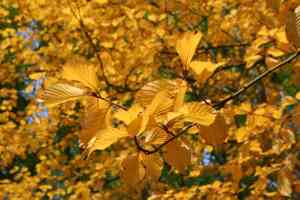
Korean mountain ash (Sorbus alnifolia)
Also known as: Hornbeam-ash, Mountain ash
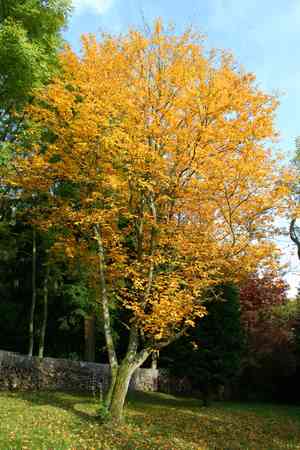
The Korean mountain ash is often cultivated as an ornamental tree in northern Europe due to its striking autumn foliage. Initially pyramid-shaped, it matures into a more rounded form. Its red to yellow berries not only add visual interest but also attract and nourish birds.
In This Article
Attributes of Korean mountain ash
Lifespan
Perennial
Plant Type
Tree
Plant Height
10 m to 20 m
Spread
6 m to 8 m
Leaf Color
Green Yellow
Flower Size
1 cm to 1.8 cm
Flower Color
White
Images of Korean mountain ash
Quickly Identify Korean mountain ash
1
Dense flattened corymbs with small white 5-petaled flowers (3 inches/7.6 cm across).
2
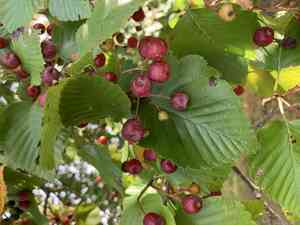
Berry-like pomes with pink to deep scarlet color gradient (5/8 inch/1.6 cm long).
3
Smooth dark green oval leaves (2-4 inches/5-10 cm) with fine-toothed margin.
4
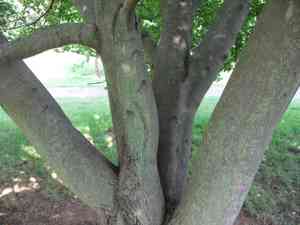
Transformative structure from pyramid to rounded tree with smooth gray bark resembling beech texture.
5
Ornamental white flowers in May, persisting pomes after foliage fall for winter interest.
Scientific Classification of Korean mountain ash
Phylum
Vascular plants
Class
Dicotyledons
Order
Rosales
Family
Rose
Genus
Sorbus
Species
Korean mountain ash
Planting and Growing of Korean mountain ash
Care Difficulty
Easy
Watering Schedule
Every 3 days
Sunlight Requirements
Partial sun
Sunshine Duration
6-10 hours
Ideal Temperature
50-68℉
Soil Type
Potting Mix, Peat Mix
Soil pH
5.5-7.5
Fertilizer Type
Balanced
Pruning Season
Spring, Summer
Pruning Area
Branches, Leaves
Pruning Frequency
2 times a year
Repotting Season
Spring
Pot Type
Plastic, Ceramic
 How to Water Korean mountain ash?
Ensure the soil is moist but not waterlogged. Sorbus alnifolia prefers a consistent level of moisture. Water until the soil feels evenly damp to about an inch below the surface. The amount of about 1000 ml per watering generally suffices, depending on your local climate and soil type.
What are the symptoms of an underwatered Korean mountain ash?
›
What should I do if my Korean mountain ash is not getting enough water?
›
What are the symptoms of an overwatered Korean mountain ash?
›
How to save an overwatered Korean mountain ash?
›
 What Are the Sunlight Requirements for Korean mountain ash?
Ideally, Sorbus alnifolia enjoys partial sun, receiving 4 to 6 hours of dappled sunlight. This balance helps maintain its vibrant foliage, encourages healthy growth, and allows it to bear fruits effectively without undue stress.
More About Sunlight Requirements Techniques→
Optimal Sunlight
›
Seasonal Adjustments
›
Leaf Health Observation
›
 What Is the Ideal Temperature Range for Korean mountain ash?
For Sorbus alnifolia, the ideal temperature range is between 50°F and 68°F. This range supports optimal growth and development, allowing the plant to thrive and produce healthy foliage and fruits. Staying within this range aids in preventing stress due to temperature fluctuations.
 What Soil is Best for Korean mountain ash?
Sorbus alnifolia thrives in well-drained soil, which prevents root rot by allowing excess water to drain away quickly, ensuring the roots receive the necessary oxygen and promoting healthy growth. This tree prefers soil that retains some moisture without becoming waterlogged, which supports its growth by keeping the roots consistently hydrated without the risk of suffocation or fungal growth. A nutrient-rich soil supports robust growth and foliage development in Sorbus alnifolia, as it provides essential minerals and nutrients required for photosynthesis and other metabolic processes.
 How to Fertilize Korean mountain ash?
For Sorbus alnifolia, it is recommended to apply approximately 100 grams of a balanced slow-release granular fertilizer around each plant during the growing season. This amount ensures that the tree receives essential nutrients without overwhelming its root system.
 How to Prune Korean mountain ash?
Use sharp, clean pruning shears or a saw suitable for the branch size. Disinfect them before use to prevent any potential spread of disease. Prune young Sorbus alnifolia trees to develop a strong framework. Begin by establishing a central leader and evenly spaced branches for balanced growth.
More About Pruning Techniques→
 How to Propagate Korean mountain ash plant?
1
Collect mature seeds in the autumn and clean them properly. Sow the seeds in a well-draining seed mix and cover lightly. Maintain a consistent moisture level until germination occurs.
2
Select semi-hardwood cuttings in early summer. Use pruners to make 15-20cm long cuttings. Remove the lower leaves and treat the cuttings with rooting hormone before planting them in a propagation medium.
3
Grafting is usually done in spring. Choose healthy rootstock and graft scION using a cleft grafting technique. Use grafting tape to secure the graft and promote good cambial contact.
 How to Repot Korean mountain ash plant?
1
You should consider repotting Sorbus alnifolia when you notice that its roots are starting to emerge at the pot's drainage holes, or if the plant seems to be growing more slowly than usual. Another good indicator is if the soil dries out quickly after watering. These signs often suggest that the plant is outgrowing its current pot.
2
Select a pot that is 1-2 inches larger in diameter than the current one. Ensure it has good drainage holes to prevent waterlogging, which is essential for the healthy root growth of Sorbus alnifolia. A well-chosen pot enhances root expansion and ensures the plant's stability and support.
3
The ideal soil for Sorbus alnifolia is well-draining loamy soil, rich in organic matter. This type of soil provides essential nutrients and aeration, allowing the roots to breathe and reducing the risk of root rot. It supports healthy growth and maintains a balanced moisture level.



