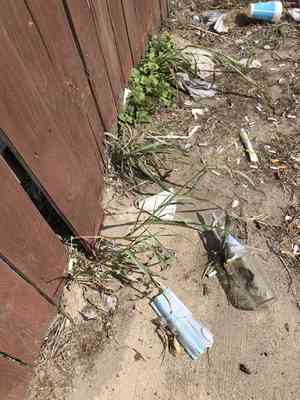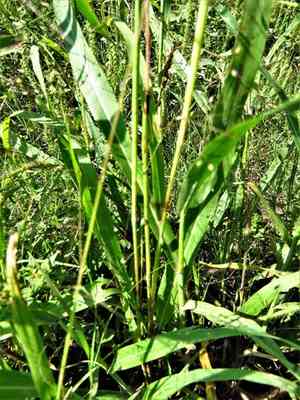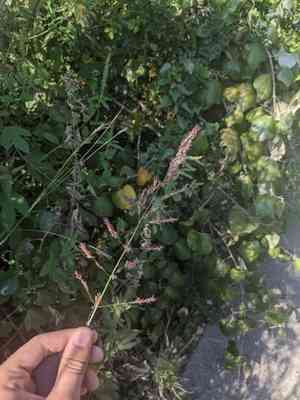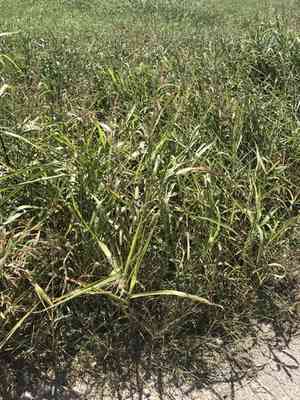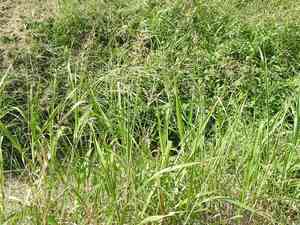
Johnson grass(Sorghum halepense)

Johnson grass (Sorghum halepense)

Also known as: Sudan grass, Evergreen millet

Johnson grass (Sorghum halepense) ranks among the world's ten worst weeds due to its aggressive growth and invasiveness. Capable of spreading quickly through both seeds and rhizomes, it outcompetes crops for essential resources like water, nutrients, and sunlight. Additionally, under stress from frost or heat, it can release hydrogen cyanide, which is toxic to livestock. Its rapid proliferation poses significant challenges for agricultural management and control. The weed is named after Colonel William Johnson, who introduced it widely in Alabama around 1840.

Attributes of Johnson grass

Lifespan
Perennial
Plant Type
Grass
Plant Height
50 cm to 1.5 m
Spread
1.2 m
Leaf Color
Green White
Flower Size
5 cm to 10 cm
Flower Color
Brown Pink Purple

PlantJoy - Identify plants with a snap

Identify and diagnose plants, get toxicity alerts, and explore safety guides for all types of fungi.

Try for Free

Images of Johnson grass

Johnson grass(Sorghum halepense)

Quickly Identify Johnson grass

1
Tall stature: Reaches 2-7 feet (0.6-2.1 meters) in height.
2
Dense bunches: Forms sturdy stems with coarse leaves.
3
Long panicle: Flowers in lanceolate or pyramidal clusters up to 18 inches long.
4
Capsule fruit: Ripens in late summer, measuring 1 inch with dry outer layer.
5
Smooth stems: Light green, terete, and glabrous, reaching 6-8 feet in height.

Scientific Classification of Johnson grass

Phylum
Vascular plants
Class
Monocotyledons
Order
Poales
Family
Grass
Genus
Sorghum
Species
Johnson grass

Planting and Growing of Johnson grass

Care Difficulty
Hard
Watering Schedule
Every 3 days
Sunlight Requirements
Full sun
Sunshine Duration
4-8 hours
Ideal Temperature
75-90℉
Soil Type
Potting Mix, Peat Mix
Soil pH
5.5-7.8
Fertilizer Type
Balanced
Pruning Season
Spring, Summer
Pruning Area
Branches, Leaves
Pruning Frequency
2 times a year
Repotting Season
Spring
Pot Type
Plastic, Ceramic

water icon How to Water Johnson grass?

Sorghum halepense requires a moderate amount of water, approximately 500 ml per watering. It is important to ensure that the water penetrates deeply into the soil, reaching the root zone but avoiding waterlogging. Water thoroughly until the soil feels evenly moist 1-2 inches below the surface. Over-saturation should be avoided as the plant thrives in a well-drained environment.
What are the symptoms of an underwatered Johnson grass?
What should I do if my Johnson grass is not getting enough water?
What are the symptoms of an overwatered Johnson grass?
How to save an overwatered Johnson grass?

sunlight icon What Are the Sunlight Requirements for Johnson grass?

Sunlight Requirements: Full sun
Duration of light: 6-8 hours daily
Sorghum halepense thrives best in full sunlight, receiving 6-8 hours of light. This encourages energy production and healthy photosynthesis, resulting in vibrant, strong plants.
What are the ideal lighting conditions for Sorghum halepense?
How can I ensure Sorghum halepense receives ideal lighting?
What are the benefits of ideal lighting for Sorghum halepense?

temperature icon What Is the Ideal Temperature Range for Johnson grass?

Ideal Temperature: 75 ~ 90℉
For optimal growth, Sorghum halepense thrives best within an ideal temperature range of 75 to 90 degrees Fahrenheit. These temperatures should be maintained consistently to allow for vigorous growth and reproduction. If conditions deviate significantly from this range, growth may be stalled, and the plant's health could suffer.

soil icon What Soil is Best for Johnson grass?

Soil type: Sandy soil, Loam, Clay soil
Soil PH: 5.5 ~ 7.8
Sorghum halepense thrives in well-drained soils that prevent waterlogging, which can lead to root rot. A well-drained soil structure enhances root aeration and nutrient absorption, ensuring robust plant growth. This plant prefers soils with moderate fertility levels. An optimal nutrient supply supports its rapid growth and high biomass production. Overly rich soils may encourage excessive vegetative growth at the expense of seed production. While Sorghum halepense can tolerate drought, consistent soil moisture is beneficial for optimal growth. Sufficient moisture aids in sustaining growth during dry periods, improving overall plant resilience.

fertilize icon How to Fertilize Johnson grass?

Fertilizer type: Balanced
For Sorghum halepense, it's essential to balance fertilization to ensure robust growth. Use approximately 1.5 to 2 pounds of balanced all-purpose fertilizer per 100 square feet. This provides the essential nitrogen, phosphorus, and potassium needed for healthy development.

prune icon How to Prune Johnson grass?

Pruning Time: Spring, Summer
Begin by identifying any stalks that appear overgrown or are blocking sunlight from reaching lower areas. These are often the ones that need cutting. Ensure that their removal will not destabilize the entire plant structure. Use a pair of sharp pruning shears to make clean cuts at the base of the overgrown stalks. Avoid crushing the stalks as you cut, as this can lead to tissue damage and increase susceptibility to pests and diseases. Gather the cut stalks and dispose of them properly. This can help prevent the spread of any potential diseases or pests that might have been present. Additionally, if you're maintaining a garden, composting them could be beneficial.

propagate icon How to Propagate Johnson grass plant?

Propagate Time: Early spring, Spring, Late spring, Early summer
1
Begin by selecting well-draining soil that is rich in organic matter. Amend the soil with compost to enhance fertility and create a conducive environment for root growth.
2
Plant seeds at a depth of about 1 to 2 centimeters and cover lightly with soil. Maintain a consistent moisture level until germination occurs, typically within two weeks.
3
When using division, carefully dig up the plant to expose its root system. Separate the plant into smaller sections, each with adequate roots and shoots, and replant immediately.

repot icon How to Repot Johnson grass plant?

Repotting frequency: Every 2-3 years
1
Sorghum halepense, a vigorous grower, signals its need for repotting when roots start to escape the drainage holes or when it becomes root-bound, causing slower growth. Ideally, repotting should be done during its active growth phase in the warmer months, facilitating root establishment in the new pot.
2
Select a pot 2-3 inches wider than the current one to allow room for growth. Ensure it has ample drainage holes to prevent root rot. A wider pot stabilizes the tall, robust growth of Sorghum halepense, preventing tipping over during strong gusts of wind.
3
Opt for well-draining loamy soil which retains moisture yet drains excess water efficiently. This soil mix supports the rapid growth and extensive root system of Sorghum halepense, providing the necessary nutrients while preventing waterlogged conditions that can harm the roots.

PlantJoy - Identify plants with a snap

Find the best spots for them to optimize their health, simply using your phone.

Try for Free

Toxicity of Johnson grass

Is Johnson grass toxic to humans?

Human poisoning incidents attributed to johnson grass primarily arise from unintentional consumption when it is mistaken for edible grain sorghum. This particular plant is recognized for harboring low-level toxic substances within its leaves. No documented cases of human poisoning from johnson grass exist, rendering the symptoms a mystery. The likelihood of toxicity increases significantly under the stress of adverse conditions such as droughts, frost, trampling, hail damage, insect infestations, or wilting.

Is Johnson grass toxic to cat?

Johnson grass presents a toxicity danger to cats if consumed. Cats can become poisoned by inadvertently ingesting the harmful leaves of johnson grass. Following ingestion, they may display symptoms of physical distress and sickness. It is vital to keep johnson grass inaccessible to cats and to observe their behavior for any signs of poisoning. If ingestion of johnson grass is suspected, seeking prompt veterinary attention is crucial to ensure the cat receives the necessary treatment.

Is Johnson grass toxic to dog?

Johnson grass is a plant that presents a toxicity hazard to dogs. When dogs ingest this plant, especially its leaves, they can suffer from poisoning. This often happens inadvertently when dogs roam into regions where johnson grass is present. Following the consumption of johnson grass, dogs may show an array of symptoms that suggest poisoning. It is vital for dog owners to keep a close watch on their pets and prevent them from entering areas containing johnson grass. Should poisoning be suspected, prompt veterinary attention is crucial to secure the best possible result for the affected dog.

Identify toxic plants for your safety

Learn which plants are harmful to you and your pets, and make informed choices for a safer home!

Try for Free
WARNING
The judgment on toxicity and danger is for reference only. We DO NOT GUARANTEE any accuracy of such judgment. Therefore, you SHALL NOT rely on such judgment. It is IMPORTANT TO SEEK PROFESSIONAL ADVICE in advance when necessary.