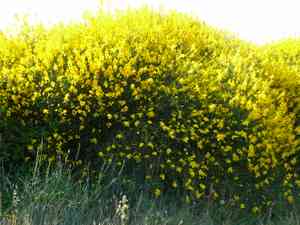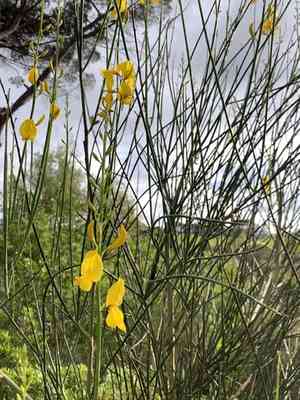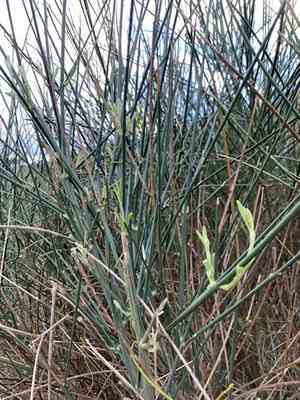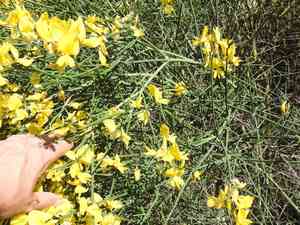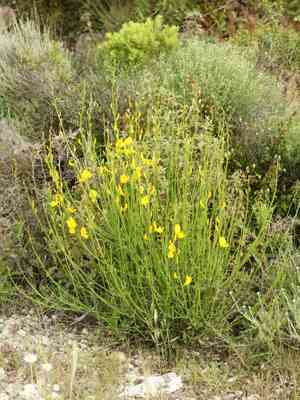
Spanish broom(Spartium junceum)

Spanish broom (Spartium junceum)

Also known as: Rush broom

Spanish broom (Spartium junceum) is a deciduous shrub native to regions around the Mediterranean, including West Asia and North Africa. It features tall, green, rush-like stems and is well-known for its vibrant, fragrant yellow flowers that bloom from late spring through summer.

**Key Characteristics:**
1. **Stems:** Slender, green, resembling rushes.
2. **Flowers:** Bright yellow, pea-like, and aromatic.
3. **Leaves:** Very small and sparse, appearing infrequently along the stems.
4. **Growth:** Quick-growing and can become invasive in certain areas.

**Applications:**
1. **Ornamental Use:** Widely planted in gardens and landscapes for its striking flowers and minimal water requirements.
2. **Erosion Control:** Effective in stabilizing soil on slopes and in degraded areas.
3. **Crafting:** The stems are traditionally used in basket weaving and broom making.
4. **Traditional Medicine:** Historically utilized for its fibrous material and medicinal properties.

Note that Spanish broom can be invasive and parts of the plant are toxic if consumed.

Attributes of Spanish broom

Lifespan
Perennial
Plant Type
Shrub
Plant Height
2 m to 5 m
Spread
1.8 m to 3 m
Leaf Color
Green
Flower Size
2.5 cm
Flower Color
Yellow Gold

PlantJoy - Identify plants with a snap

Identify and diagnose plants, get toxicity alerts, and explore safety guides for all types of fungi.

Try for Free

Images of Spanish broom

Spanish broom(Spartium junceum)

Quickly Identify Spanish broom

1
Bright yellow pea-like flowers up to 1 inch (2.5 cm) long in loose racemes.
2
Flat seed pods reaching 3 inches (7.6 cm) with a rough brownish exterior.
3
Sparse bright green leaves, 1 inch (2.5 cm) long, simple and not deeply veined.
4
Rush-like green stems turning woody, branching at the top, diameter around 0.2 inches (5 mm).
5
Multi-stemmed plant, up to 10 feet (3 meters) in height, broom-like appearance.

Scientific Classification of Spanish broom

Phylum
Vascular plants
Class
Dicotyledons
Order
Legumes, milkworts and allies
Family
Legume
Genus
Broom
Species
Spanish broom

Planting and Growing of Spanish broom

Care Difficulty
Easy
Watering Schedule
Every 2 days
Sunlight Requirements
Full sun
Sunshine Duration
6-10 hours
Ideal Temperature
65-75℉
Soil Type
Potting Mix, Peat Mix
Soil pH
6.5-7.5
Fertilizer Type
Balanced
Pruning Season
Spring, Summer
Pruning Area
Branches, Leaves
Pruning Frequency
2 times a year
Repotting Season
Spring
Pot Type
Terracotta, Plastic

water icon How to Water Spanish broom?

Spartium junceum should be watered thoroughly but infrequently. Ideal watering means drenching the soil until water flows out of the drainage holes to ensure deep hydration. However, the soil should be allowed to dry out completely between waterings to prevent root rot.
What are the symptoms of an underwatered Spanish broom?
What should I do if my Spanish broom is not getting enough water?
What are the symptoms of an overwatered Spanish broom?
How to save an overwatered Spanish broom?
More About Watering Techniques

sunlight icon What Are the Sunlight Requirements for Spanish broom?

Sunlight Requirements: Full sun
Duration of light: 6-8 hours of sunlight
Spartium junceum prefers full sun exposure, typically needing around 6-8 hours of direct sunlight daily. Optimal light ensures lush, hardy growth and ample flowering, promoting a flourishing plant.
What is the ideal lighting condition?
How to achieve optimal lighting conditions?
Benefits of obtaining ideal lighting conditions?
More About Sunlight Requirements Techniques

temperature icon What Is the Ideal Temperature Range for Spanish broom?

Ideal Temperature: 65 ~ 75℉
The ideal growing temperature for Spartium junceum, commonly known as Spanish broom, is between 65 to 75°F. Maintaining this temperature range ensures the plant thrives, manifests vibrant foliage, and produces plentiful blooms. At these temperatures, the metabolic activities necessary for optimal growth are at their peak efficiency, facilitating healthy development.

soil icon What Soil is Best for Spanish broom?

Soil type: Sandy soil, Loam, Calcareous soil
Soil PH: 6.5 ~ 7.5
Spartium junceum thrives in well-draining soil, which prevents waterlogging and root rot. The sandy and loamy soil types are particularly beneficial as they facilitate quick drainage and provide aeration to the roots, ensuring healthy growth. While Spartium junceum is quite resilient, adding organic matter to the soil can enhance its growth. This nutrient-rich substrate provides essential minerals that support flowering and overall vitality, making the plant more vibrant and lush. The plant prefers soils that offer moderate moisture retention. Loam is ideal as it maintains balanced moisture levels without getting too dry or too soggy, ensuring a steady supply of water to the plant while preventing overhydration issues. More About Soil

fertilize icon How to Fertilize Spanish broom?

Fertilizer type: Balanced
Spartium junceum, commonly known as Spanish broom, thrives with moderate fertilization. It requires a balanced approach: when using liquid fertilizer, dilute it to half the recommended strength to avoid over-fertilization. For granular fertilizers, apply approximately 50 grams per square meter of soil—a gentle touch is vital for maintaining soil health while providing adequate nutrients. More About Fertilizing Techniques

prune icon How to Prune Spanish broom?

Pruning Time: Spring, Summer
Start by removing any dead, damaged, or diseased wood as soon as it is noticeable. Next, trim back the stems to maintain shape and encourage a bushy growth. It’s important to cut above a node at an angle to promote new shoots. The process should be gentle to avoid stressing the plant. After the plant has finished blooming, prune back flowered stems to control its growth and maintain a tidy appearance. This also helps prepare the plant for the next blooming cycle. Make sure to cut back to a strong outward-facing bud to encourage healthy regrowth. More About Pruning Techniques

propagate icon How to Propagate Spanish broom plant?

Propagate Time: Spring, Early summer
1
Collect mature seeds from Spartium junceum pods and soak them in warm water overnight to facilitate germination.
2
Fill a seed tray with a well-draining seed mix and place the soaked seeds, covering them lightly with soil. Ensure the tray is kept moist and in a bright location.
3
Select healthy, non-flowering shoots and cut 10-15 cm long sections. Remove leaves from the lower half and dip the cut end in rooting hormone for better results.
More About Propagating Techniques

repot icon How to Repot Spanish broom plant?

Repotting frequency: Every 2-3 years
1
Spartium junceum should be repotted when roots grow out of the drainage holes, indicating the pot is too small, or if the soil is compacted and no longer drains well. Repotting is best done in spring or autumn to avoid the extreme temperatures of summer and winter.
2
Select a pot that is one size larger than the current one to allow root expansion. It should have ample drainage holes to prevent water stagnation, reducing the risk of root rot, which is crucial for the healthy growth of Spartium junceum.
3
Use well-draining sandy soil to mimic the plant's natural habitat. This type of soil prevents water retention around the roots, thus avoiding root rot and promoting optimal aeration, which is essential for the vigorous growth of Spartium junceum.

PlantJoy - Identify plants with a snap

Find the best spots for them to optimize their health, simply using your phone.

Try for Free

Toxicity of Spanish broom

Is Spanish broom toxic to humans?

Spanish broom is highly toxic when consumed, primarily because it contains the harmful substances cytisine and sparteine. These hazardous compounds can adversely affect the respiratory system and heart rate. While all parts of the plant contain these toxins, the seeds and flowers are considered the most dangerous. Research indicates that ingestion of the seeds may result in fatal outcomes for children. Poisoning from Spanish broom can lead to gastrointestinal issues such as vomiting, diarrhea, and abdominal discomfort, with neurological symptoms also becoming evident as the amount consumed increases.

Is Spanish broom toxic to cat?

Spanish broom has a moderate level of toxicity for cats. Typically, exposure happens when cats consume different parts of the plant, as every part of the spanish broom is toxic. When a cat ingests spanish broom, it may show signs of physical discomfort, illness, or pain. Given the moderate toxicity of this plant, such symptoms necessitate prompt professional evaluation and treatment from a veterinary clinic to safeguard the cat's health and well-being.

Is Spanish broom toxic to dog?

Spanish broom presents a moderate toxicity hazard to dogs. Any part of the plant is toxic, meaning canines risk poisoning if they ingest it. If a dog consumes portions of spanish broom, it may show symptoms like gastrointestinal distress, vomiting, and diarrhea. In more severe instances, poisoning can result in significant health complications. Therefore, it is essential for dog owners to keep their pets away from Spanish broom. If a dog does consume this plant, prompt veterinary attention is vital for effective management of the poisoning.

Identify toxic plants for your safety

Learn which plants are harmful to you and your pets, and make informed choices for a safer home!

Try for Free
WARNING
The judgment on toxicity and danger is for reference only. We DO NOT GUARANTEE any accuracy of such judgment. Therefore, you SHALL NOT rely on such judgment. It is IMPORTANT TO SEEK PROFESSIONAL ADVICE in advance when necessary.
More About Toxic Techniques