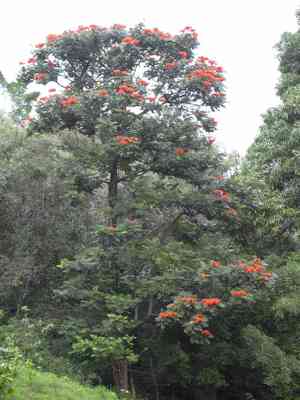
African tulip tree(Spathodea campanulata)

African tulip tree (Spathodea campanulata)

Also known as: Fountain tree, Flame of the forest, Nile flame, Tulip tree, Flame Tree of Thika

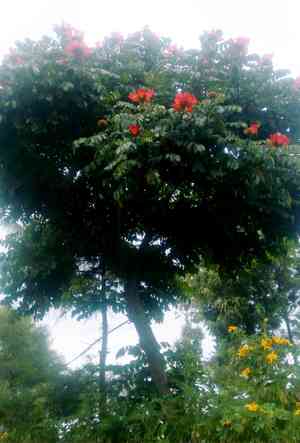
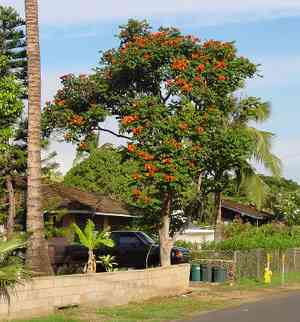
The African tulip tree (*Spathodea campanulata*) is an evergreen species that flourishes in full sun and prefers well-drained soils, although it can manage in various soil conditions. It is a fast-growing tree, often reaching heights between 7 and 25 meters (23-82 feet). While it can tolerate some shade, it thrives best with ample sunlight. Known for its prolific seed production, the tree's seeds can germinate even in low-light conditions, which contributes to its invasive potential in some regions. The tree's vibrant orange-red, tulip-shaped flowers and lush, dark green leaves make it a popular choice for ornamental planting. Regular watering is advantageous, particularly during dry spells, but the tree can endure brief droughts once established.

Attributes of African tulip tree

Lifespan
Perennial
Plant Type
Tree
Plant Height
7 m to 25 m
Spread
11 m to 15 m
Leaf Color
Green Blue
Flower Size
5 cm to 6 cm
Flower Color
Red Orange

PlantJoy - Identify plants with a snap

Identify and diagnose plants, get toxicity alerts, and explore safety guides for all types of fungi.

Try for Free

Images of African tulip tree

African tulip tree(Spathodea campanulata)

Quickly Identify African tulip tree

1
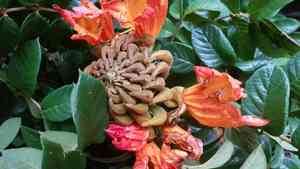
Pinnately compound leaves with bronze hue maturing to dark green.
2
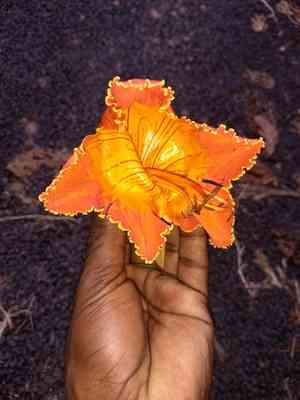
Clusters of tulip-shaped orange-red flowers, 3 inches (7.5 cm) wide by 5 inches (13 cm) deep.

Scientific Classification of African tulip tree

Phylum
Vascular plants
Class
Dicotyledons
Order
Mints plantains olives and allies
Family
Bignonia
Genus
Spathodea
Species
African tulip tree

Planting and Growing of African tulip tree

Care Difficulty
Easy
Watering Schedule
Every 4 days
Sunlight Requirements
Full sun
Sunshine Duration
4-8 hours
Ideal Temperature
75-85℉
Soil Type
Potting Mix, Peat Mix
Soil pH
6.5-7.5
Fertilizer Type
Balanced
Pruning Season
Spring, Summer
Pruning Area
Branches, Leaves
Pruning Frequency
2 times a year
Repotting Season
Spring
Pot Type
Plastic, Ceramic

water icon How to Water African tulip tree?

Spathodea campanulata, commonly known as the African Tulip Tree, requires watering where the soil is kept consistently moist but not waterlogged. Watering should be thorough, allowing water to penetrate deep into the root zone. The goal is to ensure that the soil is moist about 3 inches below the surface. Excessive water must drain away completely to prevent root rot.
What are the symptoms of an underwatered African tulip tree?
What should I do if my African tulip tree is not getting enough water?
What are the symptoms of an overwatered African tulip tree?
How to save an overwatered African tulip tree?
More About Watering Techniques

sunlight icon What Are the Sunlight Requirements for African tulip tree?

Sunlight Requirements: Full sun, Partial sun
Duration of light: 6-8 hours of sunlight
Spathodea campanulata thrives best in full sun to partial sunlight conditions, with at least 6-8 hours. Ideal light exposure promotes vibrant flowering and robust growth, optimizing both leaf and flower development.
What are the ideal light conditions for Spathodea campanulata?
How can I achieve ideal lighting conditions for Spathodea campanulata?
What are the benefits if Spathodea campanulata gets ideal lighting?
More About Sunlight Requirements Techniques

temperature icon What Is the Ideal Temperature Range for African tulip tree?

Ideal Temperature: 75 ~ 85℉
The African Tulip Tree thrives best in warm environments where temperatures are consistently between 75°F and 85°F. This range supports optimal growth, flowering, and overall health of the plant. The tree's natural habitat mirrors these conditions, ensuring robust development and vibrant blooms.

soil icon What Soil is Best for African tulip tree?

Soil type: Loam, Sandy loam
Soil PH: 6.5 ~ 7.5
Spathodea campanulata thrives in well-draining loam and sandy loam soils, allowing excess water to flow away. This prevents root rot and helps the plant uptake essential nutrients effectively. The plant prospers in nutrient-rich soils that provide an ample supply of organic matter. This abundance aids vigorous growth, lush foliage, and vibrant flowering. Maintaining a soil pH between 6.5 and 7.5 is crucial for nutrient availability. This pH range ensures optimal absorption, notably of nitrogen, phosphorus, and potassium, critical for healthy development. More About Soil

fertilize icon How to Fertilize African tulip tree?

Fertilizer type: Balanced
For Spathodea campanulata, the amount of fertilizer should be moderate. Recommended liquid fertilizer: 1 tablespoon per gallon of water. Apply enough to moisten the soil without leaving excess on the surface. More About Fertilizing Techniques

prune icon How to Prune African tulip tree?

Pruning Time: Spring, Autumn
Begin by assessing the overall shape and size of your Spathodea campanulata. Identify any branches that disrupt its natural form or are growing disproportionately. This assessment is crucial for ensuring the tree maintains not just an aesthetic appeal, but also a balance that will support its health and growth. Carefully inspect the tree and remove any dead, diseased, or damaged branches. Use clean, sharp tools to make clean cuts, which will minimize stress on the tree and reduce the risk of infection. Thinning out crowded areas allows light and air to penetrate through the canopy. Identify branches that are competing for space and selectively remove some of these to improve overall air circulation and sunlight exposure. Shape the tree by trimming back overgrown branches. Aim to maintain a balanced canopy and ensure that the tree stays manageable in size. Avoid excessive cutting; instead, focus on gradual shaping over multiple pruning sessions. More About Pruning Techniques

propagate icon How to Propagate African tulip tree plant?

Propagate Time: Early spring, Late spring, Early summer
1
Gather mature seeds from the pods of an existing Spathodea campanulata tree. Make sure that the pods have dried and browned naturally, which usually indicates readiness for collection.
2
Use a well-draining soil mixture to fill seed trays. A mixture of sand, peat, and perlite is ideal due to its excellent drainage capabilities, which helps prevent root rot in young seedlings.
3
Select semi-hardwood cuttings from the plant, remove any leaves from the lower half, and dip the cut ends in rooting hormone before planting them in the soil. This step supports quicker root growth.
More About Propagating Techniques

repot icon How to Repot African tulip tree plant?

Repotting frequency: Every 2 to 3 years
1
Spathodea campanulata should be repotted when its roots begin to outgrow the current pot, or you notice water sitting on the surface too long, a sign of compacted soil. Also, if growth appears stunted, it could be time to consider repotting.
2
Select a pot that is 1-2 inches larger in diameter than the current one to allow root growth. Choose a pot with drainage holes to prevent soggy soil. Using a terracotta pot can help wick moisture away, reducing the risk of root rot.
3
Use a well-draining potting mix to prevent waterlogging, often fatal for the roots. Incorporating perlite or sand can enhance drainage. A well-aerated soil promotes healthier root development and more robust growth.

PlantJoy - Identify plants with a snap

Find the best spots for them to optimize their health, simply using your phone.

Try for Free