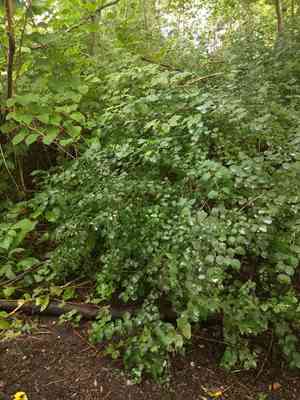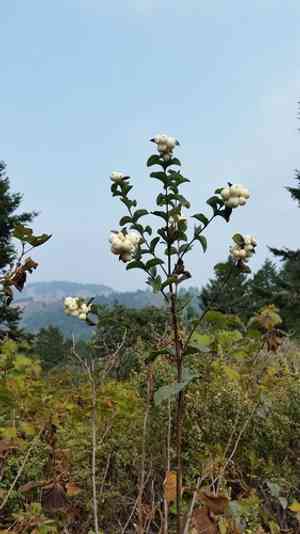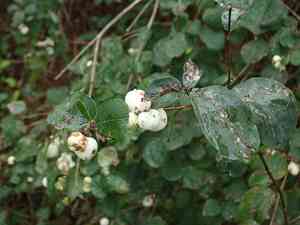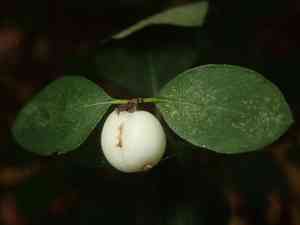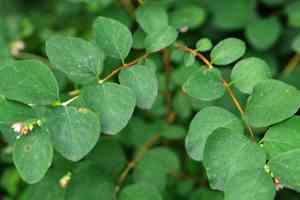
Common snowberry(Symphoricarpos albus)

Common snowberry (Symphoricarpos albus)

Also known as: Snowberry bush

Red Osier Dogwood (Cornus sericea) is a deciduous shrub known for its vibrant red stems. It flourishes in floodplains and woodlands across Canada and the United States. This shrub plays a crucial role in preventing soil erosion and supports local ecosystems by providing food for wildlife such as deer, bears, and longhorn sheep. Additionally, Red Osier Dogwood is often used in landscaping for its aesthetic appeal.

Attributes of Common snowberry

Lifespan
Perennial
Plant Type
Shrub
Plant Height
1 m to 2 m
Spread
90 cm to 1.8 m
Leaf Color
Green Blue
Flower Size
6 mm
Flower Color
Pink White

PlantJoy - Identify plants with a snap

Identify and diagnose plants, get toxicity alerts, and explore safety guides for all types of fungi.

Try for Free

Images of Common snowberry

Common snowberry(Symphoricarpos albus)

Quickly Identify Common snowberry

1
Snow-white berries, 0.5 inches (1.3 cm) diameter.
2
Oppositely arranged oval leaves, yellow-green in fall.
3
Pinkish-white tubular flowers in clustered leaf axils.
4
Distinctive white berries with green to white color transition.
5
Erect stems, hairy texture, up to 1/2 inch (1.3 cm) diameter.

Scientific Classification of Common snowberry

Phylum
Vascular plants
Class
Dicotyledons
Order
Dipsacales
Family
Honeysuckle
Genus
Snowberry
Species
Common snowberry

Planting and Growing of Common snowberry

Care Difficulty
Easy
Watering Schedule
Every 3 days
Sunlight Requirements
Partial sun
Sunshine Duration
4-8 hours
Ideal Temperature
60-75℉
Soil Type
Potting Mix, Peat Mix
Soil pH
6.5-7.5
Fertilizer Type
Balanced
Pruning Season
Spring, Summer
Pruning Area
Branches, Leaves
Pruning Frequency
2 times a year
Repotting Season
Spring
Pot Type
Terracotta, Plastic

water icon How to Water Common snowberry?

For Symphoricarpos albus, it is crucial to provide enough water to moisten the root zone. Water thoroughly until you see excess water draining from the bottom of the pot, which typically means about 500 ml for a medium-sized plant. This ensures that the entire root ball is evenly saturated and promotes healthy growth.
What are the symptoms of an underwatered Common snowberry?
What should I do if my Common snowberry is not getting enough water?
What are the symptoms of an overwatered Common snowberry?
How to save an overwatered Common snowberry?
More About Watering Techniques

sunlight icon What Are the Sunlight Requirements for Common snowberry?

Sunlight Requirements: Partial sun, Full shade
Duration of light: 4 to 6 hours
Partial sun to full shade is ideal for Symphoricarpos albus. This range supports optimal growth, leading to healthier foliage and more prolific berry production.
How much sunlight does it prefer?
What is the solution for obtaining ideal light?
What are the benefits of ideal lighting?
More About Sunlight Requirements Techniques

temperature icon What Is the Ideal Temperature Range for Common snowberry?

Ideal Temperature: 60 ~ 75℉
What are the ideal temperature conditions for Symphoricarpos albus? When cultivating Symphoricarpos albus, keeping the plant in a temperature range of 60°F to 75°F is ideal. This range supports the metabolic activities of the plant while promoting optimal growth and vibrant foliage. Outside of this range, the plant may not perform at its best, potentially showing signs of stress or weak growth.

soil icon What Soil is Best for Common snowberry?

Soil type: Loam, Sandy loam
Soil PH: 6.5 ~ 7.5
Symphoricarpos albus thrives in well-drained soils which prevent root rot and allow for healthy growth. Ensuring the soil is well-draining can help maintain the plant's longevity and vibrancy. This plant does not require highly fertile soil, making it adaptable for most garden settings. However, providing moderate fertility supports more bountiful flowering. While the soil should drain well, it should also retain enough moisture to prevent the bush from drying out too quickly, especially during hotter months. More About Soil

fertilize icon How to Fertilize Common snowberry?

Fertilizer type: Balanced
For Symphoricarpos albus, it's important to provide moderate amounts of fertilizer. During the growing season, apply about 1/2 to 1 cup of balanced granular fertilizer around the base of the plant. Too little can slow down the growth, while too much could harm the plant. More About Fertilizing Techniques

prune icon How to Prune Common snowberry?

Pruning Time: Spring, Summer, Autumn, Winter
Begin by removing dead, damaged, or diseased branches to help the plant conserve energy. Next, trim back straggly growth to maintain shape. For vigorous growth, cut back the oldest wood to the base to encourage new shoots. Always prune above a healthy bud to guide new growth. Keep the interior of the bush less dense by selectively thinning out branches. This improves air circulation, reduces fungal diseases, and allows light to penetrate, promoting even growth throughout the plant. More About Pruning Techniques

propagate icon How to Propagate Common snowberry plant?

Propagate Time: Spring,Late winter,Early spring
1
Select a healthy branch and make a cutting of 4-6 inches in length, ensuring to make a clean cut just below a node. Remove the lower leaves to prevent rotting and to expose nodes for rooting.
2
Dip the cut end of the cutting in rooting hormone to enhance root development. This hormone encourages quicker and more robust rooting, significantly increasing the chances of successful propagation.
3
Insert the prepared cutting into the potting medium, ensuring it is firm enough to stand upright. Water the cutting gently to settle the soil around it, but avoid waterlogging to prevent root rot.
More About Propagating Techniques

repot icon How to Repot Common snowberry plant?

Repotting frequency: Every 2-3 years
1
Repot Symphoricarpos albus when you notice the roots circling the bottom of the pot or emerging from drainage holes. Additionally, slow growth and difficulty in water absorption indicate it’s time for a change.
2
Select a pot that's 1-2 inches wider in diameter than the previous one. Opt for containers with sufficient drainage holes to prevent waterlogging, ensuring healthy root development and reducing root rot risks.
3
Choose a well-draining potting mix rich in organic matter. This soil ensures adequate aeration and holds necessary moisture, providing essential nutrients while preventing water-related stress.

PlantJoy - Identify plants with a snap

Find the best spots for them to optimize their health, simply using your phone.

Try for Free

Toxicity of Common snowberry

Is Common snowberry toxic to humans?

The berries of the common snowberry are regarded as mildly toxic due to the presence of saponins in their chemical structure. Consumption of these berries can lead to symptoms such as diarrhea and vomiting. It might be possible to accidentally consume the raw fruit, as various parts of the plant have been utilized in traditional medicine to address a range of health conditions, including the common cold and tuberculosis.

Is Common snowberry toxic to cat?

Common snowberry possesses a slight toxic effect on cats. Should a cat consume the leaves or berries of common snowberry, especially in considerable quantities, it could suffer from physical discomfort or exhibit signs of illness. Pet owners ought to observe their feline companions for any unusual behaviors or symptoms that suggest ingestion. It is crucial to understand that despite the mild toxicity, consuming large amounts could lead to health risks. Consequently, cat owners are strongly encouraged to vigilantly supervise their pets in proximity to this plant and to seek veterinary assistance immediately if poisoning is suspected.

Is Common snowberry toxic to dog?

Common snowberry presents a mild toxicity hazard to dogs. Although this plant is not extremely toxic, consuming it in significant amounts can result in poisoning. Dogs might be inclined to munch on the fruits and leaves of common snowberry, which are the harmful components of the plant. If a dog ingests these parts, it may show signs such as gastrointestinal distress, vomiting, or diarrhea. Therefore, it's important for dog owners to keep an eye on their pets and discourage them from eating large quantities of common snowberry. If poisoning is suspected, seeking immediate veterinary attention is vital to safeguard the health and well-being of the affected dog.

Identify toxic plants for your safety

Learn which plants are harmful to you and your pets, and make informed choices for a safer home!

Try for Free
WARNING
The judgment on toxicity and danger is for reference only. We DO NOT GUARANTEE any accuracy of such judgment. Therefore, you SHALL NOT rely on such judgment. It is IMPORTANT TO SEEK PROFESSIONAL ADVICE in advance when necessary.
More About Toxic Techniques