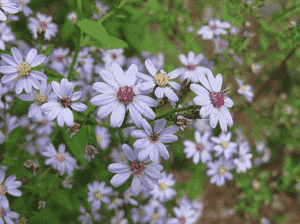
Common blue wood-aster (Symphyotrichum cordifolium)
Also known as: Beeweed
Common blue wood-aster (Symphyotrichum cordifolium) is a herbaceous (non-woody stems) flowering perennial that grows up to 91 cm tall. Its flowers are violet, blue, purple, lavender, and sometimes white with yellow centers. Common blue wood-aster is native to central and eastern North America. This plant is also called the "Heart Leaf Aster" and the "Broad-leaf Aster."
In This Article
Attributes of Common blue wood-aster
Lifespan
Perennial
Plant Type
Herb
Plant Height
30 cm to 1.2 m
Spread
45 cm to 60 cm
Leaf Color
Green
Flower Size
2.5 cm
Flower Color
Blue White Yellow Purple Red Lavender
Images of Common blue wood-aster
Quickly Identify Common blue wood-aster
1
Heart-shaped, serrated leaves with ovate upper leaves and deeply notched lower leaves.
2
Small, pale blue to violet flowers in broad panicles with daisy-like blossoms.
3
Yellow disk flowers turning red, narrow smooth petals with mild fragrance.
4
Achenes with fine bristles, light brown to tan color, clustered and 2 mm long.
5
Distinct vein pattern on smooth leaves, 2-5 inches (5-13 cm) long, enhancing appearance.
Scientific Classification of Common blue wood-aster
Phylum
Vascular plants
Class
Dicotyledons
Order
Asterales
Family
Daisy
Genus
Asters
Species
Common blue wood-aster
Planting and Growing of Common blue wood-aster
Care Difficulty
Easy
Watering Schedule
Every 2 days
Sunlight Requirements
Partial sun
Sunshine Duration
6-10 hours
Ideal Temperature
60-75℉
Soil Type
Potting Mix, Peat Mix
Soil pH
6.5-7.5
Fertilizer Type
Balanced
Pruning Season
Spring, Summer
Pruning Area
Branches, Leaves
Pruning Frequency
2 times a year
Repotting Season
Spring
Pot Type
Plastic, Ceramic
 How to Water Common blue wood-aster?
Symphyotrichum cordifolium, commonly known as Blue Wood Aster, prefers a moderate watering regime. Each watering session should supply approximately 500 ml of water, ensuring the soil remains consistently moist but not waterlogged. It's crucial to check the soil moisture by inserting a finger into the soil up to the second knuckle. If the top inch feels dry, it’s time to water.
What are the symptoms of an underwatered Common blue wood-aster?
›
What should I do if my Common blue wood-aster is not getting enough water?
›
What are the symptoms of an overwatered Common blue wood-aster?
›
How to save an overwatered Common blue wood-aster?
›
 What Are the Sunlight Requirements for Common blue wood-aster?
Symphyotrichum cordifolium prefers partial sun to full sun conditions. Ideal light exposure results in more abundant blooms, robust growth, and enhanced foliage color and vitality.
What is the best type of sunlight for Symphyotrichum cordifolium?
›
How can I ensure my plant gets the ideal amount of light?
›
What are the benefits of receiving ideal sunlight for this plant?
›
 What Is the Ideal Temperature Range for Common blue wood-aster?
For the optimal growth of Symphyotrichum cordifolium, maintaining an ideal temperature range of 60 to 75°F is crucial. This temperature range ensures a conducive environment for photosynthesis, where the plant can grow healthily without experiencing stress that may hinder its development.
 What Soil is Best for Common blue wood-aster?
Symphyotrichum cordifolium thrives best when planted in well-drained soil. This allows for optimal root growth and prevents waterlogging, which can lead to root rot and ultimately, plant failure. Ensuring the soil drains well will keep your plant healthy and vigorous. While preferring well-drained soil, Symphyotrichum cordifolium also benefits from soil that retains some moisture. This balance helps maintain steady hydration without drowning the roots, promoting lush growth and vibrant blooms. The presence of rich organic content in the soil improves its structure and fertility. For Symphyotrichum cordifolium, organic matter offers essential nutrients and a thriving environment for beneficial microorganisms, enhancing plant health and flowering.
 How to Fertilize Common blue wood-aster?
For Symphyotrichum cordifolium, use a balanced 10-10-10 liquid fertilizer diluted to half strength. Apply about 1 cup per plant for liquid fertilizers. For slow-release granular fertilizers, use about 1 tablespoon per plant, ensuring it's evenly distributed around the base of the plant.
 How to Prune Common blue wood-aster?
Start by cutting back any dead or diseased stems. Removing these parts allows the plant to focus energy on new, healthy growth and prevents disease spread. After the main blooming phase, trim back the spent flower stalks to promote a second flush of blooms, enhancing the plant's visual appeal through the growing season.
 How to Propagate Common blue wood-aster plant?
1
Harvest seeds from mature Symphyotrichum cordifolium flowers once they start to dry on the plant. Store the seeds in a cool, dry place until ready for planting.
2
Select a healthy stem free of disease or pests, and use sterilized pruning shears to cut a segment about 4-6 inches long. Remove the leaves on the lower part of the cutting before planting.
3
In early spring, carefully dig up the plant and divide it into smaller sections, each with roots and shoots. Replant the divisions in prepared soil at the same depth they were previously growing.
 How to Repot Common blue wood-aster plant?
1
Symphyotrichum cordifolium shows signs it needs repotting when roots begin to grow out of the drainage holes or rootball becomes tightly packed and water absorption slows. These indicators suggest it's outgrowing its current pot and requires a larger space to thrive, particularly in spring or autumn when it's less stressful for the plant.
2
Select a pot that is one size larger than the current one and has ample drainage holes to prevent root rot. A slightly larger pot ensures the roots have space to grow, while good drainage ensures excess water won't suffocate the roots, leading to a healthier plant.
3
Opt for a well-draining potting mix to prevent waterlogging, which can cause root rot. This type of soil mimics the plant's natural habitat, promoting healthy root growth and ensuring that nutrients are efficiently absorbed.



