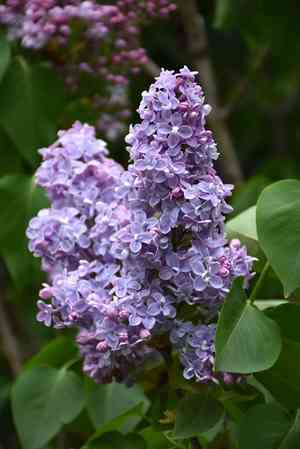
Common lilac (Syringa vulgaris)
Also known as: French lilac
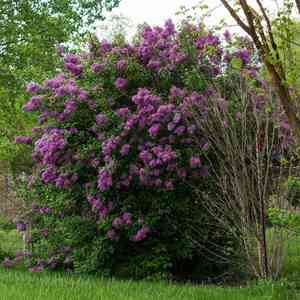
The shrub you're describing is the Common Lilac (Syringa vulgaris), native to the Balkan Peninsula. This plant thrives in rocky terrain and exhibits a suckering growth habit. Known for its fragrant spring blossoms, the lilac's flowers are often used to infuse honey, sugars, and various foods with their delightful aroma.
In This Article
Attributes of Common lilac
Lifespan
Perennial
Plant Type
Shrub, Tree
Plant Height
6 m to 7 m
Spread
1.8 m to 3.5 m
Leaf Color
Green
Flower Size
6 mm to 1 cm
Flower Color
Pink Purple White Blue Red Violet Cream Lavender
Images of Common lilac
Quickly Identify Common lilac
1
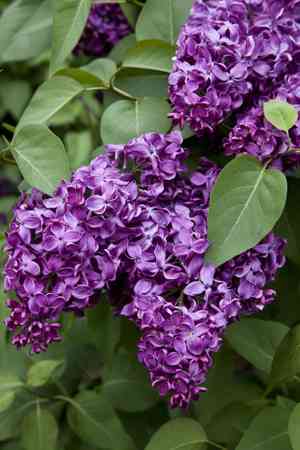
Fragrant panicles of flowers with hues from white to pink and purple, up to 7 inches (18 cm) long.
2
Heart-shaped leaves, 2-5 inches (5-12 cm) in length, dark grey-green to blue-green, with visible veins.
3
Smooth, flattened fruit capsules, around 3/4 inch (2 cm) wide, splitting into two segments with four seeds each.
4
Stout, angled stem with 4-sided shape on newer growth, lustrous brown, reaching lengths of 2 feet (60 cm) or more.
5
Light grey-brown bark with raised lenticels, leaf scars, slightly rough texture; distinctive among deciduous shrubs.
Scientific Classification of Common lilac
Phylum
Vascular plants
Class
Dicotyledons
Order
Lamiales
Family
Olive
Genus
Lilacs
Species
Common lilac
Planting and Growing of Common lilac
Care Difficulty
Easy
Watering Schedule
Every 6 days
Sunlight Requirements
Full sun
Sunshine Duration
10-12 hours
Ideal Temperature
60-75℉
Soil Type
Potting Mix, Peat Mix
Soil pH
6.5-7.5
Fertilizer Type
Balanced
Pruning Season
Spring, Summer
Pruning Area
Branches, Leaves
Pruning Frequency
2 times a year
Repotting Season
Spring
Pot Type
Plastic, Ceramic
 How to Water Common lilac?
When watering Syringa vulgaris, aim for a deep soak that moistens the root zone without waterlogging. Water about 500 ml per session, ensuring the soil is thoroughly hydrated but not soggy. It's crucial to maintain a balance where the roots get enough moisture without standing in water, promoting healthy growth.
More About Watering Techniques→
What are the symptoms of an underwatered Common lilac?
›
What should I do if my Common lilac is not getting enough water?
›
What are the symptoms of an overwatered Common lilac?
›
How to save an overwatered Common lilac?
›
 What Are the Sunlight Requirements for Common lilac?
To thrive, the lilac should receive full sun for most of the day. Ideal light promotes not only vibrant blooms and lush foliage but also increases the plant's resistance to diseases and pests.
More About Sunlight Requirements Techniques→
Is full sun the best for Syringa vulgaris?
›
How can I ensure my lilac gets enough light?
›
What are the benefits of proper light for my lilac?
›
 What Is the Ideal Temperature Range for Common lilac?
Lilacs, known scientifically as Syringa vulgaris, thrive best in a temperature range of 60 to 75 degrees Fahrenheit. At these temperatures, the plant can efficiently carry out photosynthesis, leading to optimal growth and flowering. Maintaining this range ensures a vibrant and healthy plant that is rich in blossoms during the flowering season.
 What Soil is Best for Common lilac?
The soil for Syringa vulgaris should be rich in organic matter to provide essential nutrients. A nutrient-rich substrate will enhance flowering performance, ensuring vibrant and fragrant blooms in the spring. Lilacs require well-drained soil to prevent root rot and other moisture-related issues. Proper drainage ensures that the roots get adequate air circulation, promoting healthy growth and reducing the risk of diseases. Syringa vulgaris prefers slightly alkaline soil, as it helps in nutrient absorption. A pH of 6.5 to 7.5 helps the plant take up crucial minerals, contributing to robust flowering and foliage health.
More About Soil→
 How to Fertilize Common lilac?
Syringa vulgaris, or the common lilac, thrives when provided with appropriate fertilization. Applying a balanced fertilizer with an NPK ratio comparable to 10-10-10 or 12-12-12 is optimal. For liquid fertilizer, dilute to half the recommended strength to avoid overwhelming the plant. Using about 1 liter per mature plant should suffice.
More About Fertilizing Techniques→
 How to Prune Common lilac?
Never prune more than one-third of the plant in a single season. Heavy pruning might stress the plant and lead to reduced blooming next year. Instead, aim for gradual shaping over several years for optimal plant health. Lilacs tend to develop suckers at the base of the plant. These should be removed regularly as they can sap energy from the main plant and crowd the base, leading to reduced airflow and potential disease.
More About Pruning Techniques→
 How to Propagate Common lilac plant?
1
Collect seeds in late summer or early autumn. Clean and dry them thoroughly. Stratify them by placing them in a refrigerator for a couple of months to break dormancy, mimicking natural cold weather.
2
In early spring, take 15-20 cm long cuttings from healthy parent plants. Remove leaves from the lower half, dip in rooting hormone, and plant in a well-draining potting mix.
3
Choose a flexible stem close to the ground. Gently bend it to the soil, nick the underside to encourage rooting, and pin it down using a U-shaped wire or a similar tool. Cover with soil.
 How to Repot Common lilac plant?
1
Repot Syringa vulgaris during early spring when the plant shows signs of being root-bound or when the growth seems stunted. If the roots begin to circle around the bottom of the container, it's definitely time to consider a new pot.
2
Select a pot that is 2-4 inches larger in diameter than the current one. It should have ample drainage holes to prevent waterlogging. A suitable pot gives roots more room to grow, enhancing the plant's overall health and vigor.
3
Opt for a well-draining, loamy soil mix rich in organic matter. Using the correct soil ensures proper aeration and moisture retention, which helps maintain the plant's health and supports robust flowering.
Learn More About Common lilac Diseases
Anthracnose
Bacterial Leaf Spot
Bacterial Wilt
Black Spot
Chemical Injury
Crown Gall
Damping-off
Downy Mildew
Drought Stress
Fusarium Wilt
Gray Mold
Leaf Curl
Leaf Spot
Mosaic
Nutrient Deficiency
Nutrient Toxicity
Powdery Mildew
Root Rot
Root-knot Nematode
Rusts
Sooty Mold
Spider Mites
Temperature Stress
Thrips Damage
White Mold



