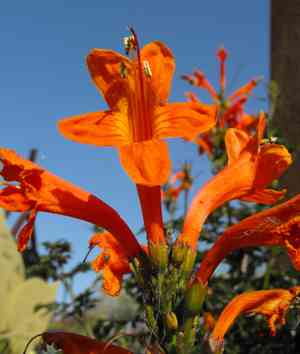
Cape honeysuckle (Tecoma capensis)
Also known as: Cape Honeysuckle
African Boxthorn (*Lycium ferocissimum*) is a flowering plant indigenous to South Africa. Despite its popularity for use in garden hedgerows, it is not related to the boxwood. African Boxthorn has become an invasive species in several areas around the world, including parts of Australia and New Zealand.
Attributes of Cape honeysuckle
Images of Cape honeysuckle
Quickly Identify Cape honeysuckle
Scientific Classification of Cape honeysuckle
Planting and Growing of Cape honeysuckle
 How to Water Cape honeysuckle?
 What Are the Sunlight Requirements for Cape honeysuckle?
 What Is the Ideal Temperature Range for Cape honeysuckle?
 What Soil is Best for Cape honeysuckle?
 How to Fertilize Cape honeysuckle?
 How to Prune Cape honeysuckle?
 How to Propagate Cape honeysuckle plant?
 How to Repot Cape honeysuckle plant?
Toxicity of Cape honeysuckle
Is Cape honeysuckle toxic to cat?
Cape honeysuckle presents a mild risk of toxicity to cats. Every component of the plant is deemed toxic, and the potential danger is heightened when these parts are consumed in excessive quantities. While the precise toxic compounds are not specified, pet owners should remain cautious, as ingestion can result in general signs of discomfort or illness in cats. It is vital for cat owners to oversee their animals and restrict their access to cape honeysuckle. If there's a suspicion that a cat has ingested cape honeysuckle, seeking prompt veterinary assistance is essential to safeguard their health and wellbeing.
Is Cape honeysuckle toxic to dog?
Cape honeysuckle is recognized as mildly toxic to dogs. If dogs eat this plant in excessive quantities, they can experience poisoning. All components of cape honeysuckle are deemed toxic and may threaten canine well-being. Should a dog consume a substantial amount of the plant, it could show signs such as gastrointestinal distress or other mild poisoning indicators. It is vital for dog owners to supervise their pets and keep them away from cape honeysuckle. If a dog happens to ingest this plant, seeking immediate care at a veterinary clinic is essential to address any possible poisoning.



