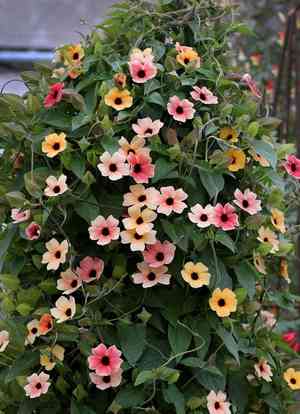
Black-eyed susan vine (Thunbergia alata)
Also known as: Clock vine
Thunbergia alata, known as the Black-eyed Susan vine, originates from southern Asia, Madagascar, and Africa. Its flowers, which feature striking bright yellow petals with dark centers, bear a resemblance to those of the black-eyed Susan. This vine is popular in ornamental gardening due to its vibrant and attractive blooms.
In This Article
Attributes of Black-eyed susan vine
Lifespan
Perennial, Annual
Plant Type
Vine, Herb
Plant Height
1.8 m to 2.5 m
Spread
90 cm to 1.8 m
Leaf Color
Green
Flower Size
3 cm
Flower Color
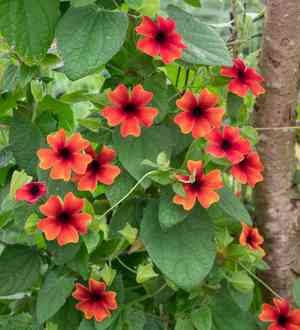
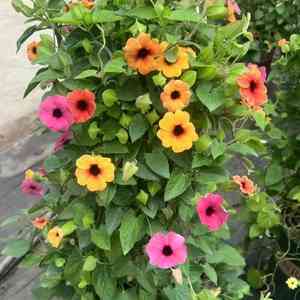
Orange Yellow White Gold Pink Red
Images of Black-eyed susan vine


Quickly Identify Black-eyed susan vine
1
Orange tubular flowers with dark purple-black throats
2
Triangular leaves with winged petioles
3
Star-shaped flowers with squarish to obovate petals
4
Fruits with spherical shape and elongated bird-like beak
5
Soft, hairy leaves with toothed edges and pale undersides
Scientific Classification of Black-eyed susan vine
Phylum
Vascular plants
Class
Dicotyledons
Order
Mints plantains olives and allies
Family
Acanthus
Genus
Thunbergias
Species
Black-eyed susan vine
Planting and Growing of Black-eyed susan vine
Care Difficulty
Easy
Watering Schedule
Every 8 days
Sunlight Requirements
Full sun
Sunshine Duration
6-10 hours
Ideal Temperature
65-75℉
Soil Type
Potting Mix, Peat Mix
Soil pH
6.5-7.5
Fertilizer Type
Balanced
Pruning Season
Spring, Summer
Pruning Area
Branches, Leaves
Pruning Frequency
Once a year
Repotting Season
Spring
Pot Type
Plastic, Ceramic
 How to Water Black-eyed susan vine?
For Thunbergia alata, known as the Black-eyed Susan vine, watering should be thorough but not excessive. Typically, 300 ml per watering is adequate. The goal is to moisten the soil deeply but avoid waterlogging. Always ensure that the excess water drains away to prevent root rot. The soil should remain consistently moist, particularly during its active growing season.
More About Watering Techniques→
What are the symptoms of an underwatered Black-eyed susan vine?
›
What should I do if my Black-eyed susan vine is not getting enough water?
›
What are the symptoms of an overwatered Black-eyed susan vine?
›
How to save an overwatered Black-eyed susan vine?
›
 What Are the Sunlight Requirements for Black-eyed susan vine?
Thunbergia alata flourishes best under full sun or partial sun, needing around 4 to 6 hours of sunlight daily. Proper light exposure enhances flowering and maintains robust growth, contributing to its decorative and lush nature.
More About Sunlight Requirements Techniques→
What is the best light for Thunbergia alata?
›
How can I ensure Thunbergia alata receives optimal light?
›
What benefits do ideal lighting conditions provide Thunbergia alata?
›
 What Is the Ideal Temperature Range for Black-eyed susan vine?
Thunbergia alata thrives best in an ideal temperature range of 65°F to 75°F. This range allows the plant to grow optimally, ensuring healthy foliage and vibrant flowering. Consistent temperatures within this band minimize stress and support the plant's metabolic processes.
 What Soil is Best for Black-eyed susan vine?
Thunbergia alata thrives in soil with excellent drainage. This helps prevent root rot caused by standing water, ensuring healthy root development and robust growth. The plant prefers soil with moderate fertility. This ensures it receives the necessary nutrients for growth without the risk of nutrient burn from overly rich soil. While drainage is crucial, the soil should also retain some moisture. This balance is key to prevent dehydration while providing consistent moisture for the plant's needs.
More About Soil→
 How to Fertilize Black-eyed susan vine?
Thunbergia alata thrives best with moderate fertilization. When using liquid fertilizer, a diluted mixture should suffice—around half the manufacturer’s recommended amount. Excessive fertilizer can harm the plant, so ensure the nutrient level remains balanced.
More About Fertilizing Techniques→
 How to Prune Black-eyed susan vine?
To prevent the spread of diseases, always use clean, sharp pruning shears or scissors. Dull tools can damage the plant's tissue, leading to infections and inhibiting proper growth. While pruning, inspect the plant for any signs of pests or infections. Early detection allows for timely intervention, protecting your Thunbergia alata from potential threats.
More About Pruning Techniques→
 How to Propagate Black-eyed susan vine plant?
1
Choosing vigorous, healthy plant material is critical for successful propagation. This step involves visually inspecting the plant for signs of disease or pest infestations to ensure only the healthiest parts are used.
2
A well-draining soil mix is prepared to support root development. Using sterile, nutrient-rich soil will create optimal conditions and prevent fungal infections.
3
Seeds or cuttings should be planted at the correct depth and positioned in a well-lit area without direct sunlight exposure to prevent dehydration and stress.
 How to Repot Black-eyed susan vine plant?
1
Thunbergia alata, commonly known as Black-Eyed Susan Vine, should be repotted when you notice roots coming out of the drainage holes or the plant growth has significantly slowed down. These signs typically mean the plant has outgrown its current pot. A distinct slowing down in flowering can also indicate it's time to give your vine a larger home.
2
Select a pot that is about two inches larger in diameter than the current one. This size allows room for growth while preventing waterlogging, which is crucial because Thunbergia alata prefers well-drained conditions. A pot with drainage holes ensures that excess water can escape, maintaining healthy root systems and preventing root rot.
3
Opt for a well-draining potting mix rich in organic material. This ensures adequate moisture retention without waterlogging the roots, which could lead to root rot. A mix with perlite or sand is ideal for drainage, while compost or peat improves nutrient availability, promoting lush growth and vibrant flowers.
Learn More About Black-eyed susan vine Diseases
Anthracnose
Bacterial Leaf Spot
Bacterial Soft Rot
Bacterial Wilt
Black Spot
Chemical Injury
Crown Gall
Damping-off
Downy Mildew
Drought Stress
Fusarium Wilt
Gray Mold
Leaf Curl
Leaf Spot
Mosaic
Nutrient Deficiency
Nutrient Toxicity
Powdery Mildew
Root Rot
Root-knot Nematode
Rusts
Sooty Mold
Spider Mites
Temperature Stress
Thrips Damage
White Mold



