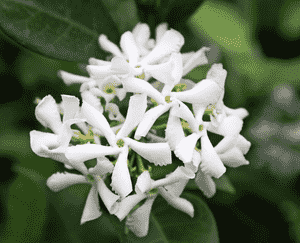
Star jasmine (Trachelospermum jasminoides)
Also known as: Southern jasmine
Star jasmine is a favored choice for both indoor and outdoor gardening due to its delightful fragrance and ease of cultivation. This adaptable plant thrives in a range of light conditions, from full sun to complete shade, making it suitable for various climates. It naturally climbs, making it ideal for planting along walls, fences, or trellises. Additionally, star jasmine attracts pollinators like bees, enhancing the garden's ecological health.
In This Article
Attributes of Star jasmine
Lifespan
Perennial
Plant Type
Vine
Plant Height
60 cm to 10 m
Spread
5 m
Leaf Color
Green Red
Flower Size
2.5 cm
Flower Color
White Yellow
Images of Star jasmine
Quickly Identify Star jasmine
1
Glossy, dark green elliptical leaves around 2 inches (5 cm) long.
2
Clusters of star-shaped, white flowers with an intense fragrance.
3
Fruit consists of elongated pair of follicles with smooth, shiny texture.
4
Opposite, simple leaves with dark green upper surface and paler green below.
5
Milky latex exudes from pubescent stem, which later becomes smooth.
Scientific Classification of Star jasmine
Phylum
Vascular plants
Class
Dicotyledons
Order
Gentians, dogbanes, madders, and allies
Family
Dogbane
Genus
Star jasmine
Species
Star jasmine
Planting and Growing of Star jasmine
Care Difficulty
Easy
Watering Schedule
Every 10 days
Sunlight Requirements
Full sun
Sunshine Duration
4-8 hours
Ideal Temperature
60-80℉
Soil Type
Potting Mix, Peat Mix
Soil pH
6.5-7.5
Fertilizer Type
Balanced
Pruning Season
Spring, Summer
Pruning Area
Branches, Leaves
Pruning Frequency
2 times a year
Repotting Season
Spring
Pot Type
Plastic, Terracotta
 How to Water Star jasmine?
Water thoroughly but ensure the soil is allowed to dry out a bit between watering. The plant enjoys deep watering, where the water reaches the root zone, roughly requiring about 500ml for potted plants.
More About Watering Techniques→
What are the symptoms of an underwatered Star jasmine?
›
What should I do if my Star jasmine is not getting enough water?
›
What are the symptoms of an overwatered Star jasmine?
›
How to save an overwatered Star jasmine?
›
 What Are the Sunlight Requirements for Star jasmine?
Partial sun to full sun provides the best environment for thriving growth, ensuring a balance between abundant flowering and robust leaf development.
More About Sunlight Requirements Techniques→
What is the ideal lighting condition for Trachelospermum jasminoides?
›
How can I ensure my plant gets the required amount of light?
›
What are the benefits of achieving ideal lighting for this plant?
›
 What Is the Ideal Temperature Range for Star jasmine?
Trachelospermum jasminoides thrives in a temperature range between 60°F and 80°F. This range promotes optimal growth and ensures a healthy, robust plant. These temperatures allow the plant's cellular processes to function efficiently, providing the right environment for photosynthesis, respiration, and other metabolic activities, leading to vibrant foliage and abundant flowering.
 What Soil is Best for Star jasmine?
Trachelospermum jasminoides thrives in nutrient-rich soil, which supports vigorous growth and lush foliage. The abundance of organic matter provides essential nutrients, enhancing flowering and root development. This plant prefers soil with excellent drainage to prevent waterlogging, which can cause root rot. Ensuring effective drainage promotes healthy root systems and prevents stress on the plant. Maintaining balanced moisture levels in the soil is crucial for Trachelospermum jasminoides. Consistent moisture supports steady growth, while avoiding overly dry conditions that can lead to leaf drop.
More About Soil→
 How to Fertilize Star jasmine?
For Trachelospermum jasminoides, it is important to use balanced fertilizers. Typically, a liquid fertilizer diluted at half strength for each application is appropriate. Ensure not to over-apply, as this can lead to root burn. A slow-release granular fertilizer should be applied sparingly, and it’s best to follow specific product instructions.
More About Fertilizing Techniques→
 How to Prune Star jasmine?
Begin by sterilizing your pruning shears to prevent the spread of disease. Make your initial cuts at a 45-degree angle, focusing on removing dead or damaged stems. This will enhance air circulation and sunlight penetration, leading to healthier growth. Trim back longer vines to encourage a bushier growth habit. Focus on shaping the plant by cutting just above a leaf node – this promotes the development of side shoots, giving your plant a fuller look while keeping it within desired boundaries. To prioritize flowers, prune right after the blooming period ends. Remove spent blooms and any excessively vigorous shoots redirecting the plant’s energy from growing to flowering. This not only enhances aesthetic appeal but also prolongs the blooming season.
More About Pruning Techniques→
 How to Propagate Star jasmine plant?
1
Choose healthy semi-hardwood stems that are about 4-6 inches long. Ensure the stems are disease-free and have at least two to three leaf nodes.
2
Remove the lower leaves of the cutting to expose nodes. Dip the cut end into rooting hormone for better chances of root development.
3
Insert the cutting into a pot with well-draining soil, ensuring that at least one node is below the soil surface. Firm the soil around the cutting to provide support.
 How to Repot Star jasmine plant?
1
Observe when the plant has outgrown its current pot or its growth has slowed. Roots growing out of the drainage holes are another clear signal. Ideally, repotting should occur during the growing season in spring or summer when the plant is not stressed and can recover quickly.
2
Select a pot that is 2-4 inches larger in diameter than the current one. This allows for room to grow without overwhelming the root system. A pot with drainage holes is essential to prevent waterlogging and root rot, ensuring healthy growth.
3
Opt for a well-draining potting mix, such as a mixture of peat, perlite, and sand. This helps to mimic its native environment, provides adequate drainage, and retains enough moisture necessary for robust growth without suffocating the root system.
Learn More About Star jasmine Diseases
Anthracnose
Bacterial Leaf Spot
Black Spot
Chemical Injury
Crown Gall
Damping-off
Downy Mildew
Drought Stress
Fusarium Wilt
Gray Mold
Leaf Curl
Leaf Spot
Mosaic
Nutrient Deficiency
Nutrient Toxicity
Powdery Mildew
Root Rot
Root-knot Nematode
Rusts
Sooty Mold
Spider Mites
Temperature Stress
Thrips Damage
White Mold



