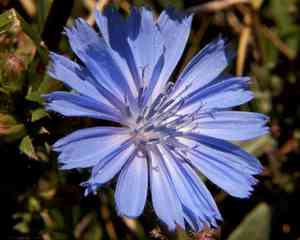
Yellow goat's beard (Tragopogon pratensis)
Also known as: Showy goat's-beard, Meadow salsify
Meadow salsify, or Tragopogon pratensis, is a widespread flowering plant found along roadsides and in fields across Europe and North America. Also known as showy-goats-beard, this plant has edible parts that can be added to salads, and its latex can serve as a natural chewing gum alternative.
In This Article
Attributes of Yellow goat's beard
Lifespan
Annual, Biennial, Perennial
Plant Type
Herb
Plant Height
60 cm
Spread
25 cm
Leaf Color
Green
Flower Size
5 cm to 10 cm
Flower Color
Yellow
Images of Yellow goat's beard
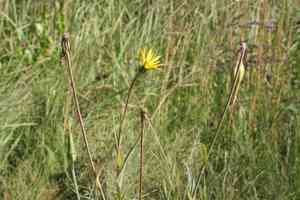
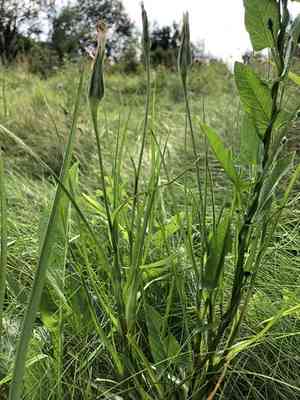
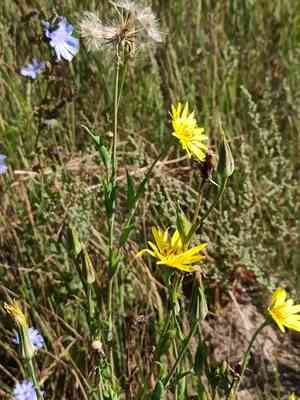
Quickly Identify Yellow goat's beard
1
Milky sap present in roots, stems, and leaves.
2
Distinctive deep yellow daisy-like flowers that close around noon.
3
Large, dandelion-like fuzzy seedhead after flowering.
4
Linear, grass-like leaves with powdery undersides and curled tips.
5
Hairless, erect stem with a powdery texture and minimal branching.
Scientific Classification of Yellow goat's beard
Phylum
Vascular plants
Class
Dicotyledons
Order
Asterales
Family
Daisy
Genus
Salsifies
Species
Yellow goat's beard
Planting and Growing of Yellow goat's beard
Care Difficulty
Easy
Watering Schedule
Every 4 days
Sunlight Requirements
Full sun
Sunshine Duration
6-10 hours
Ideal Temperature
60-75℉
Soil Type
Potting Mix, Peat Mix
Soil pH
6.5-7.5
Fertilizer Type
Balanced
Pruning Season
Spring, Summer
Pruning Area
Branches, Leaves
Pruning Frequency
2 times a year
Repotting Season
Spring
Pot Type
Plastic, Ceramic
 How to Water Yellow goat's beard?
Tragopogon pratensis prefers soil that is moderately moist. When watering, ensure that the moisture reaches the root zone, but avoid waterlogging. This typically involves applying around 250 milliliters of water per session, depending on pot size and environmental conditions. Water until the top inch of soil feels moist to touch.
What are the symptoms of an underwatered Yellow goat's beard?
›
What should I do if my Yellow goat's beard is not getting enough water?
›
What are the symptoms of an overwatered Yellow goat's beard?
›
How to save an overwatered Yellow goat's beard?
›
 What Are the Sunlight Requirements for Yellow goat's beard?
Tragopogon pratensis ideally requires full sun to partial sun exposure for optimal growth. This ensures the plant's energy needs are met, facilitating lush growth, profuse flowering, and prolonged plant health.
What is the best light condition for Tragopogon pratensis?
›
How to achieve optimal lighting for Tragopogon pratensis?
›
What are the benefits of providing ideal lighting to Tragopogon pratensis?
›
 What Is the Ideal Temperature Range for Yellow goat's beard?
The ideal temperature for growing Tragopogon pratensis ranges from 60 to 75°F. This range provides optimal conditions for growth and flowering, allowing the plant to carry out photosynthesis efficiently and support robust physiological processes.
 What Soil is Best for Yellow goat's beard?
Tragopogon pratensis thrives in soil that offers excellent drainage. Such conditions prevent waterlogging, which can lead to root rot and other moisture-related diseases. Well-draining soil ensures the plant's roots maintain proper oxygen levels, which is crucial for healthy growth. The plant prefers moderately fertile soil conditions. Too-rich soil may not be beneficial as it encourages excessive foliage growth instead of floral development. A balance of nutrients supports steady and healthy growth without compromising flower production. Low soil salinity is essential for Tragopogon pratensis as high levels can lead to nutrient imbalances. Salt stress can interfere with the plant's water uptake and overall growth, so it's crucial to keep salinity levels low for sustained plant health.
 How to Fertilize Yellow goat's beard?
For Tragopogon pratensis, applying a balanced NPK fertilizer in moderate quantities like 10-10-10 is ideal. Use about 1 teaspoon per plant for liquid fertilizers and 1 tablespoon for slow-release fertilizers. Too little can starve the plant while too much might cause toxicity.
 How to Prune Yellow goat's beard?
Sharp, clean tools should be used to ensure clean cuts. Ragged cuts may become entry points for disease, so make sure your scissors or shears are in good condition. Avoid cutting more than one-third of the plant's foliage at once. Excessive pruning can stress the plant, reducing its ability to recover and thrive. Always prune with the plant's health as a priority.
 How to Propagate Yellow goat's beard plant?
1
Begin by filling seed trays with potting soil. Sow the seeds on the surface and lightly cover them with soil. Ensure that they are spaced appropriately to avoid overcrowding.
2
Water the seeds gently using a fine spray to avoid displacing them. Maintain consistent moisture without over-watering, as this can lead to seed rot.
3
Place the trays in a warm, light-filled area, such as a south-facing window or under grow lights. This provides the necessary warmth and light for germination.
 How to Repot Yellow goat's beard plant?
1
Tragopogon pratensis should be repotted when you notice roots coming out of the drainage holes beneath the pot, indicating the plant is root-bound. Another signal is when growth slows despite optimal conditions. Ideally, repotting should be done in spring for best results as it coincides with the plant's natural growth phase, promoting better adaptation.
2
Select a pot that is one size larger than the current one to provide enough space for root growth without overwhelming the plant. The pot should have good drainage holes to prevent waterlogging, which can cause root rot. Clay or terracotta pots are excellent for promoting breathability and moisture control.
3
A well-draining compost mix is essential for Tragopogon pratensis as it helps prevent water accumulation around the roots. A mix that includes perlite or sand ensures that the soil remains aerated, reducing the chances of fungal infections and providing an ideal environment for the plant's roots to thrive and expand.
Learn More About Yellow goat's beard Diseases
Anthracnose
Bacterial Leaf Spot
Bacterial Soft Rot
Bacterial Wilt
Chemical Injury
Cyst Nematode
Damping-off
Downy Mildew
Drought Stress
Fusarium Wilt
Gray Mold
Leaf Spot
Mosaic
Nutrient Deficiency
Nutrient Toxicity
Powdery Mildew
Root Rot
Root-knot Nematode
Rusts
Sooty Mold
Spider Mites
Temperature Stress
Thrips Damage
White Mold



