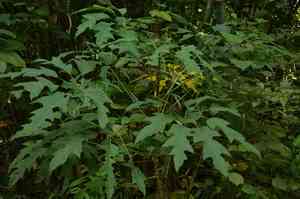
Snowflake tree (Trevesia palmata)
Also known as: Snowflake Aralia
The snowflake tree, an evergreen known for its drought tolerance, gets its name from the unique snowflake-shaped leaves it has. Historically, its pith was used in the production of 'Pith Helmets' during colonial times. Additionally, a paste made from its fruit was traditionally utilized to stun fish, and its prickly stems and trunk served as a defense against grazing animals. Today, it is commonly used as an ornamental plant.
In This Article
Attributes of Snowflake tree
Lifespan
Perennial
Plant Type
Tree
Plant Height
4.5 m to 6 m
Spread
2.5 m to 3.5 m
Leaf Color
Green
Flower Size
2.5 cm
Flower Color
Yellow Green
Images of Snowflake tree
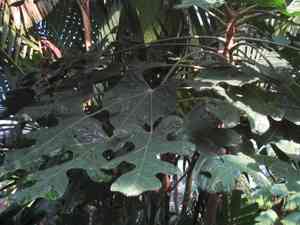
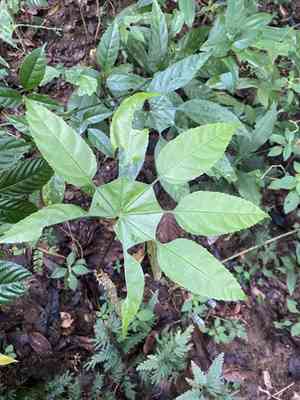
Quickly Identify Snowflake tree
1
Intricately lobed evergreen leaves, resembling snowflakes, reach 1-2 feet (30-60 cm) wide.
2
Pseudocompound leaf structure with lacy pattern and 2-3 feet (60-90 cm) long prickly petioles.
3
Large shrub or tree with sparse crown, tiny yellow flowers, and half-inch (1.27 cm) fruit clusters.
4
Panicle of greenish-yellow flowers spanning 18 inches (45 cm), lacking prominent scent but visually striking.
5
Spherical fruit 0.4-0.7 inches (1-1.8 cm) with distinctive texture, transitioning from greenish to darker hues.
Scientific Classification of Snowflake tree
Phylum
Vascular plants
Class
Dicotyledons
Order
Carrots, ivies and allies
Family
Ivy
Genus
snowflake aralia
Species
Snowflake tree
Planting and Growing of Snowflake tree
Care Difficulty
Hard
Watering Schedule
Every 2 days
Sunlight Requirements
Partial sun
Sunshine Duration
4-8 hours
Ideal Temperature
65-75℉
Soil Type
Potting Mix, Peat Mix
Soil pH
6.5-7.5
Fertilizer Type
Balanced
Pruning Season
Spring, Summer
Pruning Area
Branches, Leaves
Pruning Frequency
2 times a year
Repotting Season
Spring
Pot Type
Plastic, Ceramic
 How to Water Snowflake tree?
When watering Trevesia palmata, aim for approximately 500 milliliters each session. Ensure that the soil is evenly moist but not soggy, allowing the top inch of soil to dry out between waterings. This mimics its native subtropical environment, providing sufficient hydration without waterlogging the roots.
What are the symptoms of an underwatered Snowflake tree?
›
What should I do if my Snowflake tree is not getting enough water?
›
What are the symptoms of an overwatered Snowflake tree?
›
How to save an overwatered Snowflake tree?
›
 What Are the Sunlight Requirements for Snowflake tree?
Partial sun ensures optimal health for Trevesia palmata. This light range supports robust growth, enhances the leaf's lush appearance, and prevents common light-related issues.
More About Sunlight Requirements Techniques→
What is the best lighting condition?
›
How can you achieve ideal lighting?
›
Why is ideal lighting important?
›
 What Is the Ideal Temperature Range for Snowflake tree?
Trevesia palmata thrives best in a warm and moderate indoor environment. It benefits from stable temperatures between 65-75°F (18-24°C), as this range mimics its natural habitat and ensures optimal growth and foliage development without stressing the plant.
 What Soil is Best for Snowflake tree?
Trevesia palmata thrives best in well-drained soil, which facilitates the free flow of air and water, thereby reducing the risk of root rot that can occur in waterlogged conditions. This plant favors nutrient-rich soils. A balanced presence of organic matter enhances growth by providing essential nutrients, mimicking its natural habitat's fertile environment. While the soil must be well-drained, it should also retain enough moisture. This balance aids in sustaining plant hydration during dry spells without causing waterlogging.
 How to Fertilize Snowflake tree?
For Trevesia palmata, it is important to use balanced fertilizer rich in macro and micronutrients. Typically, a dilution of one-quarter strength of an all-purpose liquid fertilizer is sufficient. Ensure about 100 ml per plant is applied, allowing it to soak thoroughly into the soil.
 How to Prune Snowflake tree?
Start by identifying old or dead leaves that have turned brown. These can be removed to encourage new growth and maintain the plant’s aesthetic appeal. Trim back any overgrown stems to structure the plant’s canopy and prevent it from getting too top-heavy, which can cause breakage. Make cuts just above a leaf node to encourage the plant to produce new shoots and ensure a fuller appearance.
More About Pruning Techniques→
 How to Propagate Snowflake tree plant?
1
Start by preparing a soil mix that drains well, combining equal parts of sand, peat, and perlite. This mix supports rooting by providing aeration and consistent moisture.
2
Place the seeds in seed starting trays at about half an inch deep. Ensure the soil is moist but not overly wet, and maintain a warm temperature to support germination.
3
For cutting propagation, select healthy, non-flowering shoots from the parent plant. Each cutting should be about 6 inches long, with the lower leaves removed to expose nodes where roots can develop.
 How to Repot Snowflake tree plant?
1
Trevesia palmata shows signs it needs repotting when roots start emerging from the drainage holes or the top. The plant's growth might slow down, signaling that its current living quarters are becoming restrictive. These indicators help ensure your plant continues to thrive and isn't constrained by its pot.
2
Opt for a pot that's 2-3 inches larger in diameter than the current one. This ensures adequate space for root expansion while preventing excessive water retention in too large a pot. A pot with drainage holes is essential to prevent soggy soil and root rot, promoting healthier roots and vibrant growth.
3
A well-draining potting mix is crucial for Trevesia palmata, providing excellent aeration and encouraging healthy root growth. Mix in perlite or sand to ensure the soil doesn't become compacted, allowing water to flow freely and reducing the risk of overwatering, which can be detrimental to plant health.
Learn More About Snowflake tree Diseases
Anthracnose
Bacterial Leaf Spot
Bacterial Soft Rot
Bacterial Wilt
Black Spot
Chemical Injury
Crown Gall
Cyst Nematode
Damping-off
Downy Mildew
Drought Stress
Fusarium Wilt
Gray Mold
Leaf Curl
Leaf Spot
Mosaic
Nutrient Deficiency
Nutrient Toxicity
Powdery Mildew
Root Rot
Root-knot Nematode
Rusts
Sooty Mold
Spider Mites
Temperature Stress
Thrips Damage
White Mold



