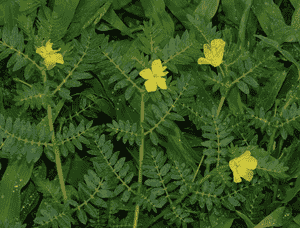
Puncture Vine(Tribulus terrestris)

Puncture Vine (Tribulus terrestris)

Also known as: Cat's-Head, Devil's-Weed, Nature's Viagra, Bindii, Bullhead

Puncture Vine (Tribulus terrestris) is a hazardous plant characterized by its spiny seed pods capable of inflicting injuries. These burs can pierce the skin of both humans and animals, as well as puncture bicycle tires and penetrate shoe soles. The plant's foliage contains saponins, which are toxic to livestock and can pose serious health risks. Managing this invasive species is crucial to prevent its spread and mitigate its harmful effects.

Attributes of Puncture Vine

Lifespan
Annual, Biennial
Plant Type
Herb
Plant Height
15 cm
Spread
60 cm to 1.5 m
Leaf Color
Green
Flower Size
2.5 cm to 5 cm
Flower Color
Yellow

PlantJoy - Identify plants with a snap

Identify and diagnose plants, get toxicity alerts, and explore safety guides for all types of fungi.

Try for Free

Images of Puncture Vine

Puncture Vine(Tribulus terrestris)

Quickly Identify Puncture Vine

1
Prostrate stems reaching 3-4 feet (91-122 cm) in length.
2
Tiny yellow star-like flowers emerging from leaf axils.
3
Angular-globoid spiny fruit transitioning from green to brown.
4
Compound leaves with opposite oblong leaflets, 1-3 inches (2.5-7.6 cm) long.
5
Fine haired branching stems, less than 0.5 inches (1.27 cm) thick.

Scientific Classification of Puncture Vine

Phylum
Vascular plants
Class
Dicotyledons
Order
Zygophyllales
Family
Creosote-bush
Genus
Puncture vine
Species
Puncture Vine

Planting and Growing of Puncture Vine

Care Difficulty
Easy
Watering Schedule
Every 2 days
Sunlight Requirements
Full sun
Sunshine Duration
4-8 hours
Ideal Temperature
68-86℉
Soil Type
Potting Mix, Peat Mix
Soil pH
6.5-7.5
Fertilizer Type
Balanced
Pruning Season
Spring, Summer
Pruning Area
Branches, Leaves
Pruning Frequency
2 times a year
Repotting Season
Spring
Pot Type
Plastic, Ceramic

water icon How to Water Puncture Vine?

Tribulus terrestris thrives best when watered deeply but infrequently, mimicking its natural arid environment. Ensure the soil is thoroughly moist but not waterlogged. This ensures the roots receive ample moisture without sitting in stagnant conditions, which can be harmful.
What are the symptoms of an underwatered Puncture Vine?
What should I do if my Puncture Vine is not getting enough water?
What are the symptoms of an overwatered Puncture Vine?
How to save an overwatered Puncture Vine?

sunlight icon What Are the Sunlight Requirements for Puncture Vine?

Sunlight Requirements: Full sun
Duration of light: 6-8 hours daily
Tribulus terrestris thrives in full sun, benefiting from bright light that encourages robust growth and flowering. Adequate sunlight ensures vibrant foliage and healthy plant development.
What is the ideal amount of sunlight for Tribulus terrestris?
How can I ensure my Tribulus terrestris gets enough sunlight?
What benefits does ideal sunlight offer to Tribulus terrestris?

temperature icon What Is the Ideal Temperature Range for Puncture Vine?

Ideal Temperature: 68 ~ 86℉
The ideal temperature range for growing Tribulus terrestris is between 68°F and 86°F. This warm climate allows the plant to photosynthesize efficiently and supports optimal growth and development, mimicking its native semi-arid environments.

soil icon What Soil is Best for Puncture Vine?

Soil type: Sandy soil, Loam, Sandy loam
Soil PH: 6.5 ~ 7.5
Tribulus terrestris thrives in soils rich in essential nutrients. Ensuring balanced nutrition helps the plant grow robustly, improving its vigor and resistance to pests. This plant favors well-drained soils, as excessive moisture can lead to root rot. Proper drainage ensures roots can breathe, promoting healthier growth. While Tribulus terrestris can tolerate dry conditions, consistent moisture availability can lead to better growth. A balance is key to prevent overwatering.

fertilize icon How to Fertilize Puncture Vine?

Fertilizer type: Balanced
For Tribulus terrestris, the amount of fertilizer should be moderate, approximately 1/4 of the recommended dosage on the fertilizer package. Over-fertilization can burn the roots and cause health issues.

prune icon How to Prune Puncture Vine?

Pruning Time: Spring, Summer
Before you start, identify areas of the plant that appear excessively sprawling or have branches crossing each other. Focus on these areas to encourage a more organized growth pattern. First, remove any stems that are dead or appear diseased. This not only improves the plant's aesthetic but also prevents the spread of potential infections to healthy parts. Carefully cut back any overgrown branches to a healthy node or bud. This will encourage new growth in a more controlled direction and keep the plant's shape tidy. Disinfect your tools between cuts, especially if you're moving between plants. This helps to prevent the spread of diseases. Use a solution of one part bleach to ten parts water or a commercial disinfectant.

propagate icon How to Propagate Puncture Vine plant?

Propagate Time: Spring, Early summer
1
Collect mature seeds from the fruit of Tribulus terrestris. Ensure they are fully dry, as damp seeds may not germinate effectively.
2
Mix a well-draining soil with sand and compost. A well-prepared soil ensures better germination and helps prevent root rot.
3
Use sterilized pruning shears to take a 4-6 inch cutting from a healthy plant. Planting should occur promptly to prevent the cut from drying out.

repot icon How to Repot Puncture Vine plant?

Repotting frequency: Every 2-3 years
1
Look for signs such as the plant becoming root-bound, roots growing out of the drainage holes, or slowed growth. These are strong indicators that it's time to give your Tribulus terrestris a new pot to stretch its roots.
2
Select a pot that is one size larger than the current one, with ample drainage holes. A slightly bigger pot ensures sufficient space for growth, providing the roots room to expand without becoming waterlogged.
3
Opt for a well-draining sandy soil mix. This type of soil prevents water from accumulating at the bottom, replicating the plant's natural dry habitat, thereby minimizing the risk of root rot.

PlantJoy - Identify plants with a snap

Find the best spots for them to optimize their health, simply using your phone.

Try for Free

Toxicity of Puncture Vine

Is Puncture Vine toxic to cat?

Puncture Vine is harmful to cats and can lead to adverse effects if consumed accidentally. Every part of this plant contains toxic substances, presenting a risk of poisoning in felines. If a cat ingests any portion of puncture Vine, they may exhibit signs of physical distress or illness. Due to the serious implications of plant toxicosis, it is essential for cat owners to vigilantly observe their pets for any indications of discomfort. Should there be any suspicion of poisoning, seeking immediate veterinary assistance is vital for prompt and effective treatment.

Is Puncture Vine toxic to dog?

Puncture Vine is recognized as toxic to dogs. Canines may unintentionally consume parts of the puncture Vine while exploring outdoor spaces where they play or roam freely. Any ingestion of the plant, as all its components are toxic, can result in poisoning. Symptoms associated with puncture Vine poisoning can differ but may include gastrointestinal disturbances, lethargy, and more severe manifestations depending on the quantity consumed. It is crucial for dog owners to keep a vigilant eye on their pets and restrict access to areas where puncture Vine is prevalent. Should a dog ingest puncture Vine, prompt veterinary attention is vital for effectively managing symptoms and safeguarding the animal's health.

Identify toxic plants for your safety

Learn which plants are harmful to you and your pets, and make informed choices for a safer home!

Try for Free
WARNING
The judgment on toxicity and danger is for reference only. We DO NOT GUARANTEE any accuracy of such judgment. Therefore, you SHALL NOT rely on such judgment. It is IMPORTANT TO SEEK PROFESSIONAL ADVICE in advance when necessary.

