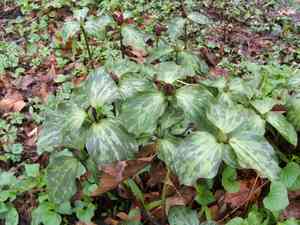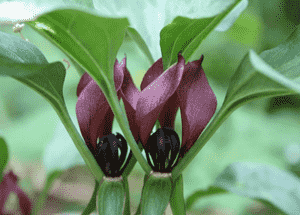
Bloody butcher(Trillium recurvatum)

Bloody butcher (Trillium recurvatum)

Also known as: Shay's trillium, Prairie wake-robin, Bloody noses, Toadshade

The Madagascar Jasmine (Stephanotis floribunda) is a flowering plant species that typically takes several years to reach maturity and bloom in the wild. However, when grown as a houseplant under favorable conditions, it can flower much sooner, making it a popular choice for indoor cultivation.

Attributes of Bloody butcher

Lifespan
Perennial
Plant Type
Herb
Plant Height
15 cm to 46 cm
Spread
23 cm to 30 cm
Leaf Color
Green Variegated Red
Flower Size
2.5 cm to 8 cm
Flower Color
Red Brown

PlantJoy - Identify plants with a snap

Identify and diagnose plants, get toxicity alerts, and explore safety guides for all types of fungi.

Try for Free

Images of Bloody butcher

Bloody butcher(Trillium recurvatum)

Quickly Identify Bloody butcher

1
Distinctive maroon to brown three-petaled flower, 2-3 inches (5-7.5 cm) long.
2
Mottled leaves with dark and light green patterns, 3-6 inches (7.6-15.2 cm) long.
3
Uniform, stout stem, light green to reddish purple, 0.2-0.5 inches (0.5-1.2 cm) diameter.
4
Rhombic-elliptic flower petals curve inward, up to 1.75 inches (4.45 cm) long.
5
Berry-like capsules with six parts, pale green to purplish-green in color, mature by August.

Scientific Classification of Bloody butcher

Phylum
Vascular plants
Class
Monocotyledons
Order
Liliales
Family
Bunchflower
Genus
Birthroots
Species
Bloody butcher

Planting and Growing of Bloody butcher

Care Difficulty
Moderate
Watering Schedule
Every 3 days
Sunlight Requirements
Partial sun
Sunshine Duration
4-8 hours
Ideal Temperature
60-80℉
Soil Type
Potting Mix, Peat Mix
Soil pH
6.5-7.5
Fertilizer Type
Balanced
Pruning Season
Spring, Summer
Pruning Area
Branches, Leaves
Pruning Frequency
2 times a year
Repotting Season
Spring
Pot Type
Plastic, Ceramic

water icon How to Water Bloody butcher?

Trillium recurvatum enjoys a moderate amount of water. It's essential to ensure that the soil is moist but not soggy. Water the plant until you see a slight drainage from the bottom of the pot, which typically amounts to about 200 ml. The soil should be evenly moist but not overly wet to maintain optimal growth conditions.
What are the symptoms of an underwatered Bloody butcher?
What should I do if my Bloody butcher is not getting enough water?
What are the symptoms of an overwatered Bloody butcher?
How to save an overwatered Bloody butcher?

sunlight icon What Are the Sunlight Requirements for Bloody butcher?

Sunlight Requirements: Partial sun, Full shade
Duration of light: 3 to 6 hours
Trillium recurvatum flourishes in partial sun to full shade conditions. Providing appropriate light helps maintain its natural growth forms and ensures robust flowering in spring.
What is the best lighting condition for Trillium recurvatum?
How can you achieve ideal light for Trillium recurvatum?
What are the benefits of providing the right light conditions?
More About Sunlight Requirements Techniques

temperature icon What Is the Ideal Temperature Range for Bloody butcher?

Ideal Temperature: 60 ~ 80℉
What is the ideal temperature range for Trillium recurvatum to thrive? The ideal temperature for this plant ranges between 60°F and 80°F. This ensures optimal photosynthesis and growth. Maintaining this range helps the plant develop strong roots and healthy foliage, facilitating robust overall health.

soil icon What Soil is Best for Bloody butcher?

Soil type: Loam, Clay soil, Sandy loam
Soil PH: 6.5 ~ 7.5
Trillium recurvatum thrives in well-drained soils. This prevents water accumulation, which can cause root rot, allowing the roots to access necessary oxygen for optimal growth. The plant prefers soils rich in organic matter, which provides essential nutrients and enhances soil structure, promoting healthy plant development and vibrant flower displays. Soils should have moderate moisture retention. This balance ensures the plant remains hydrated yet not waterlogged, which can support robust growth throughout its blooming season.

fertilize icon How to Fertilize Bloody butcher?

Fertilizer type: Balanced
Trillium recurvatum, commonly known as Prairie Trillium, requires a balanced nutrient supply. During the growing season, use a half-strength liquid fertilizer to avoid nutrient burn. For slow-release fertilizers, follow the product instructions, usually about one tablespoon per plant in spring and midsummer.

prune icon How to Prune Bloody butcher?

Pruning Time: Spring, Autumn
Begin by examining the plant for any signs of disease or damage. Look for yellowing leaves or those with spots, as these are prime candidates for pruning to promote overall plant health. Make sure to cut at a slight angle just above a leaf node. This technique encourages new growth and helps the plant to direct its energy more efficiently. More About Pruning Techniques

propagate icon How to Propagate Bloody butcher plant?

Propagate Time: Spring, Early spring
1
Collect seeds from mature Trillium recurvatum plants in the fall. Clean and dry the seeds properly to store them until early spring, ensuring they are kept in a cool, dry place during storage to maintain viability.
2
In early spring, carefully dig up a mature plant and cut the rhizomes into sections, ensuring that each section has at least one bud. This method allows you to propagate the plant vegetatively.
3
Plant seeds or rhizome divisions in a shaded garden bed with rich, humus soil during early spring. Water moderately and ensure the soil remains moist but not waterlogged.
More About Propagating Techniques

repot icon How to Repot Bloody butcher plant?

Repotting frequency: Every 2-3 years
1
The best time to repot Trillium recurvatum is in spring before the growth really takes off. Look for signals such as compacted roots peeking through the drainage holes or soil that dries out too quickly, indicating it's time for a more spacious home.
2
Select a pot that offers good drainage to prevent waterlogging, as excess moisture can lead to root rot. A pot that is just a couple of inches larger in diameter than the current one promotes healthy root spread and reduces transplant shock.
3
Choose a soil mix rich in organic matter to mimic the natural forest floor habitat of Trillium recurvatum. This will ensure that the plant has access to the nutrients it loves and provides a crumbly texture for excellent drainage while retaining moisture efficiently.

PlantJoy - Identify plants with a snap

Find the best spots for them to optimize their health, simply using your phone.

Try for Free

Toxicity of Bloody butcher

Is Bloody butcher toxic to cat?

The bloody butcher plant presents a minor toxicity hazard for cats. When ingested in large quantities, cats may display a range of physical distress symptoms arising from poisoning caused by the stems, fruits, and roots of the plant. As a preventive measure, it is crucial to supervise cats around bloody butcher and ensure that these plant components are kept beyond their reach. If a cat consumes a considerable amount of bloody butcher, it is vital to seek immediate veterinary care to properly address and treat any resulting health issues.

Is Bloody butcher toxic to dog?

The bloody butcher plant presents a low level of toxicity risk to dogs. If dogs ingest a significant quantity of its stems, fruits, or roots, they may experience poisoning. Indications of such poisoning can encompass gastrointestinal disturbances, including vomiting and diarrhea, as well as potential lethargy and excessive salivation. It is vital for dog owners to keep a close watch on their pets and to restrict their access to the bloody butcher plant. In cases where a dog is believed to have ingested the bloody butcher, prompt veterinary assistance is critical to achieve the most favorable outcome.

Identify toxic plants for your safety

Learn which plants are harmful to you and your pets, and make informed choices for a safer home!

Try for Free
WARNING
The judgment on toxicity and danger is for reference only. We DO NOT GUARANTEE any accuracy of such judgment. Therefore, you SHALL NOT rely on such judgment. It is IMPORTANT TO SEEK PROFESSIONAL ADVICE in advance when necessary.
More About Toxic Techniques