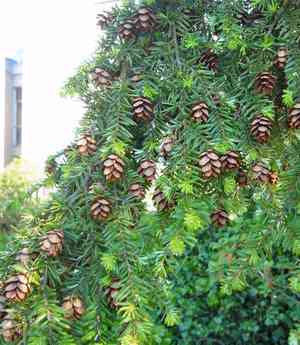
Western hemlock (Tsuga heterophylla)
Also known as: West coast hemlock
The Western Hemlock (Tsuga heterophylla), native to North America, is often used in California for ornamental landscaping and forestry.
In This Article
Attributes of Western hemlock
Lifespan
Perennial
Plant Type
Tree
Plant Height
40 m
Spread
10 m
Leaf Color
Green Blue White
Flower Size
N/A
Flower Color
Yellow Green Red
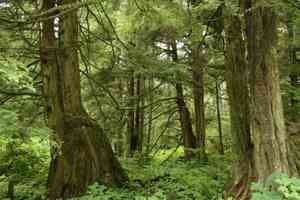
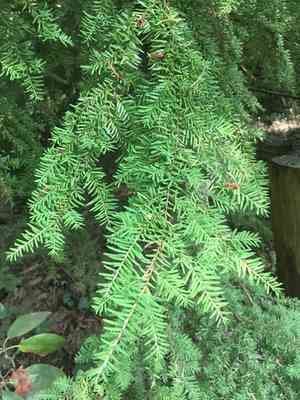
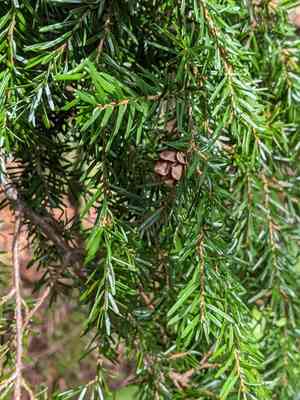
Images of Western hemlock
Quickly Identify Western hemlock
1
Foliage displays dark green to bluish-gray needles with fern-like texture and white bands on underside.
2
Needle alternation in sizes and brown seed cones with conical buds for a characteristic appearance.
3
Trunk transitions from dark brown to grayish bark with reddish inner bark streaked with purple.
4
Slim, yellowish-brown stem with fine hairs, leaf scars, and grayish-brown spherical buds.
5
Leaves are single, soft, spirally arranged needles with dentate margins and bright to dark green color.
Scientific Classification of Western hemlock
Phylum
Vascular plants
Class
Conifers
Order
Pinales
Family
Pine
Genus
Hemlocks
Species
Western hemlock
Planting and Growing of Western hemlock
Care Difficulty
Moderate
Watering Schedule
Every 2 days
Sunlight Requirements
Partial sun
Sunshine Duration
4-8 hours
Ideal Temperature
45-60℉
Soil Type
Potting Mix, Peat Mix
Soil pH
4-5.5
Fertilizer Type
Balanced
Pruning Season
Spring, Summer
Pruning Area
Branches, Leaves
Pruning Frequency
2 times a year
Repotting Season
Spring
Pot Type
Plastic, Ceramic
 How to Water Western hemlock?
Western hemlock prefers deep and thorough watering. The soil should be moist but not waterlogged. Aim for about 1000 milliliters per session, ensuring moisture reaches down to the root depth.
What are the symptoms of an underwatered Western hemlock?
›
What should I do if my Western hemlock is not getting enough water?
›
What are the symptoms of an overwatered Western hemlock?
›
How to save an overwatered Western hemlock?
›
 What Are the Sunlight Requirements for Western hemlock?
Partial sun and full shade allow Tsuga heterophylla to thrive by creating the forest understory effect. This not only supports vibrant green foliage but also ensures robust growth and resilience against pests.
More About Sunlight Requirements Techniques→
What is the ideal lighting solution?
›
How can you implement the ideal lighting?
›
What are the benefits of proper lighting?
›
 What Is the Ideal Temperature Range for Western hemlock?
Western hemlock (Tsuga heterophylla) thrives in moderate climates with optimal temperature ranges between 45°F to 60°F. This range allows the plant to efficiently carry out photosynthesis while maintaining healthy growth patterns.
 What Soil is Best for Western hemlock?
Tsuga heterophylla thrives in soil that retains moisture well. Consistent moisture helps in the deep development of roots, giving the plant a robust structure above and below ground. Well-draining soil is crucial to prevent root rot in Tsuga heterophylla. Good drainage ensures excess water doesn't drown the roots, sustaining plant health and growth. Rich organic matter in the soil supports Tsuga heterophylla by providing essential nutrients. This helps in vigorous growth and overall health of the plant, reducing the need for additional fertilizers.
More About Soil→
 How to Fertilize Western hemlock?
When fertilizing Tsuga heterophylla, it's important to use a balanced fertilizer, such as a 10-10-10 (NPK) formula. For liquid fertilizer, apply about one tablespoon mixed with a gallon of water for younger plants, increasing to two tablespoons for mature trees. For slow-release fertilizers, use about 1 to 1.5 pounds per 100 square feet.
 How to Prune Western hemlock?
Tsuga heterophylla, commonly known as Western Hemlock, benefits from annual pruning to promote health and maintain size. Start by assessing the tree's natural shape and identifying branches that need trimming. Begin by removing any dead or diseased branches using sharp, clean tools to prevent infection. Next, focus on removing any crossing or rubbing branches, as these can cause wounds and entry points for pests. Trim back lateral branches to enhance light penetration and air circulation. This helps prevent fungal diseases and encourages robust growth. Keep the tree's natural form to ensure it maintains its graceful appearance. After the major cuts are made, step back to review the overall shape. Make any minor adjustments as needed, taking care not to overprune, which can stress the tree and decrease its vigor.
More About Pruning Techniques→
 How to Propagate Western hemlock plant?
1
Collect seeds from mature cones in early autumn. Ensure the seeds are completely dry before storing them in a cool, dry place until you're ready to sow them in spring.
2
Use a mix of peat moss and sand to create a well-draining soil medium. Fill the seed trays or pots with this mix, ensuring they have proper drainage holes to prevent waterlogging.
3
Select healthy branches and cut them into sections 4-6 inches long. Remove the lower leaves, leaving a couple of sets of leaves at the top, and dip the cut ends in rooting hormone for better root development.
 How to Repot Western hemlock plant?
1
You should consider repotting Tsuga heterophylla when you notice roots growing out of the drainage holes or when its growth seems stunted despite proper care. Early spring or early autumn is ideal as transplant shock is less likely to occur due to moderate temperatures.
2
Select a pot that is only slightly larger than the previous one, about 2-4 inches wider. This prevents excessive soil that might retain too much water, risking root rot, while providing enough space for growth. Ensure the pot has good drainage to mimic its natural well-draining habitat.
3
Opt for a well-draining potting mix that contains components such as pine bark, perlite, and peat. This combination ensures adequate drainage, preventing waterlogging, while still holding enough moisture to support the plant’s root system.



