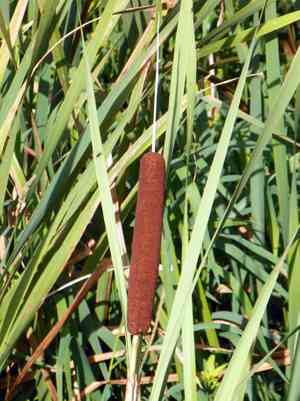
Broadleaf cattail (Typha latifolia)
Also known as: Cat-o'-nine-tails, Nailrod, Great reedmace, Cumbungi
Broadleaf cattails (Typha latifolia) thrive at the interface of wetlands and dry areas, often forming dense stands that dominate these environments. Their nutrient-rich rhizomes were a key food source for many indigenous cultures. The leaves of broadleaf cattails are useful for crafting items like mats, baskets, and even thatched roofs. Additionally, the fluffy, water-resistant seeds are ideal for stuffing pillows, mattresses, and even life vests. These versatile plants have been integral to both traditional practices and practical applications.
In This Article
Attributes of Broadleaf cattail
Lifespan
Perennial
Plant Type
Herb
Plant Height
91 cm to 2.5 m
Spread
1.2 m to 1.8 m
Leaf Color
Green Blue Silver
Flower Size
2.5 cm
Flower Color
Brown Yellow
Images of Broadleaf cattail
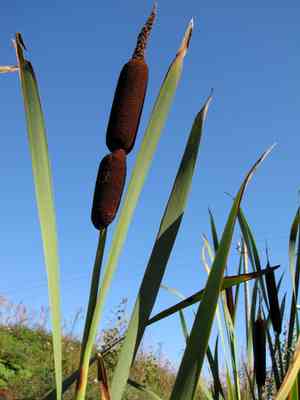



Quickly Identify Broadleaf cattail
1
Erect, sword-like leaves can reach 6 feet (1.8 meters) in height.
2
Cigar-shaped brown inflorescences atop tall stalks.
3
Dry brown cylindrical fruit clusters, 0.5-1 inch in diameter.
4
Gray-green sword-like leaves with parallel veins, turning yellow in fall.
5
Tall, unbranched stems from rhizomes, reaching 9 feet (2.7 meters).
Scientific Classification of Broadleaf cattail
Phylum
Vascular plants
Class
Monocotyledons
Order
Grasses, sedges and allies
Family
Cattail
Genus
Cattails
Species
Broadleaf cattail
Planting and Growing of Broadleaf cattail
Care Difficulty
Easy
Watering Schedule
Every 8 days
Sunlight Requirements
Full sun
Sunshine Duration
4-8 hours
Ideal Temperature
60-75℉
Soil Type
Potting Mix, Peat Mix
Soil pH
5.5-8
Fertilizer Type
Balanced
Pruning Season
Spring, Summer
Pruning Area
Branches, Leaves
Pruning Frequency
2 times a year
Repotting Season
Spring
Pot Type
Plastic, Ceramic
 How to Water Broadleaf cattail?
Typha latifolia thrives with a watering approach that mimics its natural wetland habitat. Consistently keep the soil saturated, ensuring the water reaches down deep to the roots. Aim for thorough soaking during each watering session, reaching about 1000 ml if the plant is in a container.
What are the symptoms of an underwatered Broadleaf cattail?
›
What should I do if my Broadleaf cattail is not getting enough water?
›
What are the symptoms of an overwatered Broadleaf cattail?
›
How to save an overwatered Broadleaf cattail?
›
 What Are the Sunlight Requirements for Broadleaf cattail?
Ideal lighting for Typha latifolia involves full sun with 6 to 8 hours of direct light. This promotes vigorous growth, enhances plant coloration, and optimizes flowering periods, ensuring a balanced and healthy ecological system.
More About Sunlight Requirements Techniques→
What is the best lighting condition for Typha latifolia?
›
How can I ensure Typha latifolia gets its ideal light?
›
What are the benefits of proper lighting for Typha latifolia?
›
 What Is the Ideal Temperature Range for Broadleaf cattail?
The ideal temperature range for Typha latifolia, commonly known as broadleaf cattail, is between 60°F and 75°F. These temperatures provide optimal conditions for growth and development, ensuring the plant maintains vigorous health and can carry out photosynthesis efficiently. Consistently maintaining these temperatures allows the cattail to thrive in its natural wetland habitat.
 What Soil is Best for Broadleaf cattail?
Typha latifolia thrives in soils that are consistently moist. The moisture retention capacity of loam and peat soils provides an ideal environment for its growth, ensuring that the roots remain hydrated and the plant can absorb nutrients efficiently. Rich, nutrient-dense soils are crucial. Loam offers a balanced mix of silt, sand, and clay, providing Cattails with essential minerals for their robust growth and vibrant foliage. Good aeration in the soil prevents root rot and supports healthy root systems. Loamy soil's crumbly texture ensures that air can circulate efficiently, fostering the plant's overall health and resilience.
More About Soil→
 How to Fertilize Broadleaf cattail?
For Typha latifolia, apply a light amount of fertilizer as they are not heavy feeders. Use a half-strength balanced liquid fertilizer, approximately 500 ml per plant, every two weeks during the growing season will suffice to support healthy growth without risking over-fertilization.
 How to Prune Broadleaf cattail?
Start by examining the plant and identifying the brown, dead, or broken stalks. These should be your target for pruning since removing them will allow more sunlight and air circulation to the healthy parts of the plant. This encourages robust growth and helps manage the plant's size. Cut each stalk about 6 inches above the water level or the ground line, depending on its growth environment. This method ensures that the roots remain protected while effectively removing the unwanted parts of the plant. Be sure to follow a consistent cutting pattern for a neat appearance. Dispose of the pruned material properly to avoid any disease that could potentially spread to the healthy parts of the plant. You can compost the cuttings if they are disease-free, or otherwise dispose of them through regular waste management channels.
More About Pruning Techniques→
 How to Propagate Broadleaf cattail plant?
1
Collect seeds from Typha latifolia when seedheads become dry and fluffy. Handle carefully to prevent loss due to winds or dispersal.
2
Prepare a moist, nutrient-rich soil mix for seed sowing. It should be loose to allow easy root penetration and have high organic matter content.
3
Sow seeds evenly in prepared seed trays, cover lightly with soil and water gently to ensure even distribution and germination.
 How to Repot Broadleaf cattail plant?
1
For Typha latifolia, the best time to consider repotting is when you observe crowded roots or stunted growth. This indicates the plant has become too constrained within its current pot, affecting its health and vitality.
2
Select a pot that is slightly larger, about 2-3 inches in diameter, than the current one. This increment gives the roots ample space to spread, which promotes healthier growth and ensures the plant's stability.
3
Opt for a moist, sandy loam as it closely mimics the natural swamp-like habitat of cattails. This type of soil retains adequate moisture while ensuring good drainage, offering ideal conditions for Typha latifolia.
Learn More About Broadleaf cattail Diseases
Anthracnose
Bacterial Leaf Spot
Bacterial Soft Rot
Bacterial Wilt
Chemical Injury
Damping-off
Downy Mildew
Drought Stress
Fusarium Wilt
Gray Mold
Leaf Spot
Mosaic
Nutrient Deficiency
Nutrient Toxicity
Powdery Mildew
Root Rot
Root-knot Nematode
Rusts
Sooty Mold
Spider Mites
Temperature Stress
Thrips Damage
White Mold



