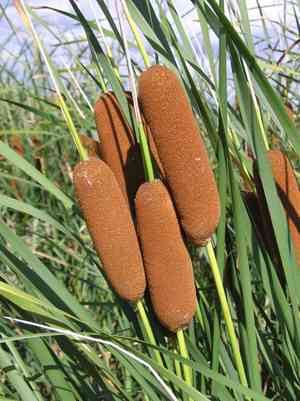
Graceful cattail (Typha laxmannii)
Also known as: narrowleaf cattail
The Latin name "Typha laxmannii" pays tribute to Erik Gustavovich Laxmann, a Finnish-Swedish clergyman and botanist who lived from 1737 to 1796. This aquatic plant is often cultivated for decorative purposes in shallow water areas near ponds and water features, attracting various birds and wildlife. However, due to its rapid growth, it is considered an invasive species in the US states of New Hampshire and Wisconsin.
In This Article
Attributes of Graceful cattail
Lifespan
Perennial
Plant Type
Herb
Plant Height
91 cm to 1.5 m
Spread
60 cm
Leaf Color
Green Gray Silver
Flower Size
2 to 3 centimeters
Flower Color
Brown Yellow Green
Images of Graceful cattail
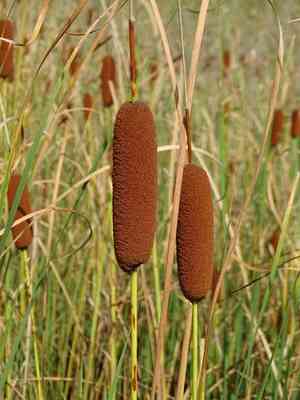
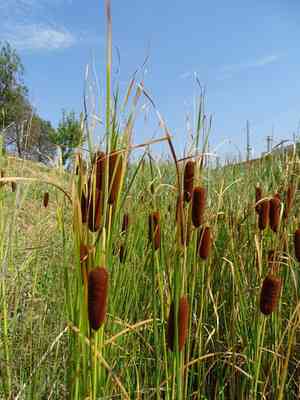
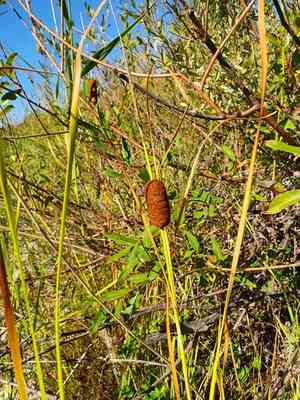
Quickly Identify Graceful cattail
1
Vertically aligned, sword-like leaves up to 5 feet (150 cm) tall.
2
Distinct yellowish male and greenish female flowers on single stalk with 2-inch (5 cm) gap.
3
Brownish, sausage-shaped fruiting spike about 4 inches (10 cm) long in early winter.
4
Basal, green leaves radiate around stout flower stalk.
5
Foliage transitions to yellow-brown color in autumn.
Scientific Classification of Graceful cattail
Phylum
Vascular plants
Class
Monocotyledons
Order
Grasses, sedges and allies
Family
Cattail
Genus
Cattails
Species
Graceful cattail
Planting and Growing of Graceful cattail
Care Difficulty
Easy
Watering Schedule
Every 3 days
Sunlight Requirements
Full sun
Sunshine Duration
6-10 hours
Ideal Temperature
60-75℉
Soil Type
Potting Mix, Peat Mix
Soil pH
6.5-7.5
Fertilizer Type
Balanced
Pruning Season
Spring, Summer
Pruning Area
Branches, Leaves
Pruning Frequency
2 times a year
Repotting Season
Spring
Pot Type
Plastic, Ceramic
 How to Water Graceful cattail?
For Typha laxmannii, consistent moisture is crucial. Generally, you should aim to provide around 500 milliliters of water per session. Make sure the soil remains consistently damp but not waterlogged, mimicking its natural marsh habitat.
What are the symptoms of an underwatered Graceful cattail?
›
What should I do if my Graceful cattail is not getting enough water?
›
What are the symptoms of an overwatered Graceful cattail?
›
How to save an overwatered Graceful cattail?
›
 What Are the Sunlight Requirements for Graceful cattail?
Typha laxmannii thrives best in conditions with full sun exposure for around 6-8 hours daily. Ideal lighting improves photosynthesis rates, aiding in the plant's structural and foliar development.
More About Sunlight Requirements Techniques→
What is the ideal light condition for Typha laxmannii?
›
How can you provide ideal lighting for Typha laxmannii?
›
What are the benefits of ideal lighting for Typha laxmannii?
›
 What Is the Ideal Temperature Range for Graceful cattail?
Typha laxmannii, also known as Laxmann's bulrush, thrives best in an environment where the temperature ranges between 60°F and 75°F. These temperatures support optimal growth and ensure the plant develops healthily. Maintaining this temperature range encourages robust foliage and flowering, essential for the propagation of this aquatic plant.
 What Soil is Best for Graceful cattail?
Typha laxmannii thrives in soil that retains moisture well, essential for its semi-aquatic nature. The soil should be able to hold water without becoming waterlogged, providing the plant with necessary hydration while preventing root rot. This plant benefits from nutrient-rich soil, which supports its rapid growth and robust foliage. The presence of organic matter can significantly enhance soil fertility, leading to healthier plants with vibrant growth patterns. The soil should have excellent aeration to allow roots to breathe. Well-aerated soil helps in the prevention of diseases and ensures efficient nutrient uptake, which is critical for the plant's overall health and growth.
 How to Fertilize Graceful cattail?
For Typha laxmannii, using a balanced 10-10-10 NPK fertilizer is ideal. When applying liquid fertilizer, dilute it to half its recommended strength to avoid root burn. For solid fertilizers, use approximately 1 tablespoon per plant per application.
 How to Prune Graceful cattail?
Begin by identifying the older stems that appear brown or damaged. Use a pair of sharp scissors or garden shears and trim these stems down to their base near the ground. Focus on removing dead foliage and maintaining shape but avoid cutting too deeply into the greenery. This encourages new growth and healthier development.
More About Pruning Techniques→
 How to Propagate Graceful cattail plant?
1
Use a well-draining growing medium suitable for wetland plants. This could include a mix of sand, peat, and garden soil that simulates the plant's natural environment. Ensuring proper drainage is key to successful propagation.
2
Evenly distribute the Typha laxmannii seeds over the surface of moist soil in the seed tray. Cover the seeds lightly with a thin layer of soil. Keep the soil consistently moist by misting it regularly.
3
Use a sharp knife or spade to divide established Typha laxmannii plants at the roots. Each section should have a portion of the root system and foliage. Replant divisions immediately in prepared soil.
 How to Repot Graceful cattail plant?
1
Typha laxmannii shows it's time for a repotting when you notice the roots are starting to circle the pot or emerging from the drainage holes. These are signs that the plant has outgrown its current container and requires more space to thrive.
2
When selecting a pot for repotting, pick one that is one size larger than the current pot. This provides ample space for root growth and prevents the soil from retaining too much moisture, potentially leading to root rot.
3
Use a well-draining garden soil mix that retains moisture but allows excess water to flow away. This balance ensures that Typha laxmannii's roots don't sit in soggy conditions, which could encourage fungal disease or root rot.
Learn More About Graceful cattail Diseases
Anthracnose
Bacterial Leaf Spot
Bacterial Soft Rot
Bacterial Wilt
Chemical Injury
Damping-off
Downy Mildew
Drought Stress
Fusarium Wilt
Gray Mold
Leaf Spot
Mosaic
Nutrient Deficiency
Nutrient Toxicity
Powdery Mildew
Root Rot
Root-knot Nematode
Rusts
Sooty Mold
Spider Mites
Temperature Stress
Thrips Damage
White Mold



