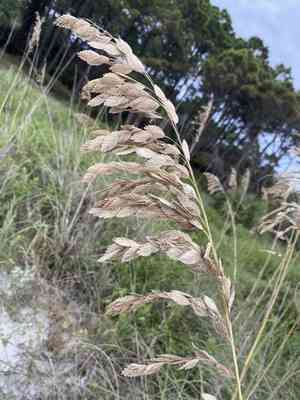
Sea oats (Uniola paniculata)
Also known as: Southern seaouts
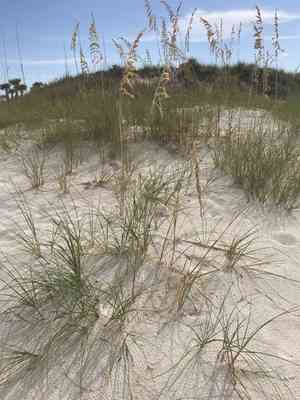
Sea oats (**Uniola paniculata**) thrive in coastal sand dunes, playing a key role in shoreline protection. This subtropical perennial grass is known for its upright growth and its decorative plumes, which turn a golden brown in late summer, giving the plant its common name due to their oat-like appearance.
In This Article
Attributes of Sea oats
Lifespan
Perennial
Plant Type
Herb
Plant Height
1.5 m to 2.5 m
Spread
30 cm to 60 cm
Leaf Color
Green
Flower Size
30 cm
Flower Color
Brown White Yellow Green
Images of Sea oats


Quickly Identify Sea oats
1
Tall, slender green leaves measuring 2-6 feet (60-180 cm) in height.
2
Large plume-like inflorescence with golden brown spikelets above foliage.
3
White flowers in drooping panicles, minute petals creating a cascading effect.
4
Oval-shaped dry achenes with reticulated texture and clustered arrangement.
5
Linear green leaves 8-18 inches (20-46 cm) long, tapering ends, parallel venation.
Scientific Classification of Sea oats
Phylum
Vascular plants
Class
Monocotyledons
Order
Poales
Family
Grass
Genus
Uniola
Species
Sea oats
Planting and Growing of Sea oats
Care Difficulty
Easy
Watering Schedule
Every day
Sunlight Requirements
Full sun
Sunshine Duration
6-10 hours
Ideal Temperature
65-85℉
Soil Type
Potting Mix, Peat Mix
Soil pH
6.5-7.5
Fertilizer Type
Balanced
Pruning Season
Spring, Summer
Pruning Area
Branches, Leaves
Pruning Frequency
Once a year
Repotting Season
Spring
Pot Type
Plastic, Ceramic
 How to Water Sea oats?
Uniola paniculata, commonly known as sea oats, should be watered with approximately 500 ml at each watering session. The principle is to ensure the soil remains slightly moist but not waterlogged. Aim to water until moisture begins to seep through the drainage holes, indicating sufficient saturation.
What are the symptoms of an underwatered Sea oats?
›
What should I do if my Sea oats is not getting enough water?
›
What are the symptoms of an overwatered Sea oats?
›
How to save an overwatered Sea oats?
›
 What Are the Sunlight Requirements for Sea oats?
Uniola paniculata flourishes under full sunlight for 6-8 hours daily. This consistent exposure ensures sturdy growth, maximizes seed output, and supports soil stabilization efforts, particularly in sandy environments.
More About Sunlight Requirements Techniques→
What is the ideal amount of sunlight for Uniola paniculata?
›
How to ensure Uniola paniculata gets its ideal sunlight?
›
Benefits of providing ideal sunlight for Uniola paniculata?
›
 What Is the Ideal Temperature Range for Sea oats?
Uniola paniculata thrives best within a temperature range of 65°F to 85°F. At these temperatures, photosynthesis is efficient, nutrient uptake is optimized, and overall plant health is maintained. Deviations above or below this range can lead to stress and inhibit growth.
 What Soil is Best for Sea oats?
Uniola paniculata thrives in well-drained soils, which prevent root rot and allow optimal air circulation for root health, ensuring steady growth and development. This plant prefers soils with low fertility, as nutrient-rich soils can lead to excessive growth and reduce its resilience against environmental stresses, maintaining balance in its natural habitats. Uniola paniculata does best in soils with minimal organic matter. The lack of decomposing material helps this plant adapt to sandy environments, promoting water retention without overwhelming its root system.
 How to Fertilize Sea oats?
For Uniola paniculata, the fertilizer amount should be carefully measured due to its nature as a native dune plant. Applying too much fertilizer can be detrimental. Typically, a dilution of liquid fertilizer at half strength is sufficient when applied bi-monthly, with approximately 0.5 gallons per plant. For granular fertilizers, a light top dressing of around 1/4 cup per plant is adequate three times a year.
 How to Prune Sea oats?
When pruning Uniola paniculata, also known as sea oats, start by removing any old or dead stems at the base to make room for new growth. Use sharp, clean shears and cut down to ground level, leaving fresh stems intact for better sunlight exposure.
More About Pruning Techniques→
 How to Propagate Sea oats plant?
1
Gather seeds from mature Uniola paniculata plants during late summer or early autumn. Ensure that seeds are fully matured to increase the success rate of germination.
2
Prepare a well-draining soil mix with sandy texture, as this mimics the coastal environment native to Uniola paniculata. The soil should be slightly moist but not waterlogged.
3
In spring or early summer, gently dig up the root ball of a mature plant. Carefully separate the clumps into smaller sections with at least a few healthy stems and roots in each.
 How to Repot Sea oats plant?
1
Uniola paniculata, commonly known as sea oats, needs repotting when roots protrude from drainage holes or growth slows significantly. Look for spring or fall when temperatures are mild and the plant can recover without stress.
2
Choose pots slightly larger than the root ball to prevent waterlogging but allow growth. Good material choices include clay or terracotta, promoting air circulation and preventing root rot, key for this moisture-sensitive species.
3
Select a sandy, well-draining soil mimicking its coastal habitat, reducing moisture retention and mimicking natural conditions. This allows optimal root aeration and mineral nutrient uptake, essential for healthy growth.



