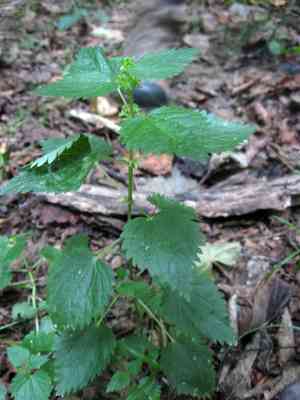
Heartleaf nettle(Urtica chamaedryoides)

Heartleaf nettle (Urtica chamaedryoides)

Also known as: Slim Stinging Nettle, Heartwhole Nettle

The stinging nettle (Urtica dioica) is notable for its irritating hairs that can cause a rash upon contact. This plant also produces small greenish flowers that are attractive to butterflies, and its fibers are suitable for making textiles.

Attributes of Heartleaf nettle

Lifespan
Annual, Perennial
Plant Type
Herb
Plant Height
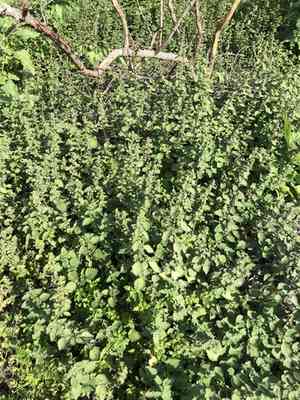
15 cm to 80 cm
Spread
20 cm to 30 cm
Leaf Color
Green
Flower Size
2.5 cm
Flower Color
Yellow Green

PlantJoy - Identify plants with a snap

Identify and diagnose plants, get toxicity alerts, and explore safety guides for all types of fungi.

Try for Free

Images of Heartleaf nettle

Heartleaf nettle(Urtica chamaedryoides)

Quickly Identify Heartleaf nettle

1
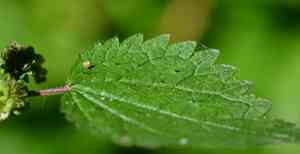
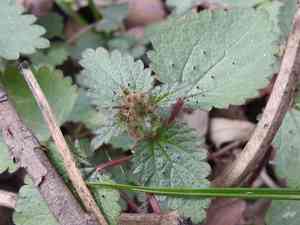
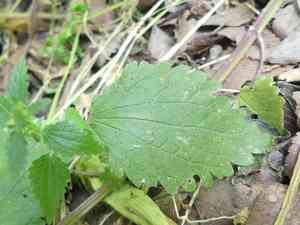
Heart-shaped leaves with stinging trichomes and toothed margins, resembling mint.
2
Opposite leaves with visible veins, measuring 1-2.5 inches (2.5-6.5 cm) long.
3
Flattened egg-shaped fruit with brown color, enclosed by bract-like structures.
4
Green to red stem with branching patterns, covered in stinging hairs.
5
Minute greenish to whitish flowers in spherical clusters, wind-pollinated from March to November.

Scientific Classification of Heartleaf nettle

Phylum
Vascular plants
Class
Dicotyledons
Order
Rosales
Family
Nettle
Genus
Urtica
Species
Heartleaf nettle

Planting and Growing of Heartleaf nettle

Care Difficulty
Easy
Watering Schedule
Every 2 days
Sunlight Requirements
Partial sun
Sunshine Duration
4-8 hours
Ideal Temperature
68-77℉
Soil Type
Potting Mix, Peat Mix
Soil pH
6.5-7.5
Fertilizer Type
Balanced
Pruning Season
Spring, Summer
Pruning Area
Branches, Leaves
Pruning Frequency
2 times a year
Repotting Season
Spring
Pot Type
Plastic, Ceramic

water icon How to Water Heartleaf nettle?

When watering Urtica chamaedryoides, it's important to ensure the soil is uniformly moist but not waterlogged. The rule of thumb is to provide around 250 milliliters of water per session, making sure it seeps through the soil evenly. This helps in maintaining the plant's natural hydration needs without leading to root rot. Ideally, the soil surface should appear moist to touch but not pooled with water.
What are the symptoms of an underwatered Heartleaf nettle?
What should I do if my Heartleaf nettle is not getting enough water?
What are the symptoms of an overwatered Heartleaf nettle?
How to save an overwatered Heartleaf nettle?

sunlight icon What Are the Sunlight Requirements for Heartleaf nettle?

Sunlight Requirements: Partial sun, Full shade
Duration of light: 4 to 6 hours
Partial sun offers Urtica chamaedryoides a harmonious blend of light and shade. Such conditions prevent stress and encourage optimal growth, enhancing leaf size and density, thus supporting the plant's overall vitality.
Solution for Ideal Light
Handling Procedure
Benefits of Proper Lighting
More About Sunlight Requirements Techniques

temperature icon What Is the Ideal Temperature Range for Heartleaf nettle?

Ideal Temperature: 68 ~ 77℉
Urtica chamaedryoides thrives best in temperatures ranging from 68°F to 77°F. This range provides the optimal conditions for growth, enabling the plant to photosynthesize effectively and develop a robust structure.

soil icon What Soil is Best for Heartleaf nettle?

Soil type: Loam, Sandy loam, Clay soil
Soil PH: 6.5 ~ 7.5
Urtica chamaedryoides thrives in well-drained soil as it prevents water accumulation around the roots, reducing the risk of root rot and enhancing nutrient uptake. Moderately fertile soil provides essential nutrients without excessive nitrogen that can discourage desirable growth, supporting healthy leaf development and plant vigor. The presence of organic matter improves soil structure, increases nutrient availability, and enhances water retention, promoting optimal growth of Urtica chamaedryoides.

fertilize icon How to Fertilize Heartleaf nettle?

Fertilizer type: Balanced
For Urtica chamaedryoides, applying a balanced liquid fertilizer at half strength is recommended. Each watering session should not exceed 250 ml of solution for potted plants. This ensures the plant receives adequate nutrients without overwhelming its root system.

prune icon How to Prune Heartleaf nettle?

Pruning Time: Spring, Summer
Start by identifying dead, damaged, or overgrown stems. Use a pair of sharp, clean scissors or pruning shears to snip them off at a 45-degree angle. This encourages the plant to heal quickly and promote new growth. Always prune above a leaf node to stimulate branching. To maintain a specific shape, prune the plant evenly by cutting back to a uniform height. Remove any errant stems that disrupt the plant’s symmetry. This not only keeps the plant looking neat but also ensures even distribution of sunlight throughout the plant. More About Pruning Techniques

propagate icon How to Propagate Heartleaf nettle plant?

Propagate Time: Spring, Early spring, Late spring
1
Collect seeds from mature Urtica chamaedryoides plants when they start drying on the plant. Dry them further in a warm area to ensure no moisture is retained, as this could lead to mold.
2
Fill a seedling tray with a well-draining soil mix. Plant the seeds lightly, covering them with a thin layer of soil, and water gently to ensure the substrate is moist but not waterlogged.
3
Select healthy, non-flowering stems of the plant for cuttings. Ideally, take cuttings early in the morning when the plant's moisture content is highest.
More About Propagating Techniques

repot icon How to Repot Heartleaf nettle plant?

Repotting frequency: Once a year
1
Urtica chamaedryoides should be repotted when roots start to emerge from the drainage holes or if the plant's growth significantly slows down. Typically, this occurs once a year as the plant rapidly fills the pot.
2
Opt for a pot that is just one size larger than the current one, ensuring it has sufficient drainage holes. This prevents water logging and encourages proper root aeration, crucial for the plant's health.
3
Choose a well-draining potting mix. This soil type prevents water retention that could lead to root rot, while allowing roots to access much-needed nutrients efficiently.

PlantJoy - Identify plants with a snap

Find the best spots for them to optimize their health, simply using your phone.

Try for Free

Toxicity of Heartleaf nettle

Is Heartleaf nettle toxic to humans?

Heartleaf nettle is a hazardous plant known for potentially causing skin irritation upon contact. The stems, leaves, and petioles are covered with tiny stinging nettles, which contain chemical toxins such as formic acid. This is the substance responsible for the itchy and burning sensations experienced on the skin. Redness and swelling in the vicinity of the affected area are also frequent side effects. Additionally, if ingested or inhaled, the plant can induce respiratory distress. The severity of symptoms varies based on the individual’s allergic response. Those with pre-existing conditions such as asthma or chronic obstructive pulmonary disease (C.O.P.D.) should exercise caution when around this weed.

Identify toxic plants for your safety

Learn which plants are harmful to you and your pets, and make informed choices for a safer home!

Try for Free
WARNING
The judgment on toxicity and danger is for reference only. We DO NOT GUARANTEE any accuracy of such judgment. Therefore, you SHALL NOT rely on such judgment. It is IMPORTANT TO SEEK PROFESSIONAL ADVICE in advance when necessary.
More About Toxic Techniques