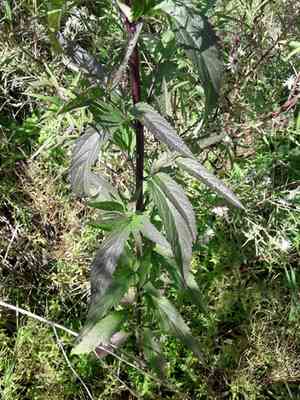
Blue vervain (Verbena hastata)
Also known as: Swamp verbena, American blue vervain, Ironweed, Simpler's joy
Blue vervain (Verbena hastata) typically flourishes in wet habitats such as stream banks, marsh edges, and damp meadows across the United States and Canada. It serves as a magnet for pollinators like bees and butterflies, and birds, including finches and sparrows, are drawn to its seeds. Additionally, Common Buckeye caterpillars use it as a host plant. While traditionally utilized in various cultural medicinal practices, modern research has identified some potential adverse effects on human health under certain conditions.
In This Article
Attributes of Blue vervain
Lifespan
Perennial, Biennial, Annual
Plant Type
Herb
Plant Height
91 cm to 1.8 m
Spread
60 cm
Leaf Color
Green
Flower Size
2.5 cm
Flower Color
Purple Blue Violet White Pink Lavender
Images of Blue vervain
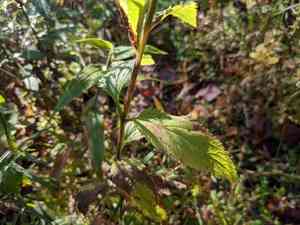
Quickly Identify Blue vervain
1
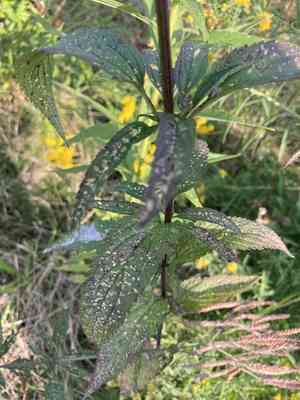
Square stems, 0.1-0.2 inches (2.5-5 mm) diameter, with white appressed hairs for texture.
2
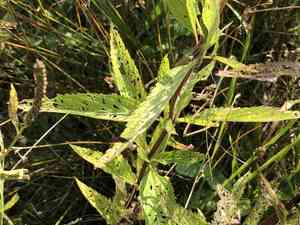
Lance-shaped leaves, opposite pairs, up to 6 inches (15 cm) long, 1 inch (2.5 cm) wide.
3
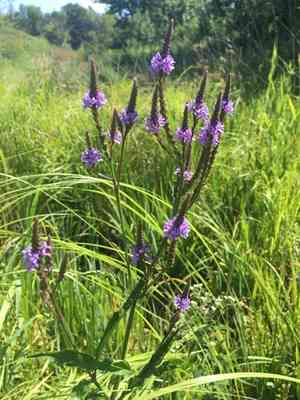
Tubular, violet-blue flowers in panicles, 0.6 cm wide, with fused petals creating flared mouth.
4
Nutlets with persistent calyx, reddish-brown, triangular-convex, small in size.
5
6-inch (15 cm) panicles, blue-violet corolla divided into 5 lobes, candelabra-like appearance.
Scientific Classification of Blue vervain
Phylum
Vascular plants
Class
Dicotyledons
Order
Lamiales
Family
Verbena
Genus
Vervains
Species
Blue vervain
Planting and Growing of Blue vervain
Care Difficulty
Easy
Watering Schedule
Every 8 days
Sunlight Requirements
Full sun
Sunshine Duration
4-8 hours
Ideal Temperature
65-75℉
Soil Type
Potting Mix, Peat Mix
Soil pH
5.5-7.5
Fertilizer Type
Balanced
Pruning Season
Spring, Summer
Pruning Area
Branches, Leaves
Pruning Frequency
2 times a year
Repotting Season
Spring
Pot Type
Plastic, Terracotta
 How to Water Blue vervain?
When watering Verbena hastata, aim to provide around 500 milliliters of water per session. This amount ensures that the soil is moistened thoroughly without becoming waterlogged, which supports healthy root growth and plant vitality. Water until you see moisture starting to drain from the bottom of the pot, indicating that the entire root zone has been adequately hydrated.
What are the symptoms of an underwatered Blue vervain?
›
What should I do if my Blue vervain is not getting enough water?
›
What are the symptoms of an overwatered Blue vervain?
›
How to save an overwatered Blue vervain?
›
 What Are the Sunlight Requirements for Blue vervain?
Verbena hastata thrives with full to partial sun, meaning it should ideally receive between 6 to 8 hours of light, supporting robust growth and abundant flowering.
More About Sunlight Requirements Techniques→
What is the best light condition for Verbena hastata?
›
How can I achieve ideal light conditions?
›
What are the benefits of optimal light?
›
 What Is the Ideal Temperature Range for Blue vervain?
The ideal temperature range for Verbena hastata is between 65°F to 75°F. This range promotes optimal growth and blooming, ensuring the plant develops robustly. It's essential to maintain this range to prevent stress and encourage full flowering potential.
 What Soil is Best for Blue vervain?
Verbena hastata thrives in soils with good moisture retention. This helps keep the roots consistently hydrated, crucial for the plant's growth and flowering. It's essential to have a balance; too much moisture can lead to root rot, while too little can cause drought stress. This plant prefers nutrient-rich soils that can support its vigorous growth. Nutrients such as nitrogen, phosphorus, and potassium are vital for its well-being, leading to lush foliage and vibrant, abundant blooms. While Verbena hastata enjoys moisture, it doesn't tolerate waterlogged conditions. Well-drained soil prevents water accumulation and reduces the risk of root disease, promoting healthier root systems.
More About Soil→
 How to Fertilize Blue vervain?
When fertilizing Verbena hastata, it is important to apply a balanced amount. For liquid fertilizer, use approximately one tablespoon per gallon of water. Slow-release fertilizers should be applied lightly, around one ounce per plant, ensuring not to overload the soil. This moderation prevents nutrient burn while promoting healthy growth.
More About Fertilizing Techniques→
 How to Prune Blue vervain?
Regularly remove spent flower heads throughout the blooming period to encourage continual flowering. Cut the faded blooms just above the new leaf node to ensure the plant channels energy into producing more blossoms. In mid-summer, consider cutting back about one-third of the plant's height. This action not only controls the size and shape but also stimulates new growth, potentially leading to a second wave of blooms in late summer. At the end of the flowering season in late fall, cut the plant back to ground level after it has been hit by the first frost. This cutback is vital for clearing out any dead material and preparing the plant for its dormancy period.
More About Pruning Techniques→
 How to Propagate Blue vervain plant?
1
Gather seeds from mature Verbena hastata plants in late autumn. Clean and dry them to avoid mold. Store in a cool, dark place until ready to sow in late spring.
2
Take 4-6 inch cuttings with at least two nodes from healthy plants. Remove lower leaves and dip the cut end in rooting hormone. Plant in moist potting mix.
3
In early autumn, carefully lift established clumps of Verbena hastata, and use a sharp spade to divide them into smaller sections. Replant sections immediately.
 How to Repot Blue vervain plant?
1
Verbena hastata shows signs of needing repotting when its roots start circling the pot or growing out of drainage holes. If the plant's growth is stunted or it dries out too quickly after watering, these are also clear indicators that it's time to repot. The best time for this task is during the active growing seasons, particularly in spring or early summer, to minimize plant stress.
2
Select a pot that is about 1-2 inches larger in diameter than the current one. This prevents overwatering and root rot from having too much soil. Opt for pots with drainage holes to ensure adequate drainage, helping the roots to breathe and thrive without saturation. Choosing the correct size and type of pot ensures that your Verbena hastata continues to grow healthily without being overwhelmed by excess moisture.
3
For replanted Verbena hastata, opt for well-draining, rich soil that retains some moisture but isn’t waterlogged. A mix that includes organic matter like compost or peat moss is ideal. Such soil enhances nutrient availability and drainage, providing the roots with the necessary support for robust growth. It also helps in avoiding water stress or root rot, critical for maintaining plant vitality.



