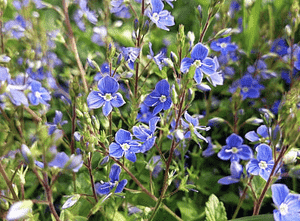
Corn speedwell (Veronica arvensis)
Also known as: Common speedwell, Wall speedwell
Field speedwell (Veronica persica) is a widespread weed originating from Europe, Africa, and Asia. This plant often invades gardens, trash dumps, and pastures, producing small blue flowers during the spring season.
In This Article
Attributes of Corn speedwell
Lifespan
Annual, Perennial
Plant Type
Herb
Plant Height
9 cm to 40 cm
Spread
15 cm to 30 cm
Leaf Color
Green Yellow Gold
Flower Size
2 mm to 3 mm
Flower Color
Blue Purple
Images of Corn speedwell
Quickly Identify Corn speedwell
1
Diminutive size and preference for full sunlight distinguish corn speedwell
2
Petite blue flowers with 4 hairy green sepals bloom mid-spring to mid-summer
3
Heart-shaped capsule with tiny yellow seeds, 1/8 inch (3 mm) long
4
Lower leaves hairy, oval-orbicular, upper leaves linear-oblong to lanceolate
5
Versatile stems, green, 0.08 to 0.16 inches (2 to 4 mm) thick, slight hairiness
Scientific Classification of Corn speedwell
Phylum
Vascular plants
Class
Dicotyledons
Order
Mints plantains olives and allies
Family
Plantain
Genus
Speedwells
Species
Corn speedwell
Planting and Growing of Corn speedwell
Care Difficulty
Easy
Watering Schedule
Every 4 days
Sunlight Requirements
Full sun
Sunshine Duration
6-10 hours
Ideal Temperature
60-75℉
Soil Type
Potting Mix, Peat Mix
Soil pH
6-7.5
Fertilizer Type
Balanced
Pruning Season
Spring, Summer
Pruning Area
Branches, Leaves
Pruning Frequency
2 times a year
Repotting Season
Spring
Pot Type
Plastic, Ceramic
 How to Water Corn speedwell?
The watering amount for Veronica arvensis should be just enough to keep the soil consistently moist but not soggy. Watering with about 50 ml each time is usually sufficient. Always ensure that the top layer of the soil has dried out before watering again to avoid waterlogging.
What are the symptoms of an underwatered Corn speedwell?
›
What should I do if my Corn speedwell is not getting enough water?
›
What are the symptoms of an overwatered Corn speedwell?
›
How to save an overwatered Corn speedwell?
›
 What Are the Sunlight Requirements for Corn speedwell?
Veronica arvensis thrives in full to partial sunlight environments. Ensuring such conditions fosters optimal growth, enhances flowering potential, and maintains overall plant health.
What type of sunlight does Veronica arvensis prefer?
›
How can you ensure Veronica arvensis gets its ideal light exposure?
›
What benefits does Veronica arvensis gain from the ideal light conditions?
›
 What Is the Ideal Temperature Range for Corn speedwell?
The ideal temperature range for Veronica arvensis is between 60°F to 75°F. Maintaining temperatures within this range supports optimal growth and health, ensuring the plant thrives. This range helps provide enough warmth for metabolic processes without causing heat stress.
 What Soil is Best for Corn speedwell?
Veronica arvensis thrives in well-drained soil to prevent root rot and ensure optimal growth. Well-drained conditions allow the roots to access oxygen more easily, promoting stronger root development and vigorous plant health. This plant requires soil with moderate fertility levels. It benefits from a balanced nutrient profile, which supports its overall growth and flowering potential without encouraging excessive foliage development. The texture and aeration of the soil play critical roles for Veronica arvensis. A sandy or loamy texture ensures air circulation around the roots, enhancing nutrient uptake and optimizing water retention without causing waterlogging.
 How to Fertilize Corn speedwell?
For Veronica arvensis, fertilizing should be modest as too much can harm the plant's health. A diluted liquid fertilizer during the growing season is recommended. Use a solution with a quarter of the concentration suggested by the fertilizer manufacturer to avoid overfeeding.
 How to Prune Corn speedwell?
Select sharp scissors or small pruning shears to make clean cuts without damaging the plant. This will facilitate faster healing and reduce infection risks. Look for discolored leaves and stems, and remove them by cutting at the base where they meet healthy growth. This promotes better light and air penetration to the center of the plant. Trim overgrown or unruly stems to keep the desired shape and size. Focus on symmetry and balance to ensure uniform growth patterns, enhancing the plant's appearance. Once the flowering spikes have peaked, cutting them back can encourage a bushier form and potentially spur more blooms. It's a way to direct energy back into vegetative growth.
 How to Propagate Corn speedwell plant?
1
Start by filling the seed tray with the sterilized potting mix. Sow the Veronica arvensis seeds on the surface, lightly pressing them into the soil. Do not cover the seeds with too much soil as they need light to germinate.
2
Gently mist the sown seeds with water to moisten them without displacing the soil. Cover the tray with a clear plastic lid or cling film to retain moisture and warmth, creating a mini greenhouse effect.
3
Place the tray in a warm, bright location but out of direct sunlight. Maintain a temperature of around 18-22°C (64-72°F) for optimal germination, and ensure that the soil remains consistently moist.
 How to Repot Corn speedwell plant?
1
Veronica arvensis signals its need for repotting when you notice it becoming root-bound, with roots emerging from the drainage holes, or when growth seems stunted. Ideally, look to repot in spring or autumn when the plant is not in an active flowering phase, ensuring minimal stress.
2
When selecting a pot for Veronica arvensis, opt for one that is only slightly larger than its root ball, ensuring proper drainage holes at the bottom. This choice helps in preventing root rot and encourages the plant to focus its growth on foliage and blooms rather than excessive root development.
3
Choosing the right soil is crucial. A well-draining, sandy soil mix is perfect for Veronica arvensis. This type of soil ensures that the plant's roots do not sit in water, reducing the risk of rot and helping the plant to thrive in a soil environment that mimics its natural habitat.



