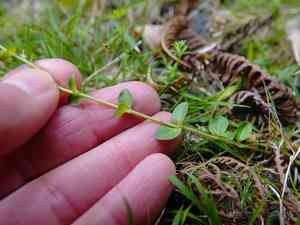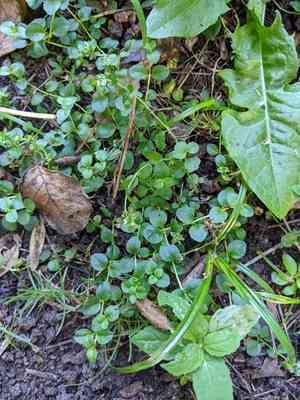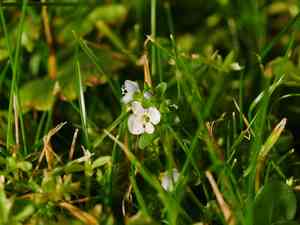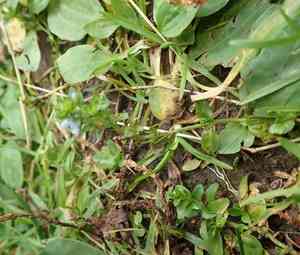
Thyme-leaved speedwell(Veronica serpyllifolia)

Thyme-leaved speedwell (Veronica serpyllifolia)

Also known as: Turf speedwell

Thyme-leaved speedwell (Veronica serpyllifolia) is a perennial weed that can grow in diverse environments including forests, hillsides, and grassy areas. To prevent it from taking over your yard, you can take the following steps:

1. **Frequent Mowing**: Consistently mow your lawn to discourage the weed's growth.
2. **Watering and Fertilizing**: Properly water and fertilize your lawn to encourage dense grass, which will outcompete the weed.
3. **Healthy Lawn Practices**: Aerate and overseed your lawn to maintain its health and thickness.
4. **Manual Weeding**: Remove the weed manually, ensuring to get the entire root.
5. **Use of Herbicides**: If needed, apply selective herbicides designed to target broadleaf weeds.

These practices will help establish a robust lawn that naturally resists the invasion of thyme-leaved speedwell.

Attributes of Thyme-leaved speedwell

Lifespan
Perennial
Plant Type
Herb
Plant Height
20 cm
Spread
15 cm to 30 cm
Leaf Color
Green
Flower Size
5 cm to 10 cm
Flower Color
White Purple Blue Lavender

PlantJoy - Identify plants with a snap

Identify and diagnose plants, get toxicity alerts, and explore safety guides for all types of fungi.

Try for Free

Images of Thyme-leaved speedwell

Thyme-leaved speedwell(Veronica serpyllifolia)

Quickly Identify Thyme-leaved speedwell

1
Glossy, evergreen foliage with ovate to oblong leaves.
2
Small, delicate flowers with four pale blue to violet petals.
3
Low mat growth habit, reaching 2–4 inches (5–10 cm) tall.
4
Fine hairs and soft texture resembling thyme on leaves.
5
Prefer full to partial sunlight and well-drained soils.

Scientific Classification of Thyme-leaved speedwell

Phylum
Vascular plants
Class
Dicotyledons
Order
Lamiales
Family
Plantain
Genus
Speedwells
Species
Thyme-leaved speedwell

Planting and Growing of Thyme-leaved speedwell

Care Difficulty
Easy
Watering Schedule
Every 2 days
Sunlight Requirements
Partial sun
Sunshine Duration
4-8 hours
Ideal Temperature
50-77℉
Soil Type
Potting Mix
Soil pH
6.5-7.5
Fertilizer Type
Balanced
Pruning Season
Spring, Summer
Pruning Area
Branches, Leaves
Pruning Frequency
2 times a year
Repotting Season
Spring
Pot Type
Plastic, Ceramic

water icon How to Water Thyme-leaved speedwell?

For Veronica serpyllifolia, or Thyme-leaved Speedwell, you should aim to water moderately. It thrives in moist conditions but doesn't tolerate standing water; thus, 200 milliliters per session should be ample to keep the soil consistently moist but not overly saturated.
What are the symptoms of an underwatered Thyme-leaved speedwell?
What should I do if my Thyme-leaved speedwell is not getting enough water?
What are the symptoms of an overwatered Thyme-leaved speedwell?
How to save an overwatered Thyme-leaved speedwell?

sunlight icon What Are the Sunlight Requirements for Thyme-leaved speedwell?

Sunlight Requirements: Partial sun, Full shade
Duration of light: 4 to 6 hours
Veronica serpyllifolia thrives with partial sun, ideally enjoying dappled sunlight. This ensures vigorous growth, lush foliage, and resilience against pest and disease attacks while maintaining plant aesthetics.
Solution
Specific Measures
Achieving Effects

temperature icon What Is the Ideal Temperature Range for Thyme-leaved speedwell?

Ideal Temperature: 50 ~ 77℉
The ideal temperature range for Veronica serpyllifolia falls between 50°F and 77°F. These temperatures provide the plant with optimal conditions to thrive, promoting healthy growth and vibrant blooms. Maintaining this range ensures that the plant can effectively photosynthesize and supports its metabolic functions.

soil icon What Soil is Best for Thyme-leaved speedwell?

Soil type: Loam, Sandy loam, Sandy soil
Soil PH: 6.5 ~ 7.5
Veronica serpyllifolia prefers well-drained soil to prevent waterlogging, which can lead to root rot. This ensures an optimal balance of moisture and air, promoting healthy growth. A soil rich in organic matter provides essential nutrients for Veronica serpyllifolia, promoting vigorous growth and abundant flowering. Compost or well-rotted manure can improve the soil structure and fertility. Moderate moisture levels are ideal, keeping the soil consistently damp but not waterlogged. This helps maintain plant turgor and supports cellular functions, resulting in lush greenery.

fertilize icon How to Fertilize Thyme-leaved speedwell?

Fertilizer type: Balanced
When fertilizing Veronica serpyllifolia, use a balanced fertilizer at a diluted ratio of 1/4 of the recommended dose found on the package. This ensures the plant receives nutrients without risking root burn.

prune icon How to Prune Thyme-leaved speedwell?

Pruning Time: Spring, Summer, Autumn
First, ensure you have a pair of clean, sharp pruning shears. Begin by removing any dead or damaged stems at the base. Then, cut back the flowering stems slightly to encourage branching and further blooms. You can also trim any excessive growth that disrupts the plant's appearance or balance, always making sure cuts are made just above a leaf node for best results. For Veronica serpyllifolia that has grown too leggy or sparse, perform rejuvenation pruning by cutting back the plant to within a few inches above the ground. This drastic approach encourages the plant to produce new, lush growth and can be particularly effective if the plant appears tired or untidy. It's best carried out in early spring or after the main flowering season.

propagate icon How to Propagate Thyme-leaved speedwell plant?

Propagate Time: Spring, Early Spring, Late Spring
1
Gather seeds from mature plants ensuring they are fully ripened. Store them in a cool, dry place until you're ready to sow in spring for best results.
2
Select healthy, non-flowering stems and cut just below a node. Each cutting should be at least three inches long to provide adequate material for rooting.
3
Carefully dig up the entire plant and separate the root clumps. Ensure each division has a healthy shoot and root system to promote successful replanting.

repot icon How to Repot Thyme-leaved speedwell plant?

Repotting frequency: Annually or biennially
1
Veronica serpyllifolia should be repotted when it becomes root-bound or when the growth slows significantly, indicating that nutrients are running low. A good sign is when you notice roots growing out of the drainage holes, or if the plant seems stressed despite regular care, suggesting it's time for a new pot.
2
Select a pot that is one size larger than the current pot, and ensure it has sufficient drainage holes. This prevents waterlogging, which Veronica serpyllifolia is particularly sensitive to. A slightly larger pot allows the roots to expand, promoting healthier growth and preventing issues related to overwatering.
3
Opt for a well-draining potting mix to prevent water retention and root rot, which this plant is prone to. A mix containing peat, perlite, and a portion of sand provides a balance of moisture retention and drainage, offering optimal growing conditions for Veronica serpyllifolia.

PlantJoy - Identify plants with a snap

Find the best spots for them to optimize their health, simply using your phone.

Try for Free