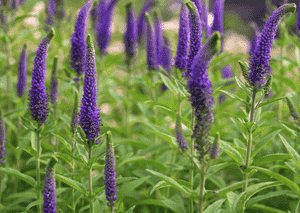
Spiked speedwell (Veronica spicata)
Also known as: Spiked Speedwell, Incana Speedwell
The Spiked Speedwell (*Veronica spicata*) is a native plant species in the United Kingdom. It enjoys protection under the Conservation of Wild Creatures and Wild Plants Act and holds the distinction of being the county flower of Montgomeryshire.
In This Article
Attributes of Spiked speedwell
Lifespan
Perennial
Plant Type
Herb
Plant Height
61 cm to 91 cm
Spread
60 cm to 75 cm
Leaf Color
Green
Flower Size
2.5 cm
Flower Color
Blue White Pink Purple Red
Images of Spiked speedwell
Quickly Identify Spiked speedwell
1
Upright growth to 2 feet (60 cm) with lance-shaped basal leaves in a rosette.
2
Colorful spikes of small, star-shaped flowers in shades of blue, violet, or pink.
3
Simple leaves up to 2 inches (5 cm) long, with acute tips and cuneate bases.
4
Pubescent leaves with vein patterns aligned with leaf shape for structural support.
Scientific Classification of Spiked speedwell
Phylum
Vascular plants
Class
Dicotyledons
Order
Lamiales
Family
Plantain
Genus
Speedwells
Species
Spiked speedwell
Planting and Growing of Spiked speedwell
Care Difficulty
Easy
Watering Schedule
Every 4 days
Sunlight Requirements
Full sun
Sunshine Duration
4-8 hours
Ideal Temperature
60-75℉
Soil Type
Potting Mix, Peat Mix
Soil pH
6.5-7.5
Fertilizer Type
Balanced
Pruning Season
Spring, Summer
Pruning Area
Branches, Leaves
Pruning Frequency
2 times a year
Repotting Season
Spring
Pot Type
Plastic, Terracotta
 How to Water Spiked speedwell?
Veronica spicata requires a moderate amount of water. You should aim to give it approximately 500 milliliters per session. The key is to ensure the soil remains consistently moist but not waterlogged. Check the top inch of the soil; if it's dry, it's time to water. Avoid letting the roots stand in water to prevent rot.
More About Watering Techniques→
What are the symptoms of an underwatered Spiked speedwell?
›
What should I do if my Spiked speedwell is not getting enough water?
›
What are the symptoms of an overwatered Spiked speedwell?
›
How to save an overwatered Spiked speedwell?
›
 What Are the Sunlight Requirements for Spiked speedwell?
Veronica spicata thrives in full to partial sunlight. Ideal light promotes vigorous growth, maximizes blooming, and maintains the plant's aesthetic vibrant with healthy foliage.
More About Sunlight Requirements Techniques→
Optimal Sun Exposure
›
Solution for Ideal Light
›
Results of Ideal Lighting
›
 What Is the Ideal Temperature Range for Spiked speedwell?
The ideal temperature range for Veronica spicata is between 60°F and 75°F. This range supports optimal growth and blooming, ensuring that the plant remains healthy and vibrant. It thrives in moderate temperatures that emulate its natural habitat. Ensuring the plant remains within this temperature bracket will help maintain its overall vigor and flowering potential.
 What Soil is Best for Spiked speedwell?
Veronica spicata thrives in well-drained soil which prevents water logging. Adequate drainage encourages healthier root development and minimizes root rot risk. A nutrient-rich loam provides the essential minerals and nutrients Veronica spicata requires for vibrant blooms. Regularly enriched soil supports vigorous growth and flowering. This plant does well in soil that retains just enough moisture to keep roots healthy. Consistent moisture ensures sustained growth, avoiding drought stress while preventing water excess.
More About Soil→
 How to Fertilize Spiked speedwell?
When fertilizing Veronica spicata, use a balanced fertilizer with an N-P-K ratio of 10-10-10. Apply liquid fertilizer at a rate of 1 tablespoon per gallon of water. For slow-release granules, use approximately 1 to 1.5 pounds per 100 square feet.
 How to Prune Spiked speedwell?
Start by removing any dead or diseased stems at their base using sharp, sterilized shears. Next, cut back spent flower spikes just above a pair of leaves to encourage further blooming. During late spring, consider trimming the plant by one-third to promote a denser growth habit. Be careful not to cut into the old, woody parts of the plant, as this can hinder new growth.
More About Pruning Techniques→
 How to Propagate Spiked speedwell plant?
1
Fill a seed tray with a well-draining potting mix, sow the seeds on the surface, and gently press them into the soil. Water lightly and cover with a plastic lid to maintain humidity. Place the tray in a warm, bright location.
2
Select a healthy, non-flowering shoot and cut a section about 4-6 inches long. Remove the lower leaves to expose nodes and dip the end in rooting hormone. Plant in a pot filled with moist potting mix.
3
Carefully dig up a mature plant with a garden fork. Separate the root clump into smaller sections with a sharp knife, ensuring each section has roots and shoots. Replant immediately in prepared soil.
 How to Repot Spiked speedwell plant?
1
Watch for signs such as roots growing out of the drainage holes. Also, if the soil dries out too quickly or the plant becomes top-heavy, it's time to repot. Ideally, repot Veronica spicata in spring when the plant is coming out of dormancy, ensuring a strong start for the growing season.
2
Choose a pot that's about 2 inches larger in diameter than the current one. Opt for pots with good drainage holes to prevent waterlogging, which helps maintain healthy roots and prevents rot. Materials like terracotta can absorb excess moisture, offering an added benefit.
3
Use well-drained loamy soil that retains moisture without becoming waterlogged. A mix designed for perennials or a custom blend of garden soil with organic matter like compost will work well. This promotes strong root growth and provides essential nutrients.



