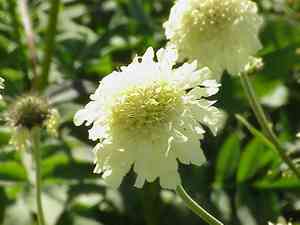
Smooth witherod(Viburnum nudum)

Smooth witherod (Viburnum nudum)

Also known as: Witherod viburnum, Southern wild raisin

Smooth witherod (Viburnum nudum) is a deciduous shrub that reaches heights of 5 to 12 feet. It naturally thrives in boggy and wet woodland areas. For optimal growth, it prefers full sun to partial shade and acidic, moist, well-drained soils. In late spring to early summer, the shrub produces clusters of attractive, fragrant white to pinkish flowers. As fall approaches, it bears ornamental berries that transition from green to pink to blue-black, adding seasonal interest and providing a food source for wildlife.

Attributes of Smooth witherod

Lifespan
Perennial
Plant Type
Shrub
Plant Height
1.5 m to 1.8 m
Spread
1.5 m to 1.8 m
Leaf Color
Green Red Purple
Flower Size
2.5 cm
Flower Color
White

PlantJoy - Identify plants with a snap

Identify and diagnose plants, get toxicity alerts, and explore safety guides for all types of fungi.

Try for Free

Images of Smooth witherod

Smooth witherod(Viburnum nudum)

Quickly Identify Smooth witherod

1
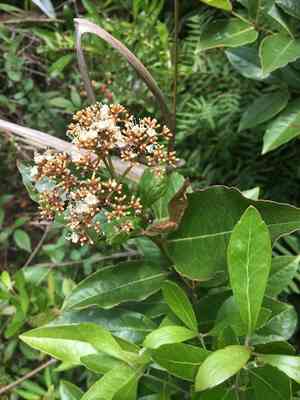
Creamy white flowers in star-shaped clusters, 0.25 inches (0.6 cm) diameter.
2
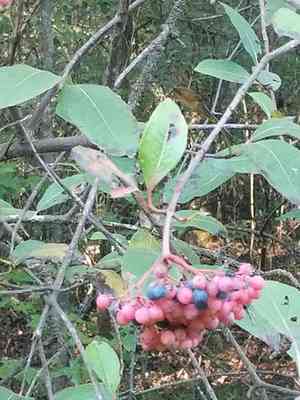
Fruit transitions from light pink to purplish-black, creating a multicolored display.
3
Smooth, reddish-brown stems with scruffy pinkish-brown valvate buds.
4
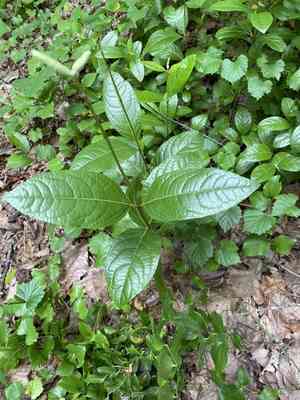
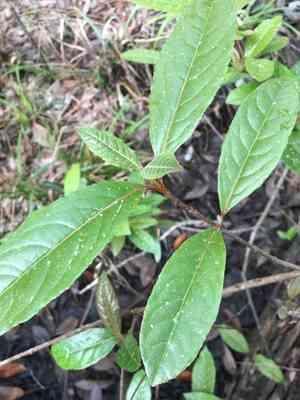
Glossy, dark green leaves with pinnate vein pattern, turning reddish-purple in fall.
5
12-foot (3.7 meters) deciduous shrub with rounded silhouette and versatile light conditions.

Scientific Classification of Smooth witherod

Phylum
Vascular plants
Class
Dicotyledons
Order
Dipsacales
Family
Moschatel
Genus
Viburnum
Species
Smooth witherod

Planting and Growing of Smooth witherod

Care Difficulty
Easy
Watering Schedule
Every 4 days
Sunlight Requirements
Full sun
Sunshine Duration
6-10 hours
Ideal Temperature
68-77℉
Soil Type
Potting Mix, Peat Mix
Soil pH
5.5-7.5
Fertilizer Type
Balanced
Pruning Season
Spring, Summer
Pruning Area
Branches, Leaves
Pruning Frequency
2 times a year
Repotting Season
Spring
Pot Type
Plastic, Ceramic

water icon How to Water Smooth witherod?

Viburnum nudum thrives when watered to the extent that the soil remains consistently moist yet never soggy. A general rule of thumb is to water it thoroughly until the excess starts to drain out of the pot, ensuring about 500 ml of water per session.
What are the symptoms of an underwatered Smooth witherod?
What should I do if my Smooth witherod is not getting enough water?
What are the symptoms of an overwatered Smooth witherod?
How to save an overwatered Smooth witherod?

sunlight icon What Are the Sunlight Requirements for Smooth witherod?

Sunlight Requirements: Full sun, Partial sun
Duration of light: 4 to 6 hours
Viburnum nudum thrives in full to partial sun, ideally receiving four to six hours of sunlight daily. Proper light conditions ensure robust growth, vibrant flowers, and a healthy leaf canopy, maximizing its ornamental appeal.
What is the best type of light for Viburnum nudum?
What solutions are available to provide the ideal light to Viburnum nudum?
What benefits does Viburnum nudum receive from ideal sunlight exposure?
More About Sunlight Requirements Techniques

temperature icon What Is the Ideal Temperature Range for Smooth witherod?

Ideal Temperature: 68 ~ 77℉
Viburnum nudum thrives best in a temperature range of 68°F to 77°F. This range allows the plant to maximize its metabolic functions and ensures optimal growth. Maintaining this environment will help the plant flourish with vibrant foliage and healthy blooms.

soil icon What Soil is Best for Smooth witherod?

Soil type: Loam, Sandy loam
Soil PH: 5.5 ~ 7.5
Viburnum nudum thrives in well-drained soil to prevent waterlogging, which can cause root rot. This ensures healthy root growth and optimal nutrient absorption, promoting vigorous plant development. The presence of organic matter enhances soil fertility, aids in moisture retention, and provides necessary nutrients, supporting robust growth and vibrant foliage for Viburnum nudum. While Viburnum nudum requires well-drained soil, maintaining adequate moisture is crucial for preventing leaf wilt and supporting consistent growth, especially during dry spells.

fertilize icon How to Fertilize Smooth witherod?

Fertilizer type: Balanced
For healthy growth of Viburnum nudum, a balanced approach to fertilization is essential. Use a balanced 10-10-10 fertilizer. For liquid fertilizers, mix it as per the manufacturer's instructions, generally about 1 tablespoon per gallon of water. For solid fertilizers, distribute it evenly around the base of the plant, using approximately 0.5 pounds per 100 square feet.

prune icon How to Prune Smooth witherod?

Pruning Time: Spring, Autumn
Begin by inspecting the Viburnum nudum for any dead or diseased branches, which should be removed immediately. Then, focus on thinning out the plant by cutting back the overcrowded stems. Cut away any branches that are rubbing against each other to promote air circulation and prevent fungal diseases. Aim to shape the shrub for a balanced, open structure. More About Pruning Techniques

propagate icon How to Propagate Smooth witherod plant?

Propagate Time: Spring, Early spring
1
Cold stratify the seeds by placing them in a moist medium in the refrigerator for 60-90 days. This mimics winter conditions and breaks seed dormancy, promoting successful germination.
2
Select healthy, semi-hardwood cuttings from the plant. Cut a 4 to 6-inch length just below a node. Remove the lower leaves to reduce transpiration and dip the cut end in rooting hormone.
3
For seeds, plant them shallowly in seed starting mix. Keep the medium consistently moist. For cuttings, insert them into a well-draining propagation medium, ensuring they are upright and secure.
More About Propagating Techniques

repot icon How to Repot Smooth witherod plant?

Repotting frequency: Every 2-3 years
1
Viburnum nudum should be repotted when it shows signs of being root-bound, such as roots emerging from drainage holes or the plant showing stunted growth. Ideally, aim to repot during early spring or autumn when the plant is not in active bloom.
2
Select a pot that is 2-3 inches larger in diameter than the current one to allow for root expansion. A pot with adequate drainage holes is crucial to prevent waterlogging, promoting healthy root growth and reducing the risk of root rot.
3
Opt for a well-draining, nutrient-rich soil mix, such as a blend of garden soil, peat moss, and perlite. This mix enhances moisture retention while preventing water stagnation, providing an ideal environment for Viburnum nudum's roots to thrive.

PlantJoy - Identify plants with a snap

Find the best spots for them to optimize their health, simply using your phone.

Try for Free

Toxicity of Smooth witherod

Is Smooth witherod toxic to humans?

The smooth witherod possesses berries that are regarded as mildly toxic prior to full ripening. These berries are rich in polyphenols which may lead to stomach irritation, resulting in symptoms such as nausea, excessive salivation, abdominal pain, diarrhea, and vomiting when consumed in sufficient quantities. For safety reasons, they should be kept out of reach of children and individuals with cognitive impairments. One of the significant dangers posed by the smooth witherod is not merely its toxicity, but its striking similarity to the highly poisonous poison sumac. This serves as yet another compelling rationale to abstain from consuming its berries.

Identify toxic plants for your safety

Learn which plants are harmful to you and your pets, and make informed choices for a safer home!

Try for Free
WARNING
The judgment on toxicity and danger is for reference only. We DO NOT GUARANTEE any accuracy of such judgment. Therefore, you SHALL NOT rely on such judgment. It is IMPORTANT TO SEEK PROFESSIONAL ADVICE in advance when necessary.
More About Toxic Techniques