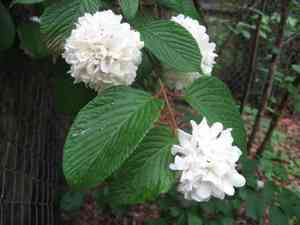
Japanese snowball(Viburnum plicatum)

Japanese snowball (Viburnum plicatum)

Also known as: Doublefile viburnum

A well-loved deciduous ornamental shrub is the Japanese Snowball (Viburnum plicatum), which can reach heights of up to 3 meters. This shrub dazzles in the spring with clusters of white, snowball-like flowers and offers appealing foliage through summer and fall.

Attributes of Japanese snowball

Lifespan
Perennial
Plant Type
Shrub
Plant Height
1.5 m to 3 m
Spread
1.2 m to 2 m
Leaf Color
Green
Flower Size
4 cm to 8 cm
Flower Color
White

PlantJoy - Identify plants with a snap

Identify and diagnose plants, get toxicity alerts, and explore safety guides for all types of fungi.

Try for Free

Images of Japanese snowball

Japanese snowball(Viburnum plicatum)

Quickly Identify Japanese snowball

1
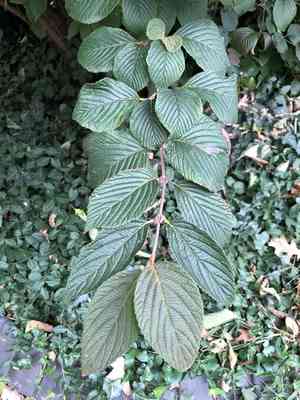
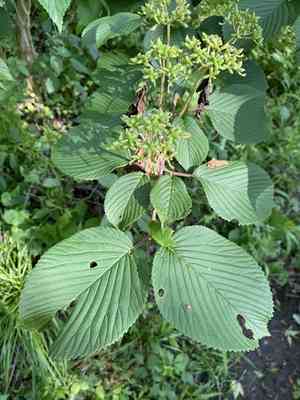
Pleated dark green leaves give a textured appearance, measuring 1.5-4 inches (4-10 cm) in length.
2
Flowers form white corymbs, 2-4 inches (5-10 cm) across, with flat-topped, lace-like arrangement.
3
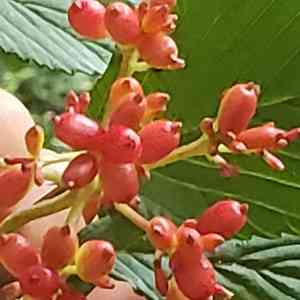
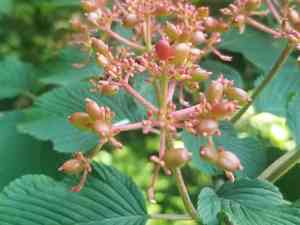
Egg-shaped red fruit cluster in drupes, each around 0.33 inches (8 mm) in diameter.
4
Multi-stemmed, sturdy stems are thick, 0.5-1 inch (1.3-2.5 cm) in diameter, creating tiered branching.
5
Distinctively pleated trunk bark, smooth yet firm, varies in color, reaching up to 4 inches (10 cm) diameter.

Scientific Classification of Japanese snowball

Phylum
Vascular plants
Class
Dicotyledons
Order
Honeysuckles, moschatels and allies
Family
Moschatel
Genus
Viburnum
Species
Japanese snowball

Planting and Growing of Japanese snowball

Care Difficulty
Easy
Watering Schedule
Every 4 days
Sunlight Requirements
Partial sun
Sunshine Duration
6-10 hours
Ideal Temperature
60-75℉
Soil Type
Potting Mix, Peat Mix
Soil pH
6.5-7.5
Fertilizer Type
Balanced
Pruning Season
Spring, Summer
Pruning Area
Branches, Leaves
Pruning Frequency
2 times a year
Repotting Season
Spring
Pot Type
Plastic, Ceramic

water icon How to Water Japanese snowball?

For Viburnum plicatum, the watering amount should ensure that the soil is thoroughly moistened. Aim to provide around 500 ml of water each time you water. This amount allows the water to penetrate deeply enough to reach the root system without sitting on the surface and potentially causing rot.
What are the symptoms of an underwatered Japanese snowball?
What should I do if my Japanese snowball is not getting enough water?
What are the symptoms of an overwatered Japanese snowball?
How to save an overwatered Japanese snowball?
More About Watering Techniques

sunlight icon What Are the Sunlight Requirements for Japanese snowball?

Sunlight Requirements: Partial sun
Duration of light: 4 to 6 hours
Viburnum plicatum flourishes in partial sun conditions. Adequate light encourages robust growth and vibrant blossoms, maximizing both aesthetic and ecological value.
How much light does Viburnum plicatum need?
How to ensure optimal light conditions for Viburnum plicatum?
What are the benefits of ideal lighting for Viburnum plicatum?
More About Sunlight Requirements Techniques

temperature icon What Is the Ideal Temperature Range for Japanese snowball?

Ideal Temperature: 60 ~ 75℉
For optimal growth, Viburnum plicatum thrives best in temperatures between 60 to 75°F. This range ensures the plant can photosynthesize efficiently, maintain steady metabolic functions, and produce vibrant blooms and foliage.

soil icon What Soil is Best for Japanese snowball?

Soil type: Loam, Sandy loam
Soil PH: 6.5 ~ 7.5
Viburnum plicatum thrives in well-drained soil because it prevents waterlogging, which can lead to root rot. Ensuring proper drainage allows the roots to breathe and enhances nutrient uptake for healthier growth. While V. plicatum prefers well-drained soil, it also needs consistent moisture to sustain its lush foliage and vibrant blooms. A steady supply of water helps maintain its overall plant health and vigor. The plant benefits greatly from a nutrient-rich soil environment. This ensures a steady supply of essential nutrients, promoting robust growth, increased flowering, and a resilient structure that can withstand environmental stresses. More About Soil

fertilize icon How to Fertilize Japanese snowball?

Fertilizer type: Balanced
When applying fertilizer to Viburnum plicatum, it is essential to consider its moderate nutritional needs. Use about 1 tablespoon of balanced granular fertilizer per gallon of soil mix for optimal growth. This ensures the plant receives the required nutrients without overloading the soil. More About Fertilizing Techniques

prune icon How to Prune Japanese snowball?

Pruning Time: Spring, Summer, Autumn
Begin by removing any dead, diseased, or damaged branches. This can be done at any time of the year but is best in early spring before new growth emerges. This will prevent the spread of any diseases and encourage healthier growth. After tackling the damaged parts, you can shape the plant to your liking. Focus on achieving a symmetrical shape by trimming overgrown branches. This will promote a more attractive plant and enhance its visual appeal in your garden. When pruning, ensure you cut back branches that are overcrowded or crossing each other. This improves air circulation within the plant, reducing the risk of fungal diseases and promoting a healthier shrub overall. More About Pruning Techniques

propagate icon How to Propagate Japanese snowball plant?

Propagate Time: Spring,Early summer
1
Choose a healthy, non-flowering stem from the parent plant. The cutting should be about 4-6 inches long with at least two leaf nodes for optimal rooting potential.
2
Remove the leaves from the lower half of the cutting to prevent rot and dip the cut end in rooting hormone to enhance root development.
3
Insert the cutting into a pot filled with well-draining soil mix. Ensure the cutting is planted deep enough to support itself, typically covering at least one node.
More About Propagating Techniques

repot icon How to Repot Japanese snowball plant?

Repotting frequency: Every 2-3 years
1
The best time to repot Viburnum plicatum is when you notice roots growing out of the drainage holes or becoming root-bound. Ideally, you should repot during spring or autumn to give the plant ample time to establish its roots in the new soil before extreme weather conditions. Look for signs like slowed growth or yellowing leaves, which indicate it's time for a new pot.
2
Select a pot that is 2-3 inches larger in diameter than the current one, ensuring it has adequate drainage holes. A larger pot provides more room for growth and prevents the roots from becoming crowded too quickly. It's important to avoid pots that are too large, as excess soil can retain moisture and lead to root rot.
3
Opt for well-draining, rich soil with a mix of organic matter. The ideal soil helps retain sufficient moisture without becoming waterlogged. Incorporating components like peat moss or perlite can improve drainage and aeration, creating an optimal environment for Viburnum plicatum's roots to thrive.
More About Repotting Techniques

PlantJoy - Identify plants with a snap

Find the best spots for them to optimize their health, simply using your phone.

Try for Free

Toxicity of Japanese snowball

Is Japanese snowball toxic to humans?

The Japanese snowball produces berries that are regarded as mildly toxic, particularly when they are unripe. These berries are rich in polyphenols and glycosides, which can lead to stomach irritation, resulting in symptoms such as nausea, excessive salivation, abdominal pain, diarrhea, and vomiting if consumed in sufficient quantities. It is crucial to keep them out of reach of children and individuals with cognitive impairments; therefore, secure fencing or complete removal is recommended.

Identify toxic plants for your safety

Learn which plants are harmful to you and your pets, and make informed choices for a safer home!

Try for Free
WARNING
The judgment on toxicity and danger is for reference only. We DO NOT GUARANTEE any accuracy of such judgment. Therefore, you SHALL NOT rely on such judgment. It is IMPORTANT TO SEEK PROFESSIONAL ADVICE in advance when necessary.
More About Toxic Techniques