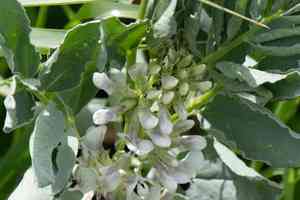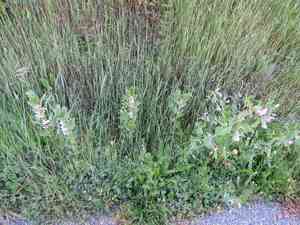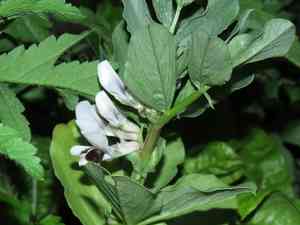
Broad bean(Vicia faba)

Broad bean (Vicia faba)

Also known as: Horse bean, Field bean

The chickpea (Cicer arietinum) is a fruit-bearing flowering plant related to the pea with uncertain origins. Known also as the garbanzo bean, gram, and Egyptian pea, it is extensively cultivated for human consumption and features prominently in various culinary traditions.

Attributes of Broad bean

Lifespan
Annual, Biennial
Plant Type
Herb, Vine
Plant Height
90 cm
Spread
45 cm
Leaf Color
Green
Flower Size
1 to 2 centimeters
Flower Color
White Purple Black

PlantJoy - Identify plants with a snap

Identify and diagnose plants, get toxicity alerts, and explore safety guides for all types of fungi.

Try for Free

Images of Broad bean

Broad bean(Vicia faba)

Quickly Identify Broad bean

1
Distinct zygomorphic white flowers with black markings
2
Leaves pinnate with 2-6 leaflets, ending in tendrils
3
Narrowly oblong fruit pods up to 11 inches long
4
Coarse, stout stem, hollow and square, reaching 2 feet in height
5
Fragrant flowers on unbranched racemes with purplish blotch

Scientific Classification of Broad bean

Phylum
Vascular plants
Class
Dicotyledons
Order
Legumes, milkworts and allies
Family
Legume
Genus
Vetches
Species
Broad bean

Planting and Growing of Broad bean

Care Difficulty
Easy
Watering Schedule
Every 8 days
Sunlight Requirements
Full sun
Sunshine Duration
6-12 hours
Ideal Temperature
60-70℉
Soil Type
Potting Mix, Peat Mix
Soil pH
6.5-7.5
Fertilizer Type
Balanced
Pruning Season
Spring, Summer
Pruning Area
Branches, Leaves
Pruning Frequency
2 times a year
Repotting Season
Spring
Pot Type
Plastic, Ceramic

water icon How to Water Broad bean?

Vicia faba, commonly known as the broad bean, requires a moderate amount of water to thrive. The soil should be kept consistently moist but not waterlogged. Watering with approximately 500 milliliters allows the soil to absorb enough moisture while preventing excess water from pooling at the roots.
What are the symptoms of an underwatered Broad bean?
What should I do if my Broad bean is not getting enough water?
What are the symptoms of an overwatered Broad bean?
How to save an overwatered Broad bean?
More About Watering Techniques

sunlight icon What Are the Sunlight Requirements for Broad bean?

Sunlight Requirements: Full sun, Partial sun
Duration of light: 6 to 8 hours daily
Vicia faba excels in full sun to partial sun conditions, ideally receiving 6 to 8 hours of sunlight. This enhances photosynthesis rates, leading to strong growth and abundant yields.
Optimal Light Exposure
Adjusting Sunlight Exposure
Benefits of Adequate Sunlight
More About Sunlight Requirements Techniques

temperature icon What Is the Ideal Temperature Range for Broad bean?

Ideal Temperature: 60 ~ 70℉
The ideal temperature range for Vicia faba, commonly known as broad bean, is between 60°F to 70°F. This range is optimal for its metabolic processes, photosynthesis, and overall growth. During this temperature range, the plant can effectively carry out essential biological functions without stress, promoting healthy growth and development.

soil icon What Soil is Best for Broad bean?

Soil type: Loam, Sandy loam
Soil PH: 6.5 ~ 7.5
Vicia faba requires a nutrient-rich soil to thrive. High levels of organic matter enhance growth and yield, providing essential nutrients that are crucial for healthy development. This plant prefers a soil that retains adequate moisture without becoming waterlogged. Consistent moisture supports steady growth and helps prevent stress-related issues. Maintaining a soil pH between 6.5 and 7.5 is optimal for Vicia faba. Proper pH levels ensure the availability of essential nutrients and promote healthy plant growth. More About Soil

fertilize icon How to Fertilize Broad bean?

Fertilizer type: Balanced
For Vicia faba, moderation is key. Use about half a cup of a balanced fertilizer, such as a 10-10-10 NPK, for every square foot around the plant. Avoid direct contact with the stem to prevent burn. More About Fertilizing Techniques

prune icon How to Prune Broad bean?

Pruning Time: Spring, Summer
To promote lateral growth, focus on cutting back the growing tips. Start by identifying the main stems and then prune back to a pair of healthy leaves or a growth node. This encourages the plant to become bushier. Inspect your Vicia faba regularly to spot any dead, diseased, or infested leaves and stems. Remove these as soon as they are noticed to prevent spread and allow the plant to focus energy on healthy growth. More About Pruning Techniques

propagate icon How to Propagate Broad bean plant?

Propagate Time: Early spring,Late spring
1
Ensure that you are using high-quality, disease-free seeds. Inspect them for abnormalities or deformities that could impede germination.
2
Fill seed trays with potting mix, leaving about an inch from the top. This space allows for proper watering and air circulation around the seeds.
3
Place seeds evenly on the potting mix surface, then cover them lightly with soil. Maintain consistent spacing to prevent overcrowding as seedlings grow.
More About Propagating Techniques

repot icon How to Repot Broad bean plant?

Repotting frequency: Every 1-2 years
1
Repotting Vicia faba is best done in spring or autumn when the plant shows signs such as roots emerging from the drainage holes or a general slowdown in growth. These are indicators that the plant requires more space and nutrients to continue thriving.
2
Choose a pot that is slightly larger than the current one, with good drainage holes at the bottom. This prevents waterlogging and enables proper root expansion, providing the plant with the space it needs for optimal growth.
3
Opt for well-draining loamy soil, enriched with organic matter. This type of soil retains the right amount of moisture while providing essential nutrients and promoting healthy root development, crucial for the plant's vigor.

PlantJoy - Identify plants with a snap

Find the best spots for them to optimize their health, simply using your phone.

Try for Free

Toxicity of Broad bean

Is Broad bean toxic to cat?

Broad beans present a moderate toxicity hazard to felines if consumed. Although the precise toxic agents are not specified, it is crucial to recognize that the seeds of broad beans are the primary toxic components of the plant. If cats ingest these seeds, they may experience symptoms of physical distress or illness. In the event that a cat consumes these seeds, it is vital for pet owners to promptly seek professional assistance from a veterinary facility to tackle the toxicity and avert more severe health complications.

Is Broad bean toxic to dog?

Broad beans present a moderate toxicity hazard to dogs, especially when they consume the plant's seeds. Ingesting these harmful components can result in various symptoms associated with poisoning. Dog owners should remain attentive to indicators like vomiting, diarrhea, abdominal discomfort, lethargy, or more critical reactions such as tremors or seizures. If a dog exhibits any of these signs after potential exposure to broad beans, it is crucial to obtain prompt veterinary assistance to secure the best possible outcome for the affected pet.

Identify toxic plants for your safety

Learn which plants are harmful to you and your pets, and make informed choices for a safer home!

Try for Free
WARNING
The judgment on toxicity and danger is for reference only. We DO NOT GUARANTEE any accuracy of such judgment. Therefore, you SHALL NOT rely on such judgment. It is IMPORTANT TO SEEK PROFESSIONAL ADVICE in advance when necessary.
More About Toxic Techniques