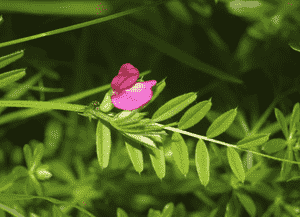
Common vetch(Vicia sativa)

Common vetch (Vicia sativa)

Also known as: Summer vetch

**Common vetch (Vicia sativa)**, also known simply as vetch, tare, or garden vetch, is an annual herb often regarded as a weed. However, it is widely used for green manure and as animal feed for livestock. For agricultural use, it is typically sown densely in fields.

Attributes of Common vetch

Lifespan
Annual, Biennial
Plant Type
Vine, Herb
Plant Height
15 cm to 1.2 m
Spread
15 cm
Leaf Color
Green Blue
Flower Size
1 cm to 3 cm
Flower Color
Pink Purple

PlantJoy - Identify plants with a snap

Identify and diagnose plants, get toxicity alerts, and explore safety guides for all types of fungi.

Try for Free

Images of Common vetch

Common vetch(Vicia sativa)

Quickly Identify Common vetch

1
Slender climbing stem, reaching 2 feet (60 cm) with tendrils for support.
2
Pinnate leaves with 5-6 pairs of narrow leaflets, 3-5 inches (7.6-12.7 cm) long.
3
Pea-shaped flowers in pairs, with broad upper petal and oval lateral petals.
4
Legume-type fruit with 4-8 seeds, pods explosively open for seed dispersal.
5
Green to blackish hued fruit pods, 1-2 inches (2.5-5 cm) long, containing viable seeds.

Scientific Classification of Common vetch

Phylum
Vascular plants
Class
Dicotyledons
Order
Legumes, milkworts and allies
Family
Legume
Genus
Vetches
Species
Common vetch

Planting and Growing of Common vetch

Care Difficulty
Easy
Watering Schedule
Every 6 days
Sunlight Requirements
Full sun
Sunshine Duration
6-10 hours
Ideal Temperature
60-75℉
Soil Type
Potting Mix, Peat Mix
Soil pH
6.5-7.5
Fertilizer Type
Balanced
Pruning Season
Spring, Summer
Pruning Area
Branches, Leaves
Pruning Frequency
2 times a year
Repotting Season
Spring
Pot Type
Plastic, Ceramic

water icon How to Water Common vetch?

Vicia sativa prefers consistent moisture, which means the soil should be kept moist without being waterlogged. Aim to give about 500 ml of water per session, ensuring it's enough to penetrate to the root zone but not so much that it creates standing water.
What are the symptoms of an underwatered Common vetch?
What should I do if my Common vetch is not getting enough water?
What are the symptoms of an overwatered Common vetch?
How to save an overwatered Common vetch?

sunlight icon What Are the Sunlight Requirements for Common vetch?

Sunlight Requirements: Full sun, Partial sun
Duration of light: 6 to 8 hours
Vicia sativa prefers full sun conditions, thriving in open areas with 6 to 8 hours of sunlight. Appropriate light levels enhance growth rate, seed production, and overall plant strength, contributing to optimal agricultural yields.
How much sunlight does Vicia sativa need?
Why is sunlight important for Vicia sativa?
What are the benefits of optimal light for Vicia sativa?

temperature icon What Is the Ideal Temperature Range for Common vetch?

Ideal Temperature: 60 ~ 75℉
Vicia sativa, commonly known as common vetch, thrives best in temperatures ranging from 60°F to 75°F. This range supports optimal growth, allowing the plant to efficiently carry out photosynthesis and other physiological processes. It's essential to maintain consistent temperatures within this range to ensure robust plant development and avoid stress-related issues.

soil icon What Soil is Best for Common vetch?

Soil type: Loam, Sandy loam, Sandy soil
Soil PH: 6.5 ~ 7.5
Vicia sativa thrives in well-draining soil which prevents waterlogging. This is essential for healthy root development and prevents diseases caused by excess moisture. The plant benefits from a nutrient-rich substrate, supporting vigorous growth and high yield. A balanced mix of organic matter enhances soil fertility, promoting robust plant health. While drainage is important, soil should also retain some moisture. This helps maintain steady hydration of the plant, supporting consistent growth.

fertilize icon How to Fertilize Common vetch?

Fertilizer type: Balanced
Vicia sativa, commonly known as common vetch, benefits from moderate fertilization. Both liquid and solid fertilizers can be applied, but the key is balance. Avoid over-fertilizing as it can hinder root development and cause lanky growth. A measurement of 100 grams per square meter for solid fertilizers is optimal, while a diluted solution at half the recommended rate is ideal for liquid options.

prune icon How to Prune Common vetch?

Pruning Time: Spring, Summer
Begin by removing any dead or diseased stems to prevent the spread of pathogens. Cut back to a healthy section, ensuring any brown or rotting stems are completely removed. For Vicia sativa, aim to create a balanced shape with even distribution of foliage. Focus on cutting back overlong stems that disrupt the plant's symmetry, trimming them back to just above a pair of healthy leaves. To prevent this plant from taking over your garden, keep its growth in check by trimming back around one-third of the newest growth monthly during peak growing seasons to maintain a manageable size.

propagate icon How to Propagate Common vetch plant?

Propagate Time: Spring, Early spring
1
Fill the seed trays with a well-draining potting mix, leaving a small gap at the top. Lightly water the soil to settle it and eliminate large air pockets. This step ensures the seeds have immediate contact with soil when planted.
2
Evenly distribute vetch seeds across the soil surface and lightly cover them with a thin layer of potting mix. Avoid burying them too deeply as light coverage aids in proper germination. Be sure to water lightly after sowing.
3
Place the seed trays in a warm, well-lit area. Keep the soil consistently moist but not waterlogged. If necessary, cover the trays with a clear plastic lid to create a mini greenhouse effect, enhancing humidity and warmth.

repot icon How to Repot Common vetch plant?

Repotting frequency: Annually or biannually
1
Repotting time is crucial for Vicia sativa to avoid stressing the plant. The best indication for repotting is when you notice roots protruding from the drainage holes or when the soil dries out more quickly than usual. Typically, late spring or early summer is ideal as the plant is hitting its stride in growth, allowing it to acclimate smoothly in its new pot.
2
Select a pot that is just one size larger than the current one to prevent waterlogging. A pot with a well-placed drainage hole is essential to keep the soil from becoming too wet, which helps in reducing the risk of root rot. The material of the pot should be considered as well; terra cotta pots can aid in moisture control, making them a desirable choice for this legume.
3
For Vicia sativa, opt for a well-draining potting mix. A blend containing equal parts loam, compost, and perlite or coarse sand can facilitate proper root aeration and prevent water retention, providing the ideal conditions for a legume that thrives on modest moisture levels.

PlantJoy - Identify plants with a snap

Find the best spots for them to optimize their health, simply using your phone.

Try for Free

Toxicity of Common vetch

Is Common vetch toxic to humans?

Common vetch predominantly presents a threat to children. The seeds harbor a cyanide compound that, upon contact with stomach acid, releases cyanide gas. It is this gas that inflicts harm. Consuming an adequate amount can lead to severe respiratory and cardiac issues that may result in fatalities. Reduced quantities may induce symptoms such as vomiting, colic, headaches, chest tightness, agitation, muscle weakness, and convulsions. Even minute amounts of cyanide can be lethal.

Is Common vetch toxic to cat?

Common vetch presents a mild toxicity hazard to cats. The main risk originates from the seeds of common vetch, which can lead to poisoning if ingested in significant quantities. When a cat consumes these seeds, it may suffer physical discomfort and exhibit symptoms of illness that suggest internal distress. Although the toxicity is mild, ingestion should not be underestimated. If a cat has eaten common vetch seeds, it is crucial to seek prompt veterinary assistance to safeguard their health and manage any possible complications.

Is Common vetch toxic to dog?

Common vetch carries a mild toxicity risk for dogs, especially when they consume large quantities of the plant. The main concern lies with the seeds, which are considered the toxic components of common vetch. Dogs that eat significant numbers of these seeds may show signs of poisoning. Although the specific toxic compounds are not specified, dog owners should be alert for symptoms such as gastrointestinal distress, lethargy, or more severe clinical manifestations based on the quantity consumed. If any dog is suspected of being poisoned by common vetch, seeking immediate veterinary advice is crucial to secure appropriate treatment and management of the situation.

Identify toxic plants for your safety

Learn which plants are harmful to you and your pets, and make informed choices for a safer home!

Try for Free
WARNING
The judgment on toxicity and danger is for reference only. We DO NOT GUARANTEE any accuracy of such judgment. Therefore, you SHALL NOT rely on such judgment. It is IMPORTANT TO SEEK PROFESSIONAL ADVICE in advance when necessary.
More About Toxic Techniques

