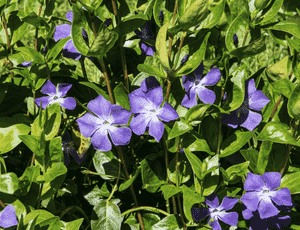
Greater periwinkle (Vinca major)
Also known as: Blue periwinkle, Big periwinkle
Greater periwinkle (Vinca major) is an evergreen ground cover known for its attractive lavender flowers and glossy, deep green leaves. To prevent it from overtaking your garden while still enjoying its beauty, consider the following methods:
1. **Container Gardening**: Grow Vinca major in hanging baskets or window boxes to keep it contained and manageable.
2. **Use Barriers**: Install root barriers if planting in the ground to limit its spread.
3. **Regular Pruning**: Trim the plant frequently to control its growth and prevent it from spreading too aggressively.
4. **Thick Mulching**: Apply a substantial layer of mulch to suppress its tendency to spread.
5. **Strategic Location**: Plant it in controlled areas like along pathways or patios where you can easily monitor and manage its growth.
These strategies will allow you to enjoy the ornamental appeal of Vinca major without it becoming invasive in your garden.
Attributes of Greater periwinkle
Images of Greater periwinkle
Quickly Identify Greater periwinkle
Scientific Classification of Greater periwinkle
Planting and Growing of Greater periwinkle
 How to Water Greater periwinkle?
 What Are the Sunlight Requirements for Greater periwinkle?
 What Is the Ideal Temperature Range for Greater periwinkle?
 What Soil is Best for Greater periwinkle?
 How to Fertilize Greater periwinkle?
 How to Prune Greater periwinkle?
 How to Propagate Greater periwinkle plant?
 How to Repot Greater periwinkle plant?
Toxicity of Greater periwinkle
Is Greater periwinkle toxic to cat?
The greater periwinkle plant is highly toxic to cats and may cause poisoning if ingested accidentally. Any part of the greater periwinkle is dangerous for felines, as all components of this plant contain toxic elements. After being exposed, a cat may display signs of physical discomfort, sickness, or pain, which can be alarming for pet owners to witness. Prompt medical attention is critically important; hence, if there's any suspicion of exposure, it is vital to take the cat to a veterinary clinic without delay. To prevent possible poisoning, it is wise to keep greater periwinkle out of reach or to remove it entirely from areas frequented by cats.
Is Greater periwinkle toxic to dog?
Greater periwinkle is identified as a toxic species for dogs. If dogs consume any part of this plant, whether by accident or out of curiosity, they can be poisoned. The whole plant, which comprises leaves, stems, and flowers, contains toxic compounds that endanger canine health. Symptoms of poisoning may encompass gastrointestinal disturbances, such as vomiting and diarrhea; in more severe instances, tremors or seizures might manifest. It is essential for dog owners to vigilantly supervise their pets and restrict their access to greater periwinkle. Should there be a suspicion of a dog ingesting any part of greater periwinkle, seeking immediate veterinary care is vital for the animal's health.



