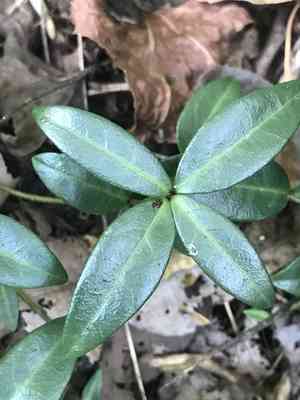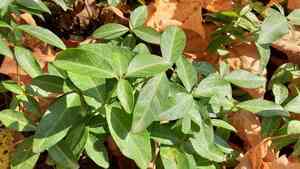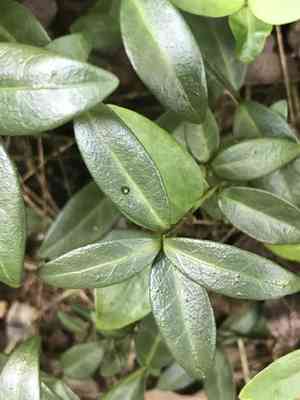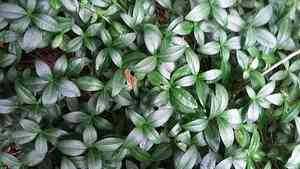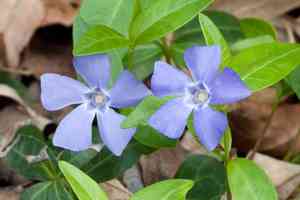
Common periwinkle(Vinca minor)

Common periwinkle (Vinca minor)

Also known as: Dwarf periwinkle

Common periwinkle (Vinca minor) is a low-growing, evergreen plant that spreads to create thick, wide mats. This makes it ideal for use as a ground cover in landscaping. It is favored for its ability to grow in various light conditions and its minimal maintenance needs. While it is mildly toxic, its bitter taste usually prevents significant ingestion.

Attributes of Common periwinkle

Lifespan
Perennial
Plant Type
Vine, Herb
Plant Height
10 cm to 40 cm
Spread
15 cm to 45 cm
Leaf Color
Green Blue Yellow White
Flower Size
1.5 cm to 3 cm
Flower Color
Blue White Purple Violet Pink Lavender

PlantJoy - Identify plants with a snap

Identify and diagnose plants, get toxicity alerts, and explore safety guides for all types of fungi.

Try for Free

Images of Common periwinkle

Common periwinkle(Vinca minor)

Quickly Identify Common periwinkle

1
Low-growing evergreen, reaching 3-6 inches (7.5-15 cm) in height.
2
Dark green, glossy, oval leaves persist year-round, 1-2 inches (2.5-5 cm) long.
3
Delicate, funnel-shaped flowers in blue-lavender hues, 1 inch (2.5 cm) in diameter.
4
Axillary, solitary lilac-blue flowers with 5-lobed, rotate corolla, no scent.
5
Thin, wiry stem reaches 6 inches (15 cm) before trailing, smooth texture with branching pattern.

Scientific Classification of Common periwinkle

Phylum
Vascular plants
Class
Dicotyledons
Order
Gentianales
Family
Dogbane
Genus
Periwinkles
Species
Common periwinkle

Planting and Growing of Common periwinkle

Care Difficulty
Easy
Watering Schedule
Every 3 days
Sunlight Requirements
Partial sun
Sunshine Duration
4-6 hours
Ideal Temperature
60-68℉
Soil Type
Potting Mix, Peat Mix
Soil pH
6.5-7.5
Fertilizer Type
Balanced
Pruning Season
Spring, Summer
Pruning Area
Branches, Leaves
Pruning Frequency
2 times a year
Repotting Season
Spring
Pot Type
Plastic, Ceramic

water icon How to Water Common periwinkle?

Vinca minor, known for its resilience, thrives on moderate watering. Aim for about 150 ml per session, ensuring the topsoil is moistened but not drenched. The soil should retain some moisture, mimicking its natural woodland habitat.
What are the symptoms of an underwatered Common periwinkle?
What should I do if my Common periwinkle is not getting enough water?
What are the symptoms of an overwatered Common periwinkle?
How to save an overwatered Common periwinkle?
More About Watering Techniques

sunlight icon What Are the Sunlight Requirements for Common periwinkle?

Sunlight Requirements: Partial sun, Full shade
Duration of light: 4 to 6 hours
Partial sun or full shade of around 4 to 6 hours a day is ideal, promoting lush foliage and robust growth with minimal risk of sunburn.
What is the best lighting condition for Vinca minor?
How can I ensure my Vinca minor receives optimal light?
What are the advantages of providing ideal light conditions for Vinca minor?
More About Sunlight Requirements Techniques

temperature icon What Is the Ideal Temperature Range for Common periwinkle?

Ideal Temperature: 60 ~ 68℉
For optimal growth, Vinca minor thrives in a temperature range between 60°F and 68°F. This range supports robust foliage and flowering. Consistent warmth without excessive heat stress promotes healthy development.

soil icon What Soil is Best for Common periwinkle?

Soil type: Loam, Sandy loam, Clay soil
Soil PH: 6.5 ~ 7.5
Vinca minor thrives best in well-drained soil. Good drainage prevents root rot and other moisture-related diseases, enhancing the plant's health and vigor. This plant benefits from nutrient-rich soil, which supplies essential nutrients for robust growth and vibrant foliage. Regular enrichment ensures the plant receives necessary sustenance. Although Vinca minor prefers well-drained soil, a certain level of moisture retention is beneficial. Consistent moisture levels support steady growth and prevent wilting during dry periods. More About Soil

fertilize icon How to Fertilize Common periwinkle?

Fertilizer type: Balanced
When fertilizing Vinca minor, apply a small amount to avoid nutrient overload. Typically, a half-strength balanced liquid fertilizer is adequate. Use approximately one-quarter to half a teaspoon per gallon of water. For slow-release fertilizers, use a thin layer spread evenly over the soil surface. More About Fertilizing Techniques

prune icon How to Prune Common periwinkle?

Pruning Time: Spring, Summer
Begin by identifying long, leggier stems that extend beyond the desired shape of the plant. Target these for pruning to encourage bushier growth. If the stems are tangled, carefully separate them before cutting. Cut stems back to just above a leaf node, where new growth is most likely to emerge. This technique not only maintains the plant's shape but also stimulates new, healthy shoots. Prune away any dead, damaged, or diseased stems as you proceed. Removing these parts improves airflow through the plant and reduces the likelihood of fungal diseases taking hold. More About Pruning Techniques

propagate icon How to Propagate Common periwinkle plant?

Propagate Time: Spring,Late spring,Early spring
1
Choose healthy, vigorous stems from the parent plant, about 4-6 inches long. Ensure the cuttings are free from disease and pests to increase the success rate.
2
Remove the lower leaves of each cutting, leaving only a few upper leaves. This minimizes water loss and supports root development by focusing energy on rooting rather than sustaining foliage.
3
Dip the cut end of each cutting in rooting hormone and plant it in a pot with well-drained soil. Ensure the cuttings are planted at the proper depth to encourage root establishment.
More About Propagating Techniques

repot icon How to Repot Common periwinkle plant?

Repotting frequency: Every 2-3 years
1
Look for signs like roots growing out of drainage holes, reduced growth, or soil that dries out quickly. These indicate it's time to repot your Vinca minor. Repotting should be done when the plant shows active growth in Spring or early Summer.
2
Choose a pot that is 1-2 inches larger in diameter than the current one. Ensure it has adequate drainage holes to prevent waterlogging. A slightly bigger pot allows room for growth while minimizing the risk of excess soil retaining too much moisture, which can lead to root rot.
3
Opt for a well-draining potting mix that is rich in organic matter. The ideal soil should retain some moisture while allowing excess water to drain away effectively. This balance prevents root rot and promotes healthy root development.
More About Repotting Techniques

PlantJoy - Identify plants with a snap

Find the best spots for them to optimize their health, simply using your phone.

Try for Free

Toxicity of Common periwinkle

Is Common periwinkle toxic to cat?

The common periwinkle poses a poison risk to cats. If a cat consumes any portion of this plant, it may result in toxicity. Felines frequently encounter danger when they inadvertently eat the leaves, stems, or flowers of the common periwinkle. Following ingestion, a cat could display signs of physical distress or sickness, which requires urgent veterinary care. To protect the well-being of their feline friends, cat owners should restrict access to the common periwinkle and obtain immediate assistance from a veterinary clinic if ingestion happens.

Is Common periwinkle toxic to dog?

The common periwinkle is recognized as a toxic species for dogs. If dogs accidentally consume this plant or find it easily accessible, they risk poisoning. All parts of the plant, including its leaves, stems, and flowers, are toxic. Upon consuming any section of the common periwinkle, dogs may display a range of poisoning symptoms. These manifestations could vary from gastrointestinal distress, including vomiting and diarrhea, to more serious reactions such as seizures or heart irregularities. Therefore, it is essential for dog owners to remain vigilant and prevent their pets from coming into contact with common periwinkle. Should a dog ingest any part of this plant, it is vital to obtain immediate veterinary assistance to ensure the best possible recovery for the affected pet.

Identify toxic plants for your safety

Learn which plants are harmful to you and your pets, and make informed choices for a safer home!

Try for Free
WARNING
The judgment on toxicity and danger is for reference only. We DO NOT GUARANTEE any accuracy of such judgment. Therefore, you SHALL NOT rely on such judgment. It is IMPORTANT TO SEEK PROFESSIONAL ADVICE in advance when necessary.
More About Toxic Techniques