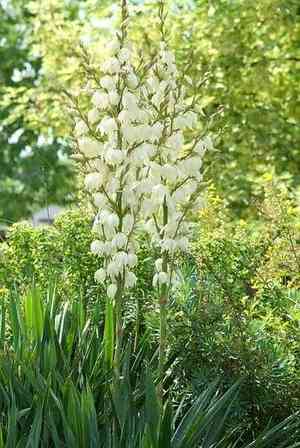
Adam's needle (Yucca filamentosa)
Also known as: Spoon-Leaf Yucca, Silkgrass, Adam's-Needle, Spoonleaf Yucca, Spanish Dagger, Beargrass, Bear-grass, Needle-palm, Spanish bayonet
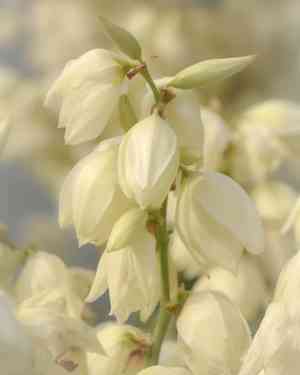
Adam's needle (Yucca filamentosa) is a compact evergreen shrub highly appreciated by horticulturalists and landscapers worldwide. Yucca filamentosa takes the spotlight in almost every garden due to its stunning looks. It is easily recognized by its large clusters of gentle white flowers, which are in sharp contrast to the green rosettes of sword-shaped leaves.
In This Article
Attributes of Adam's needle
Lifespan
Perennial
Plant Type
Shrub
Plant Height
20 cm to 3 m
Spread
60 cm to 90 cm
Leaf Color
Green Yellow Blue Gray Variegated
Flower Size
4 cm to 8 cm
Flower Color
White Cream
Images of Adam's needle
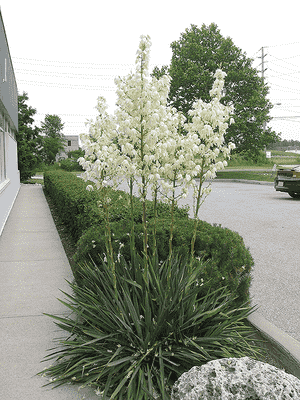
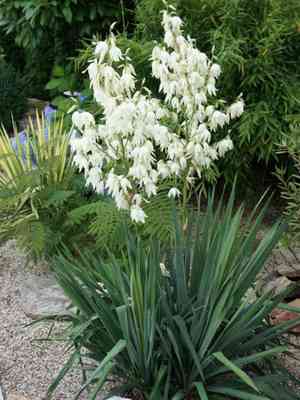
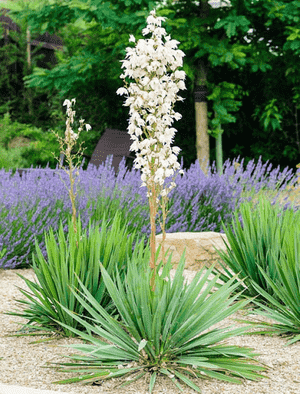
Quickly Identify Adam's needle
1
Curled fibers along bluish-green leaves' margins create a unique texture.
2
Waxy, creamy white bell-shaped flowers on tall panicles with a mild fragrance.
3
Fruit transitions from green to brown, housing black seeds, distinctive for identification.
4
Stem supports significant height, stout, unbranched, with fibrous base, light grey to brown.
5
Basal rosette of stemless sword-shaped leaves with inrolled margins and thread-like filaments.
Scientific Classification of Adam's needle
Phylum
Vascular plants
Class
Monocotyledons
Order
Asparagales
Family
Asparagus
Genus
Yuccas
Species
Adam's needle
Planting and Growing of Adam's needle
Care Difficulty
Easy
Watering Schedule
Every 2 days
Sunlight Requirements
Full sun
Sunshine Duration
6-10 hours
Ideal Temperature
65-75℉
Soil Type
Potting Mix, Peat Mix
Soil pH
6.5-7.5
Fertilizer Type
Balanced
Pruning Season
Spring, Summer
Pruning Area
Branches, Leaves
Pruning Frequency
2 times a year
Repotting Season
Spring
Pot Type
Plastic, Ceramic
 How to Water Adam's needle?
Yucca filamentosa is a drought-tolerant plant and should be watered conservatively. It is crucial to allow the soil to dry out between waterings, so water thoroughly until you notice some drainage. Avoid letting the plant sit in water, as this may promote root rot.
More About Watering Techniques→
What are the symptoms of an underwatered Adam's needle?
›
What should I do if my Adam's needle is not getting enough water?
›
What are the symptoms of an overwatered Adam's needle?
›
How to save an overwatered Adam's needle?
›
 What Are the Sunlight Requirements for Adam's needle?
Full sun to partial sun conditions are ideal for Yucca filamentosa. Proper light ensures optimum photosynthesis, resulting in strong growth and healthier foliage.
More About Sunlight Requirements Techniques→
What is the ideal light condition for Yucca filamentosa?
›
How can you ensure Yucca filamentosa gets ideal lighting?
›
What benefits does Yucca filamentosa gain from ideal lighting?
›
 What Is the Ideal Temperature Range for Adam's needle?
The ideal temperature range for Yucca filamentosa is between 65°F to 75°F. This range ensures optimal growth by providing a consistent environment that neither stresses the plant with cold nor with excessive heat, promoting balanced physiological processes and enhancing overall health and vigor.
 What Soil is Best for Adam's needle?
Yucca filamentosa thrives in well-drained soil, which helps prevent root rot by allowing excess water to escape quickly. This condition is crucial for maintaining healthy root systems and robust growth, especially in regions with frequent rainfall. This plant adapts to nutrient-poor conditions, as it evolved in environments with sparse resources. In nutrient-rich soils, excessive fertilizers can lead to overgrowth and weaker plant structures, so moderation is key. Yucca filamentosa prefers drier soil, and excessive watering can lead to issues like fungal infections. A dry soil environment promotes its natural resilience and minimizes the need for constant maintenance.
More About Soil→
 How to Fertilize Adam's needle?
For Yucca filamentosa, moderate fertilization is vital. When using liquid fertilizer, aim for a dilution rate that provides a half-strength solution, as too much can cause nutrient burn. A teaspoon of all-purpose liquid fertilizer diluted per gallon of water is a good rule of thumb, ensuring the plant receives balanced nutrition without the risk of overloading.
More About Fertilizing Techniques→
 How to Prune Adam's needle?
Begin by cutting away any dead or brown leaves from the base. Hold the leaf firmly and cut close to the trunk, but avoid cutting into the trunk itself. This prevents harm to the plant's structural integrity. After the flowering season, remove spent flower stalks to encourage new growth. Cut the stalk at its base with clean shears, ensuring the cut is angled to allow water to run off and prevent rot. Yucca filamentosa can grow quite large. To manage its size, selectively prune back some of the healthier leaves, ideally ones growing at odd angles or too close to pathways. This helps maintain a tidy appearance and prevents overcrowding.
More About Pruning Techniques→
 How to Propagate Adam's needle plant?
1
To propagate using seeds, first collect the seeds from mature fruit pods of Yucca filamentosa. Make sure the seeds are fully ripened to increase viability before allowing them to dry for a few days.
2
Sow the Yucca seeds in a flat or individual pots filled with a well-draining mix. Cover them lightly with soil, and maintain consistent moisture without overwatering until germination occurs.
3
During late spring or summer, carefully dig around the base of the plant to find offsets. Use a sharp knife to cut the offsets away from the main plant, ensuring each piece has roots attached.
 How to Repot Adam's needle plant?
1
Yucca filamentosa needs repotting when you notice the roots are visibly escaping through the drainage holes or if it's top-heavy and tipping over. It typically requires a larger pot every 2-3 years or if growth seems stagnant despite optimal conditions.
2
Select a pot that's just a size larger than the current one, with ample drainage holes. A breathable material like clay is preferable, aiding in moisture regulation, which prevents waterlogging, a common issue for Yucca filamentosa.
3
A well-draining sandy soil mix is ideal for Yucca filamentosa. This type of soil ensures that the roots are not sitting in water, which can cause root rot. The mixture should mimic its native arid environment to maintain healthy growth.



