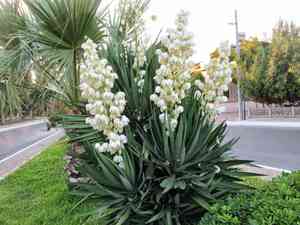
Spanish dagger (Yucca gloriosa)
Also known as: Palm lily, Adam's needle
Yucca gloriosa, commonly known as Spanish Dagger, is a flowering evergreen shrub native to the southeastern United States. It typically grows in sandy dune areas and has gained popularity as a landscaping plant. Other names for Yucca gloriosa include Roman Candle, Lord's Candlestick, and Sea Islands Yucca.
In This Article
Attributes of Spanish dagger
Lifespan
Perennial
Plant Type
Shrub
Plant Height
50 cm to 1.8 m
Spread
1.2 m
Leaf Color
Green Blue Yellow Variegated
Flower Size
5 cm to 7 cm
Flower Color
White Cream
Images of Spanish dagger
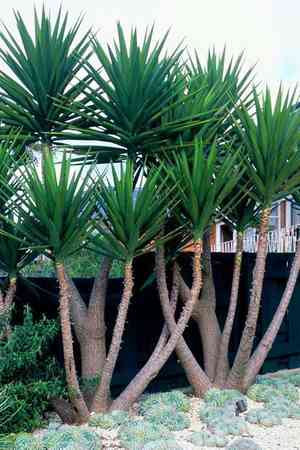
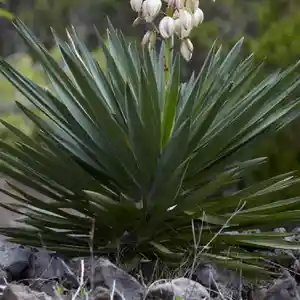
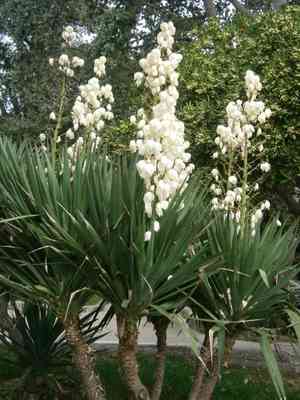
Quickly Identify Spanish dagger
1
Sword-shaped leaves with sharp tips and symmetrical arrangement.
2
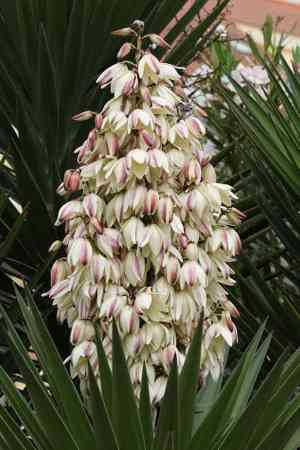
Creamy white, bell-shaped flowers in large panicles with red or purple tints.
3
6-lobed, elongate berry with a tough, leathery exterior, distinctive among berries.
4
Thick, succulent stem transitioning from green to woody texture, exceeding 1 inch (2.5 cm) in diameter.
5
Young leaves are blue-green, linear, and feature inconspicuous teeth, maturing to light green.
Scientific Classification of Spanish dagger
Phylum
Vascular plants
Class
Monocotyledons
Order
Asparagus and allies
Family
Asparagus
Genus
Yuccas
Species
Spanish dagger
Planting and Growing of Spanish dagger
Care Difficulty
Easy
Watering Schedule
Every 2 days
Sunlight Requirements
Full sun
Sunshine Duration
6-10 hours
Ideal Temperature
65-75℉
Soil Type
Potting Mix, Peat Mix
Soil pH
6.5-7.5
Fertilizer Type
Balanced
Pruning Season
Spring, Summer
Pruning Area
Branches, Leaves
Pruning Frequency
2 times a year
Repotting Season
Spring
Pot Type
Plastic, Ceramic
 How to Water Spanish dagger?
Yucca gloriosa thrives with a moderate watering approach, requiring around 500 ml of water per session. Ensure the water penetrates the soil deeply without leaving standing water. This avoids root rot while ensuring nourishment.
More About Watering Techniques→
What are the symptoms of an underwatered Spanish dagger?
›
What should I do if my Spanish dagger is not getting enough water?
›
What are the symptoms of an overwatered Spanish dagger?
›
How to save an overwatered Spanish dagger?
›
 What Are the Sunlight Requirements for Spanish dagger?
Yucca gloriosa thrives in conditions that offer full to partial sun, benefiting from 6 to 8 hours of sunlight daily. Optimal light exposure ensures robust growth, vivid foliage, and a strong flowering pattern.
More About Sunlight Requirements Techniques→
Optimal Sunlight Requirement
›
How to Achieve Ideal Lighting
›
Benefits of Ideal Lighting
›
 What Is the Ideal Temperature Range for Spanish dagger?
Yucca gloriosa thrives best in temperatures ranging from 65 to 75 degrees Fahrenheit. This range provides optimal conditions for growth and development, allowing the plant to perform photosynthesis efficiently while maintaining cellular function.
 What Soil is Best for Spanish dagger?
Yucca gloriosa thrives in well-draining soil which prevents root rot by avoiding excessive water retention. Proper drainage ensures that the roots receive adequate air circulation, promoting healthy growth. This plant does not require overly fertile soil but benefits from moderate fertility. A balanced nutrient content supports robust growth without overwhelming the plant, maintaining its natural resilience. Yucca gloriosa is adapted to dry soil conditions, making it an ideal choice for arid gardens. It tolerates drought well, reducing the need for frequent watering and making it low-maintenance.
More About Soil→
 How to Fertilize Spanish dagger?
Yucca gloriosa is a hardy plant that doesn’t require excessive fertilization. A balanced 10-10-10 NPK liquid fertilizer diluted to half strength is usually sufficient. For liquid fertilizers, apply approximately 250 ml per plant monthly during the growing season. When using slow-release granules, apply about 50 grams per plant every six months.
More About Fertilizing Techniques→
 How to Prune Spanish dagger?
Start by trimming away any dead or damaged leaves from the bottom of the plant. This not only enhances its aesthetic appeal but also prevents disease spread. If you notice the leaf tips turning brown or discolored, carefully snip them off to maintain plant health and encourage fresh, vibrant growth. If necessary, cut back the taller stems incrementally to maintain the desired height. It’s important not to remove too much at once, as this can shock the plant.
More About Pruning Techniques→
 How to Propagate Spanish dagger plant?
1
Choose a robust and healthy Yucca gloriosa plant for taking cuttings or dividing. A healthy parent plant increases the chances of successful propagation.
2
Using a sharp knife, take cuttings of about 10–15 cm in length, or divide the plant carefully at the root zone if using the division method. Ensure cuts are clean to minimize damage.
3
Plant the cutting or division in a prepared pot with well-draining soil and water lightly. Avoid excess moisture as it might cause rot in the newly forming roots.
 How to Repot Spanish dagger plant?
1
Yucca gloriosa should be considered for repotting when you notice roots growing out of the drainage holes, or when its growth has noticeably slowed. Another indicator is if the soil no longer retains moisture, becoming dry too quickly. These are strong signs that it's time to give your Yucca a fresh start in a larger pot.
2
When selecting a pot for your Yucca gloriosa, opt for one that is 2-3 inches larger in diameter than the current pot. Ensure it has adequate drainage holes to prevent water accumulation. The pot's material can vary, but terracotta is a good choice as it is porous and allows excess moisture to evaporate, reducing the risk of root rot.
3
Choose a well-draining sandy soil mix that mimics the Yucca's natural habitat. A cactus or succulent mix works perfectly, often containing sand, perlite, and a bit of organic material. This kind of soil provides excellent drainage, preventing waterlogging and ensuring your Yucca's roots have adequate air circulation.
Toxicity
Golden pothos contains a chemical called calcium oxalate, which is mildly toxic to humans if ingested or if the skin comes into significant physical contact with its sap. Ingestion or skin contact.
WARNING
The judgment on toxicity and danger is for reference only. We DO NOT GUARANTEE any accuracy of such judgment. Therefore, you SHALL NOT rely on such judgment. It is IMPORTANT TO SEEK PROFESSIONAL ADVICE in advance when necessary.



