How Often Should You Water Your Peacock plant?
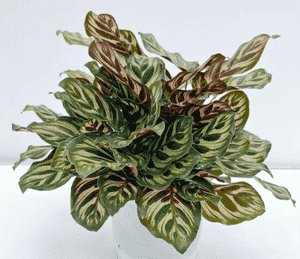
1
Moisten your Peacock plant weekly, making sure the substrate stays uniformly damp.
2
Employ purified or demineralized water for superior outcomes since your Peacock plant reacts poorly to tap water minerals.
3
Elevated atmospheric moisture, approximately 60-70%, establishes an ideal setting for your Peacock plant.
Understanding the Hydration Requirements of Your Peacock Plant
The Significance of Proper Moisture for Peacock Plant
The Peacock plant, known for its vibrant and lush leaves, flourishes with consistent and sufficient moisture. Appropriate watering ensures its foliage stays bright and healthy, preventing browning and dryness. It's crucial to recognize that each plant type has distinct watering needs, and the Peacock plant is no exception. This tropical species requires a balance where the soil is damp but not saturated, fostering robust development and vivid leaves.
Indicators of Insufficient and Excessive Watering
A key aspect of plant care involves identifying signs of distress caused by improper watering. For Peacock plants, underwatering will manifest as curling leaves, dry soil, and an overall wilted appearance. Conversely, overwatering can lead to yellowing leaves, soft stems, and root decay due to excessive moisture. Regularly inspect the soil and plant to maintain optimal moisture levels.
Effective Methods for Watering Your Peacock Plant
Optimal Practices for Watering Frequency
The best approach for watering your Peacock plant is to irrigate it once per week. This allows the soil to remain uniformly moist, providing the plant with steady hydration. However, always check the soil's top layer; if it feels dry to the touch before the week concludes, a light watering is acceptable. Factors such as pot size, plant dimensions, and indoor climate can influence watering frequency, so adjust accordingly.
Selecting the Appropriate Water and Tools
The type of water used for your Peacock plant can significantly impact its well-being. Filtered or distilled water is recommended as tap water may contain minerals like chlorine and fluoride, which can harm the plant. Additionally, a watering can with a narrow spout helps distribute water evenly at the plant's base, avoiding direct wetting of the foliage. Tools such as a moisture meter can also be useful for accurately assessing soil moisture levels.
The Influence of Environmental Factors on Watering
Environmental elements like humidity, temperature, and light exposure are critical in determining how often to water your Peacock plant. In a high-humidity setting, the plant might need less frequent watering, whereas in low humidity, you may need to water more often. Temperature fluctuations also affect soil moisture; warmer conditions dry out the soil faster, necessitating more frequent irrigation.
Peacock Plant Care Across Different Seasons
Adjusting Watering Schedules in Summer and Winter
Your Peacock plant's watering routine will change with the seasons. During summer, the plant will likely require more frequent watering due to higher temperatures and increased evaporation. Conversely, in winter, the plant's growth slows, and the soil retains moisture longer. Therefore, reducing watering frequency during colder months helps prevent waterlogging and root rot. Always check soil moisture before watering to accurately meet your plant's needs.
Specific Considerations for Humidity and Temperature
The Peacock plant thrives in moist environments, making it crucial to maintain humidity levels around 60-70%. Using a humidifier, placing a water tray near the plant, or misting the leaves can boost ambient humidity. Temperature also plays a vital role; ideally, keep the plant in an environment ranging between 18-27°C (65-80°F). Avoid exposing your Peacock plant to drafts or sudden temperature shifts, as these can stress the plant and impact its watering requirements.



